Wednesday, April 16, 2008

Hunger. Strikes. Riots. The food crisis bites

Across the world a crisis is unfolding at alarming speed. Climate change, China's increasing consumption and the dash for biofuels are causing food shortages and rocketing prices - sparking riots in cities from the Caribbean to the Far East. Robin McKie and Heather Stewart report on the millions facing starvation - and the growing threat to global security

This article appeared in the Observer on Sunday April 13 2008 on p22 of the Focus section

It is the constant sensation of hunger that makes Kamla Devi so angry. She argues with shopkeepers in New Delhi over prices and quarrels with her husband, a casual labourer, over his wages - about 50 rupees (60p) a day.

'When I go to the market and see how little I can get for my money, it makes me want to hit the shopkeepers and thrash the government,' she says. A few months ago, Kamla - who is 42 - decided she and her husband could no longer afford to eat twice a day. The couple, who have already sent their two teenage sons to live with more prosperous relatives, now exist on only one daily meal. At midday Kamla cooks a dozen roti (a round, flat Indian bread) with some vegetables fried with onions and spices. If there are some left, they will eat them at night. The only other sustenance that the couple have are occasional cups of sugared tea.

'My husband and I would argue every night. In the end he told me it wouldn't make his wages grow larger. Instead we went down to one meal a day to cut costs.'

It is a grim, unsettling story. Yet it is certainly not an exceptional one. Across the world, a food crisis is now unfolding with frightening speed. Hundreds of millions of men and women who, only a few months ago, were able to provide food for their families have found rocketing prices of wheat, rice and cooking oil have left them facing the imminent prospect of starvation. The spectre of catastrophe now looms over much of the planet.

In less than a year, the price of wheat has risen 130 per cent, soya by 87 per cent and rice by 74 per cent. According to the UN's Food and Agriculture Organisation, there are only eight to 12 weeks of cereal stocks in the world, while grain supplies are at their lowest since the 1980s.

For the Devi family, and hundreds of millions of others like them, the impact has been calamitous, as Robert Zoellick, the World Bank President, warned at this weekend's G7 meeting in Washington. Brandishing a bag of rice, he told startled delegates from the world's richest nations that the world was now perched at the edge of catastrophe.

'This is not just about meals forgone today, or about increasing social unrest, it is about lost learning potential for children and adults in the future, stunted intellectual and physical growth,' he said. Without urgent action to resolve the crisis, he added, the fight against poverty could be set back by seven years.

Not surprisingly, these swiftly rising prices have unleashed serious political unrest in many places. In Dhaka yesterday 10,000 Bangladeshi textile workers clashed with police. Dozens were injured, including 20 policemen, in a protest triggered by food costs that was eventually quelled by baton charges and teargas. In Haiti, demonstrators recently tried to storm the presidential palace after prices of staple foods leaped 50 per cent.

In Egypt, Indonesia, Ivory Coast, Mauritania, Mozambique, Senegal and Cameroon there have been demonstrations, sometimes involving fatalities, as starving, desperate people have taken to the streets. And in Vietnam the new crime of rice rustling - in which crops are stripped at night from fields by raiders - has led to the banning of all harvesting machines from roads after sunset and to farmers, armed with shotguns, camping around their fields 24 hours a day.

But what are the factors that led to this global unrest? What has triggered the price rises that have put the world's basic foodstuffs out of reach for a rising fraction of its population? And what measures must be taken by politicians, world leaders and monetary chiefs to rectify the crisis? Not surprisingly, the first two of these questions tend to be the easier ones to answer. Economists and financiers point to a number of factors that have combined to create the current crisis, a perfect storm in which several apparently unconnected events come together with disastrous effects.

One key issue highlighted at the G7 meeting was the decision by the US government, made several years ago, to give domestic subsidies to its farmers so that they could grow corn that can then be fermented and distilled into ethanol, a biofuel which can be mixed with petrol. This policy helps limit US dependence on oil imports and also gives support to the nation's farmers. However, by taking over land - about 20 million acres so far in the United States - that would otherwise have been used to grow wheat and other food crops, US food production has dropped dramatically. Prices of wheat, soya and other crops have been pushed up significantly as a result.

Other nations, including Argentina, Canada and some European countries, have adopted similar, but more restrained, biofuel policies. But without mentioning any countries by name, Zoellick clearly pointed the finger of blame at the US. Everyone should 'look closely at the effects of the dash for biofuels', he said. 'I would hope that countries that, for whatever reason, energy security and others, have emphasised biofuel development will be particularly sensitive to the call to meet the emergency needs for people who may not have enough food to eat.'

This point has also been stressed recently by the UK government's chief scientific adviser, Professor John Beddington. 'It is very hard to imagine how we can see the world growing enough crops to produce renewable energy and at the same time meet the enormous demand for food,' he said. 'The supply of food really isn't keeping up.'

For his part, Hank Paulson, the US Treasury Secretary - asked about the impact of US energy policies on food prices on Friday - tried to bat away the question. 'This is a complex area, with a number of causes,' he told reporters. The first priority, he added, was to get food supplies to people who need them, before considering the longer-term reasons for the rising prices.

It was not a point shared by the chief of staff in the United Nations trade and development division, Taffere Tesfachew, who flew to London last week ahead of a vital meeting of the leaders of the world's poorest nations in Accra, the capital of Ghana. Instead of an agenda designed to achieve economic progress in the developing world, the meeting will instead focus on the pressing issue of food. Tesfachew said that decades of aid has been skewed to ambitious industrialisation programmes and that the World Bank and others have failed to invest in the agricultural sector. 'We believe these high food prices won't disappear in the next two years, so now is the time to redress imbalances in terms of ethanol subsidies,' he said.

Zoellick was also clear that action was now urgently needed. 'In the US and Europe over the last year we have been focusing on the prices of gasoline at the pumps. While many worry about filling their tanks, many others around the world are struggling to fill their stomachs. And it's getting more and more difficult every day,' added Zoellick, who made an impassioned plea to the world's rich nations to provide emergency help, including $500m in extra funding to the UN World Food Programme.

This call was backed by finance ministers from the G24, who represent the leading developing countries, who also demanded extra cash to help cushion the poor against the shock of rising food prices. As well as causing hunger and malnutrition, the rising cost of basic foodstuffs risks blowing a hole in the budgets of food-importing countries, many of them in Africa, they argued.

As to the other factors that have combined to trigger the current food crisis, experts also point to the connected issue of climate change. As the levels of carbon dioxide rise in the atmosphere, meteorologists have warned that weather patterns are becoming increasingly disturbed, causing devastation in many areas. For several consecutive years, Australia - once a prime grower of wheat - has found its production ruined by drought, for example. Scarcity, particularly on Asia's grain markets, has then driven up prices even further.

Some campaigners see climate change as the most pressing challenge facing the world while others now say that biofuels - grown to offset fossil fuel use - is taking food out of the mouths of some of the world's poorest people. The net result will be eco-warriers battling with poverty campaigners for the moral high ground.

On top of these issues, there is the growing wealth of China and its 1 billion inhabitants. Once the possessor of a relatively poor rural economy, China has becoming increasingly industrialised and its middle classes have swelled in numbers.

One impact has been to trigger a doubling in meat consumption, particularly pork. As the country's farmers have sought to feed more and more pigs, more and more grain has been bought by them. However, China has only 7 per cent of the world's arable land and that figure is shrinking as farmland has been ravaged by pollution and water shortages.

The net result has been to decrease domestic supplies of grain just as demand for it has started to boom. Again the impact has struck worst in the Third World, with wheat and other grain prices soaring.

And finally there is the issue of vegetable oils. Soya and palm oils are a major source of calories in Asia. But flooding in Malaysia and a drought in Indonesia have limited supplies.

In addition, these oils are now being sought as bio-diesel, which is used as a direct substitute for diesel in many countries, including Australia. The impact has been all too familiar: an alarming drop in supplies for the people of the Third World as prices of this basic commodity have soared.

One such victim is Kamla Devi. She has already had to abandon dhal, a central, protein-rich dish of lentils that was a key part of her family's diet for several months. Now the cooking of fried food - in particular, pooris: hot, puffed, oil-soaked bread - has had to follow suit for the simple reason that cooking oil has become unaffordable.

'It has affected my health,' she says. 'The rich are becoming richer. They go to shopping malls and they don't need to worry. The problem with prices only matters for the poor people like me.'

· Additional reporting by Amelia Gentleman and Nick Mathiasson

Four key factors behind the spreading fear of starvation across the globe

Growing consumption

Six months ago Zhou Jian closed down his car parts business and launched himself as a pork butcher. Since then the 26-year-old businessman's Shanghai shop has been crowded out - despite a 58 per cent rise in the price of pork in the past year - and his income has trebled.

As China's emerging middle classes become richer, their consumption of meat has increased by more than 150 per cent per head since 1980. In those days, meat was scarce, rationed at around 1kg per person per month and used sparingly in rice and noodle dishes, stir fried to preserve cooking oil.

Today, the average Chinese consumer eats more than 50kg of meat a year. To feed the millions of pigs on its farms, China is now importing grain on a huge scale, pushing up its prices worldwide.

Palm oil crisis

The oil palm tree is the most highly efficient producer of vegetable oil, with one acre yielding as much oil as eight acres of soybeans. Unfortunately, it takes eight years to grow to maturity and demand has outstripped supply. Vegetable oils provide an important source of calories in the developing world, and their shortage has contributed to the food crisis.

A drought in Indonesia and flooding in Malaysia has also hit the crop. While farmers and plantation companies hurriedly clear land to replant, it will take time before their efforts bear fruit. Palm oil prices jumped nearly 70 per cent last year, hitting the poorest families. When a store in Chongqing in China announced a cooking-oil promotion in November, a stampede left three dead and 31 injured.

Biofuel demand

The rising demand for ethanol, a biofuel that is mixed with petrol to bring down prices at the pump, has transformed the landscape of Iowa. Today this heartland of the Midwest is America's cornbelt, with the corn crop stretching as far as the eye can see.

Iowa produces almost half of the entire output of ethanol in the US, with 21 ethanol-producing plants as farmers tear down fences, dig out old soya bean crops, buy up land and plant yet more corn. It has been likened to a new gold rush.

But none of it is for food. And as the demand for ethanol increases, yet more farmers will pile in for the great scramble to plant corn - instead of grain. The effect will be to further worsen world grain shortages.

Global warming

The massive grain storage complex outside Tottenham, New South Wales, today lies virtually empty. Normally, it would be half-full. As the second largest exporter of grain after the US, Australia usually expects to harvest around 25 million tonnes a year. But, because of a five-year drought, thought to have been caused by climate change, it managed just 9.8 million tonnes in 2006.

Farmers such as George Grieg, who has farmed here for 50 years, have rarely known it to be so bad. Many have not even recovered the cost of planting and caring for their crops, and are being forced into debt. With global wheat prices at an all-time high, all they can do is cling on in the hope of a bumper crop next time - if they are lucky.

Food in figures

93,000,000 Acres of corn planted by US farmers last year, up 19 per cent on 2006.

76% Amount of US corn used for animal feed.

8kg Amount of grain it takes to produce 1kg of beef.

20% Portion of US corn used to produce five billion gallons of ethanol in 2006-07.

50kg Quantity of meat consumed annually by the average Chinese person, up from 20kg in 1985.

10% Anticipated share of biofuels used for transport in the EU by 2020.

$500m The UN World Food Programme's shortfall this year, in attempting to feed 89 million needy people.

9.2bn The world's predicted population by 2050. It's 6.6bn now.

130% The rise in the cost of wheat in 12 months.

16 times The overall food consumption of the world's richest 20 per cent compared with that of the poorest 20 per cent.

58% Jump in the price of pork in China in the past year.

$900 The cost of one tonne of Thai premier rice, up 30 per cent in a month.

Caroline Davies

Illegal fishers plunder the Arctic

From: WWF

/wildlife/article/34769

According to Norwegian government figures, more than 100,000 tonnes of illegal cod, valued at €225 million ($US350 million), was caught in the Barents Sea in 2005. Concerted efforts by industry, government and NGOs to clamp down on this illegal activity has seen illegal landings cut by 50 per cent, but illegal fishing for Alaska pollock in the Russian Far-East remains a problem.

While investigation into illegal fishing in the Russian Far-East is less exhaustive than in the Barents Sea, the new report, Illegal Fishing in Arctic Waters, shows that in the Sea of Okhotsk alone, illegal landings of Alaska pollock can reach a value of more than €45 million ($US70 million) annually. The economic loss to the legitimate fishing industry and public purse is estimated at €210 million ($US327 million).

“Illegal fishing in the Arctic is a serious transnational crime crossing European, African, Asian and American borders.” said Dr Neil Hamilton, Director of WWF International’s Arctic Programme. “Cheats are putting short-term profits ahead of the long-term survival of Arctic fisheries.”

About 70 per cent of the world’s white fish supply comes from the Arctic, with the world’s last large cod stock found in the Barents Sea. The Russian Alaska pollock and Barents Sea cod catches analyzed in the report together account for about a quarter of the world’s white fish supply.

Barents Sea cod is taken mainly by Norwegian, Russian and EU fishers, while the bulk of the Alaska pollock catch, fished mainly in the Western Bering Sea and Sea of Okhotsk, is taken by Russian fleets with China the largest buyer. With markets spread across the globe, the distribution of black market cod and pollock is a global problem.

“If you’re enjoying bacalhau in Brazil, fish and chips in the UK, or frozen fillets in Germany you could be unwittingly supporting black-market cod,” said Maren Esmark, Marine Director at WWF-Norway. “Progress in tackling illegal fishing for cod in the Barents Sea should be applauded, but the positive trend may not continue as illegal products can find new ways to international markets.”

WWF is concerned about the ability of Arctic fish to cope with climate change, with illegal fishing being an added stress that can reduce the capacity of fish populations to adapt and survive.

WWF is also alarmed that several EU member states are opposing the current European Commission proposal to address illegal fishing, and the EU risks losing a key opportunity to tackle this problem.

“We urge all EU countries to support the commission’s proposal to deal with illegal fishing, and appeal to processors, retailers and consumers to not support criminality in fishing,” said Esmark, “Companies should not trade with vessels known to fish illegally, and consumers should demand the seafood they buy comes from a sustainable, legal source.”

World must reform agriculture now or face dire crisis: report

From: , The World Business Council for Sustainable Development (WBCSD), More from this Affiliate
Published April 16, 2008 08:23 AM
/ecosystems/article/34761

The world will face social upheaval and environmental disasters if agriculture is not radically reformed to better serve the poor and hungry, a landmark UN-sponsored report said Tuesday.

The warning in the report by the International Assessment of Agricultural Science and Technology for Development (IAASTD) comes amid growing discontent among the world's poorest over rising food prices.

"Continuing with current trends in production and distribution would exhaust our resources and put our children's future in jeopardy," said the report, which was compiled by about 400 international experts.

"And the increasingly globalised food market and ever-increasing food imports mean that no country can assume itself to be immune to the implications," it added.

In a statement, the IAASTD called for a "more holistic view of agriculture." The first of the United Nations' 10 Millennium Goals is to reduce by half the number of people suffering from hunger by 2015.

But the new report stressed that agriculture as is practised today was the source of deep inequalities and that the number of malnourished people worldwide was continuing to grow.

"Although considered by many to be a success story, the benefits of productivity increases in world agriculture are unevenly spread," it said.

"Often the poorest of the poor have gained little or nothing, and 850 million people are still hungry or malnourished with an additional four million more joining their ranks annually," the report went on.

The report said the world's agricultural expertise "should be targeted toward strategies that combine productivity with protecting natural resources like soils, water, forests, and biodiversity."

"To argue, as we do, that continuing to focus on production alone will undermine our agricultural capital and leave us with an increasingly degraded and divided planet is to reiterate an old message," the IAASTD said.

"But it is a message that has not always had resonance in some parts of the world. If those with power are now willing to hear it, then we may hope for more equitable policies that do take the interests of the poor into account."

Commissioned by the World Bank and the UN's Food and Agriculture Organisation, the report was considered by 64 governments at an intergovernmental plenary in Johannesburg last week.

Food protests have already been the cause of deadly protests in African countries such as Cameroon, Senegal and Mauritania and riots in Haiti and Indonesia.

The crisis has spurred world leaders into action, with the United States on Tuesday pledging 200 million dollars to help governments address the problems of rising food prices.

Earlier, UN chief Ban Ki-moon warned that the food crisis could trigger political upheavals and security risks.

World sea levels to rise 1.5m by 2100: scientists

From: Reuters

/wildlife/article/34702

By Karin Strohecker

VIENNA (Reuters) - Melting glaciers, disappearing ice sheets and warming water could lift sea levels by as much as 1.5 meters (4.9 feet) by the end of this century, displacing tens of millions of people, new research showed on Tuesday.

Presented at a European Geosciences Union conference, the research forecasts a rise in sea levels three times higher than that predicted by the Intergovernmental Panel on Climate Change (IPCC) last year. The U.N. climate panel shared the 2007 Nobel Peace Prize with former U.S. Vice President Al Gore.

Svetlana Jevrejeva of the Proudman Oceanographic Laboratory in Britain said the estimate was based on a new model allowing accurate reconstruction of sea levels over the past 2,000 years.

"For the past 2,000 years, the sea level was very stable," she told journalists on the margins of the Vienna meeting.

But the pace at which sea levels are rising is accelerating, and they will be 0.8-1.5 meters higher by next century, researchers including Jevrejeva said in a statement.

Sea levels rose 2 cm in the 18th century, 6 cm in the 19th century and 19 cm last century, she said, adding: "It seems that rapid rise in the 20th century is from melting ice sheets."

Scientists fiercely debate how much sea levels will rise, with the IPCC predicting increases of between 18 cm and 59 cm.

"The IPCC numbers are underestimates," said Simon Holgate, also of the Proudman Laboratory.

The researchers said the IPCC had not accounted for ice dynamics -- the more rapid movement of ice sheets due to melt water which could markedly speed up their disappearance and boost sea levels.

But this effect is set to generate around one-third of the future rise in sea levels, according to Steve Nerem from the University of Colorado in the United States.

"There is a lot of evidence out there that we will see around one meter in 2100," said Nerem, adding the rise would not be uniform around the globe, and that more research was needed to determine the effects on single regions.

Scientists might debate the levels, but they agree on who will be hardest hit -- developing nations in Africa and Asia who lack the infrastructural means to build up flood defenses. They include countries like Bangladesh, almost of all of whose land surface is a within a meter of the current sea level.

"If (the sea level) rises by one meter, 72 million Chinese people will be displaced, and 10 percent of the Vietnamese population," said Jevrejeva.

(Reporting by Karin Strohecker; Editing by Catherine Evans)

Sunday, April 6, 2008

To Breed or Not to Breed

Listen Now
"To Breed or Not to Breed"


Peggy Orenstein goes on a baby quest. Madelyn Cain on the childless revolution. Catherine Wagner shares some motherhood poems. A.M. Homes wrote an adoption memoir.

Journalist Peggy Orenstein has written a memoir called "Waiting for Daisy." She tells Jim Fleming about her ambivalence about having children, her difficulties becoming pregnant, and her adventures with fertility treatments.

Madelyn Cain is the author of "The Childless Revolution." She tells Jim Fleming that many women choose not to have children because they know they are not good enough at nurturing. She thinks this is an admirable, unselfish decision and one that more and more couples will make in the future.

Catherine Wagner is the co-editor, (with Rebecca Wolff) of the anthology "Not for Mothers Only." She talks with Steve Paulson about aspects of mothering and reads several poems from the book.

A.M. Homes was adopted as a newborn. When she was 31, her biological mother made contact, launching the writer on a years-long quest into her identity. She talks about it in her memoir, "The Mistress's Daughter" and in this conversation with Anne Strainchamps.


To the Best of Our Knowledge is an audio magazine of ideas - two hours of smart, entertaining radio for people with curious minds.

Nobel scientist warns on climate change

From: Reuters

/climate/article/34206

By Tom Brown

MIAMI (Reuters) - The Nobel Prize-winning scientist who rang the first alarm bells over the ozone hole issued a warming about climate change on Saturday, saying there could be "almost irreversible consequences" if the Earth warmed 2.5 degrees Celsius (4.5 degrees F) above what it ought to be.

"Things are changing and there's no doubt that it's as a result of human activities," said Mario Molina, a Mexican who shared a Nobel prize in chemistry in 1995 for groundbreaking work on chlorofluorocarbon gases and their threat to the Earth's ozone layer.

"Long before we run out of oil, we will run out of atmosphere," he said.

Molina told a panel discussion on climate change at an annual Inter-American Development Bank meeting in Miami that the increasing intensity of hurricanes was among the worrisome changes that scientists had linked to a rapid global warming trend over the past 30 years.

Molina did not elaborate on specific effects so far from the Earth's temperature rise, which has been slightly less than 1 degree Celsius (1.8 F) over the last century.

But he said certain "tipping points" would be reached if temperatures continue increasing, including unmanageable changes to the Earth's environment.

Molina later told Reuters there was considerable uncertainty about how much further warming the planet can sustain before it reaches critical levels.

"You keep changing the temperature gradually but then suddenly things change dramatically," he said.

"Trying to keep it (warming) below two degrees (Celsius) means we want to keep the change at most twice or three times what it has changed already. And that's because it's unrealistic to change it by less, because of what we have already done," Molina said.

"The idea to keep the temperature change not above 2.5 (degrees Celsius) is precisely to reduce the possibility of these tipping points happening," he added.

He said warming beyond that would pose "a risk that is not acceptable to society."

(Editing by Michael Christie and Peter Cooney)

Climate change threatens Australia's koala: report

From: Reuters

/wildlife/article/34193

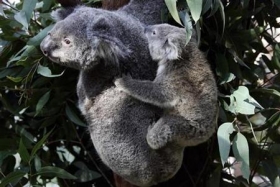
SYDNEY (Reuters) - Australia's unique tree-dwelling koalas may become a victim of climate change, new research reported on Saturday shows.

Australian scientists say that eucalyptus leaves, the staple diet of koalas and other animals, could become inedible because of climate change.

"What we're seeing, essentially, is that the staple diet of these animals is being turned to leather," Australian National University science professor Bill Foley was quoted as saying in the Weekend Australian.

"Life is set to become extremely difficult for these animals."

Increased carbon dioxide reduced nitrogen and other nutrients in eucalyptus leaves and boosted tannins, a naturally occurring toxin, greenhouse experiments by James Cook University researcher Ivan Lawler found.

This sharply reduced the levels of protein in the leaves, requiring koalas and other animals to eat more nutritionally-poor eucalyptus leaves to survive.

"The food chain for these animals is very finely balanced, and a small change can have serious consequences," the newspaper quoted Dr Lawler as saying.

Koalas and greater gliders, a large gliding possum, depend entirely on eucalyptus leaves for food. Some other marsupials, including brushtail and ringtail possums and many wallaby species, feed extensively on the leaves.

Many insect species also feed exclusively on the leaves.

(Reporting by Michael Byrnes; Editing by Sanjeev Miglani)

Involve indigenous people in climate policy, says report

From: , Science and Development Network, More from this Affiliate

/climate/article/34198

The ingenuity of indigenous peoples is too often overlooked by policymakers making decisions related to climate change — even though they are among the most vulnerable to its impacts, according to a new report.

The report from the International Union for Conservation of Nature (IUCN), released last month (March), points out that indigenous people usually occupy marginal and remote areas, such as small islands, coastal plains, mountain areas and drylands, where they are exposed to adverse environmental effects.

Although these populations develop coping strategies, the severity of future climate change may exceed this adaptive capacity, say the report's authors.

Furthermore, they are often socially vulnerable —— lacking rights, infrastructure and support, and with fragile livelihoods based only on natural resources.

The areas liable to the greatest changes in climate, and indeed already affected, include the Amazon region, the Caribbean, southern Africa and southern Latin America — all containing large numbers of indigenous people.

Gonzalo Oviedo, co-author of the report and IUCN senior advisor on social policy, told SciDev.Net, "Indigenous peoples' vast experience in adapting to climate variability will not be sufficient — they also need better access to other information and tools."

The report emphasises the need to involve indigenous communities more in research and debate on climate change. "In the Arctic, scientists and indigenous people work together. It opens doors to knowledge not accessible through Western scientific methods," says co-author Sarah Gotheil, programme officer of IUCN's Global Marine Programme.

Indigenous peoples' perspective and knowledge should be considered when making policies on adapting to climate change, the report recommends.

Their adaptation practices include rainwater harvesting, crop and livelihood diversification, and hunting and gathering timed with variations in animal migration and fruiting periods.

The challenge, says the report, is to find how best to combine traditional and scientific knowledge for incorporation into decision making.

The report advises that supporting indigenous peoples in their adaptation methods will help preserve the world's culturally and biologically most diverse areas.

"Their wise practices are also important for the younger generations," adds co-author Agni Boedhihartono, a landscape and community engagement officer for IUCN.

Link to full IUCN report [1.49MB]

Drought grows slightly in E. Australian farmlands

From: Reuters

/ecosystems/article/34210

SYDNEY (Reuters) - A key part of Australia's eastern farmlands slipped further into drought in March but record crops were still expected if good rains fell soon, New South Wales Primary Industries Minister Ian Macdonald said on Sunday.

New South Wales, one of Australia's biggest agricultural states, was hit hardest by the country's worst drought in 100 years before rain began falling early this year.

The rain reduced the area of the state in drought to around 40 percent from 99 percent during the worst of the drought in 2002.

However, in the latest month the drought-affected area of the state rose by around 2 percentage points to 42.9 percent, Macdonald said.

Winter crop prospects were still good if farmers received autumn rain, he said.

"They are anxiously waiting for quite good rainfall across the state so they can get their winter crops in," Macdonald said of farmers.

"We anticipate there'll be a record amount of cropping put into the ground if we can get some decent autumn rain," he said on ABC radio.

Australia, one of the largest farm goods exporters in the world, largely to Asia, will begin to plant its winter wheat crop in around three week's time.

Normally the second-largest wheat exporter in the world, Australian wheat crops have been decimated in three of the last six years because of drought. This recently sent world wheat prices soaring to record highs.

Recent forecasts put Australia's 2008/09 wheat crop at between 26 million tonnes and a record-breaking 27 million tonnes. All forecasts are based on good rain falling soon.

(Reporting by Michael Byrnes, editing by Jacqueline Wong)

Iceland: life on global warming's front line

From: Reuters

/wildlife/article/34208

By Adam Cox and Kristin Arna Bragadottir

REYKJAVIK (Reuters) - If any country can claim to be pitched on the global warming front line, it may be the North Atlantic island nation of Iceland.

On a purely physical level, this land of icecaps and volcanoes and home to 300,000 people is undergoing a rapid transformation as its glaciers melt and weather patterns change dramatically.

But global warming is also having a profound effect on Iceland economically -- and in many ways the effects have actually been beneficial.

Warmer weather has been a boon to Iceland's hydroelectric industry, which is producing more energy than before as melting glaciers feed its rivers.

Climate change, stoked by human use of fossil fuels, has also focused attention on Iceland's energy innovations and created demand for its ideas and expertise in fields such as geothermal energy and fuel technology.

Scientists from Africa to the Americas are exploring what Icelandic universities and energy researchers are up to. And foreign companies are teaming up with the small island's firms.

Two-thirds of electricity in Iceland is already derived from renewable sources -- its plentiful rivers and waterfalls and the geothermal heat that warms 90 percent of Iceland's houses.

Some observers say forward-thinking comes naturally on an island where climate change can already be seen in thawing ice and balmier winters.

"People are already now planning for a future that will be different from the past," said Tomas Johannesson, a geophysicist at the Icelandic Meteorological Office.

"We are in an unusual situation that many of the changes that are happening are maybe more beneficial than for the worse," he added.

The increase in waterflow in the island's rivers, because of melting glaciers, is one example.

"If you compare the hydrological data about how much energy is in the water for the last 60 years, and then the last 20 years, you see that there is an increase," said Thorstein Hilmarsson of the national power company Landsvirkjun.

This extra energy is needed in an economy driven partly by power-intensive industries such as aluminum smelting.

But Icelanders know that climate change is not a simple economic equation.

"If something serious happens to other nations, this can easily have an effect here. So people are not exactly welcoming these changes," Johannesson said.

CREATIVE JUICES

Carol van Voorst, U.S. ambassador to Iceland, has made the promotion of energy ventures in Iceland part of her mission.

"We're on the ground, we know the players, and we can be helpful in making the links and connections," she said.

"You quickly notice how creatively Iceland is using its natural resources," she said.

Among the initiatives that have caught her attention are a deep-drilling project to harness underground energy, technology to convert carbon dioxide into fuel and hydrogen-powered rental cars, which went into use in Reykjavik last year.

The Iceland Deep Drilling Project, a multi-national venture including Landsvirkjun, will start drilling a hole this year between 4 and 5 km (2.5 and 3 miles) deep to learn about "supercritical hydrous fluid" at temperatures of between 400 and 600 degrees Celsius (750 and 1,100 degrees Fahrenheit).

It might take decades to learn how to harness the energy, but it could radically change the way power is generated.

Iceland is also pushing hard to become the first nation to break free from the constraints of fossil fuel -- this year, the first hydrogen-equipped commercial vessel was due to start sailing around Reykjavik.

Iceland hopes to convert its entire transport system to hydrogen by 2050.

RAIN NOT SNOW

The flip side of this innovation, however, is concern.

Last October, Nordic nations, including Iceland, sounded the alarm about a quickening melt of Arctic ice and said the thaw might soon prove irreversible because of global warming.

The U.N. Climate Panel says temperatures are rising more rapidly in the Arctic because darker water and land soak up more heat than reflective ice and snow.

Nonetheless, even with higher temperatures, it could take centuries for Iceland's glaciers to melt, the national energy company says.

The Vatnajokull glacier in southeast Iceland is Europe's largest and is big enough to cover all of Iceland with 50 meters (160 ft) of water.

There are more immediate signs of climate change, though, and these are worrying Iceland's residents.

This winter, Reykjavik experienced double-digit swings in temperature, as the normally sub-zero conditions suddenly turned balmy. The capital was flooded.

"I don't think it's even a question," said Asta Gisladottir, asked whether the freak weather was caused by global warming.

"We're so close to the North Pole," the 36-year-old hotel worker said. "It's just in our backyard."

Gisladottir recalled winters during her childhood in the village of Siglufjordur, on the island's north, as very different. Then there was snow from November to April.

Now, it is mostly rain.

Geophysicist Johannesson, who has studied climate change since the early 1990s, said the evidence was not just anecdotal.

"What we see here is an overall warming from a rather cold 19th century," he said. "As a general rule, this is sufficient for us to have many significant changes in the environment."

(Editing by Clar Ni Chonghaile)

Wednesday, April 2, 2008

Do or die for threatened species

Marian Wilk, Environment Editor

Sydney Morning Herald print edition.

AUSTRALIA needs to urgently identify land that can act as refuges for native wildlife and plants threatened by climate change and decide how to minimise the number of species that will face extinction, a disturbing report by the CSIRO has warned.

While saving species should be a priority, the report finds, "it is almost certain that some species will become extinct in the wild".

The sweeping report highlights signs of climate change likely to impact on Australia's wildlife, such as the threat in the alps to the pygmy possum as reduced snow cover exposes it to predators while feral horses, pigs and rabbits prosper in the warmer temperatures.

In a major challenge to state and federal governments, the sweeping report by Michael Dunlop and Peter Brown calls for a re-examination of Australia's "core" conservation principles in the light of climate change. Instead of trying to prevent environmental change, the report says, governments and park managers will need to, "embrace the task of managing the change to minimise the loss".

The federal Environment Minister, Peter Garrett, said yesterday that the Government would begin acting on the report immediately to identify the refuges in the network of Australia's 9000 national parks, public and private reserves, including Aboriginal lands. Refuges will include the most resilient land where animals can retreat to and plants can survive.

"The refuges project will look at the existing refuges for threatened species and whether we need to extend their boundaries and identify what new protected areas are needed to reduce extinction risk for our native plants and animals," Mr Garrett said.

An initial $250,000 will be spent to identify the refuges but a significant increase in funds to protect wildlife and plants from climate change is expected to be announced soon.

Last year, scientific advice to the Government suggested $250 million over five years would be needed, shared between the states, Aboriginal groups and private landowners.

Leading conservation groups, including the Australian Conservation Foundation, WWF and International Union for the Conservation of Nature (IUCN), have been urging the policy shake-up since last year.

"Climate change has been perceived as principally stopping greenhouse gas emissions," said Penny Figgis, of the IUCN. "What we have been screaming from the rooftops is that, in the meantime, every scientist on Earth is saying that we are basically facing a global extinction crisis.

"As one of the epicentres of biodiversity on Earth, and as a developed country, we need to do all the things we can do to head off that outcome."

The CSIRO report examines the crucial role Australia's national reserve system will play in helping plants and wildlife cope with climate change. Preserving and expanding these reserves will be the best way to conserve threatened species, the report says.

The authors identify four threats that "will be particularly hard to manage", including an increase in pests and exotic species, changes in bushfire behaviour, changing land use - particularly grazing lands in wetter regions turning into crop land - and changing rainfall patterns.

The report warns that "mass mortality events" from bushfire and drought will have lasting effects on the landscape, like the 2003 bushfires in the Alps where in parts of Victoria almost no trees survived.

While the report says the trees will regenerate, the new growth faces increased threats from both fire and drought.

In other unusual patterns, the report cites studies showing how some bird species are already adapting to climate change as they shift their migration and breeding patterns, potentially having cascading impacts on insect species and plant seeds.

The forest kingfisher, for example, is now breeding twice a year rather than once. Some migratory birds are arriving earlier and leaving later. In Western Australia, tropical seabirds are pushing further south. This initial rich increase in some species as they adapt could result in pressure on others as competition for food increases.

While Australian plants and wildlife have adapted to change before and suffered extinction, the report finds the scale of changes from global warming are "unprecedented in their nature and rate [and] they may be outside any evolutionary coping range of many species".

Gore to recruit 10m-strong green army

· Huge drive for Congress action on global warming
· $300m TV campaign will focus on job opportunities

This article appeared in the Guardian on Tuesday April 01 2008 on p19 of the International section.
Al Gore at the UN climate change conference in Bali in 2007

Al Gore at the UN climate change conference in Bali in 2007. Photograph: Jewel Samad/AFP/Getty images

Al Gore yesterday launched a drive to mobilise 10 million volunteers to force politicians to act on climate change - twice as many as the number who marched against the Vietnam war or in support of civil rights during the heyday of US activism in the 1960s.

During the next three years, his Alliance for Climate Protection plans to spend $300m (about £150m) on television advertising and online organising to make global warming among the most urgent issues for elected American leaders.

The wecansolveit.org initiative aims to build up pressure on the next US president to support stringent mandatory emissions controls when they come before Congress, and take a leadership role at the renegotiation of the Kyoto treaty.

Environmental activists yesterday described the plan as the most ambitious public campaign launched in the US.

"The resources are completely unprecedented in American politics," said Philip Clapp, of the Pew Environment Group. It is equally ambitious in targets. The Alliance has already reached out to organisations as diverse as the Girl Scouts and the steelworkers union to try to broaden its appeal.

Gore told the Washington Post that he launched the initiative because of his concerns that US politicians had balked at supporting strong legislation on climate change.

"This climate crisis is so interwoven with habits and patterns that are so entrenched, the elected officials in both parties are going to be timid about enacting the bold changes that are needed until there is a change in the public's sense of urgency in addressing this crisis," Gore said. "I've tried everything else I know to try. The way to solve this crisis is to change the way the public thinks about it."

Environmental activists said it was crucial that the campaign focus attention on green jobs and other positive consequences of going green - rather than the potential costs.

"What I am particularly hopeful about is that their advertising campaign will emphasise the economic opportunities," said Reid Detchon, executive director for energy and climate change at the United Nations Fund. "That is where the political leverage is, particularly at a time when the economy is faltering. The opportunities for business and job creation are very large in this transition."

The initiative was widely seen as the logical extension of campaigns such as moveon.org, which supports liberal causes and Democratic candidates and has more than 3 million supporters, and stopglobalwarming.org, which has more than a million supporters.

Chris Miller, director of US Greenpeace's global warming campaign, said: "The movie An Inconvenient Truth and Gore's work were incredibly strong in raising awareness. The step that it didn't take is telling people how to solve the problem. This [campaign] is going to reinforce that there are steps we can take in our personal lives, but that ultimately it will take political leaders to solve the problem."

But channelling growing public awareness and concern into a political force has proved difficult. Gore wants a 90% reduction in greenhouse gases by 2050 - a more ambitious target than those of Hillary Clinton or Barack Obama, who favour an 80% cut, or John McCain, who supports only a 60% reduction.

Last January, the League of Conservative Voters analysed transcripts of television interviews and debates with all the Democratic and Republican contenders for the White House. By January 25, the candidates had been asked 2,975 questions on a range of issues.

Only six of those mentioned the words "climate change" or "global warming". That is not much greater than the level of media interest in the candidates' positions on UFOs. They were asked three questions on UFOs in the same study.

But as Gore told CBS on Sunday night: "I'm not finished yet."

The campaign

The campaign is getting a hefty kick-start from Gore. The former vice-president has donated earnings from his Oscar-winning film, An Inconvenient Truth, his Nobel peace prize, and his job at a venture capital firm. In the first ad, a voiceover by the actor William H Macy says: "We didn't wait for someone else to storm the beaches of Normandy. We didn't wait for someone else to guarantee civil rights." Future ads will feature political adversaries such as Newt Gingrich, a conservative Republican, in an attempt to elevate the cause above political divisions.

Video

"Manufactured Landscapes" SEE THIS BRILLIANT MOVIE! You'll never have the same shopping experience again.