Sunday, April 6, 2008

To Breed or Not to Breed

Listen Now
"To Breed or Not to Breed"


Peggy Orenstein goes on a baby quest. Madelyn Cain on the childless revolution. Catherine Wagner shares some motherhood poems. A.M. Homes wrote an adoption memoir.

Journalist Peggy Orenstein has written a memoir called "Waiting for Daisy." She tells Jim Fleming about her ambivalence about having children, her difficulties becoming pregnant, and her adventures with fertility treatments.

Madelyn Cain is the author of "The Childless Revolution." She tells Jim Fleming that many women choose not to have children because they know they are not good enough at nurturing. She thinks this is an admirable, unselfish decision and one that more and more couples will make in the future.

Catherine Wagner is the co-editor, (with Rebecca Wolff) of the anthology "Not for Mothers Only." She talks with Steve Paulson about aspects of mothering and reads several poems from the book.

A.M. Homes was adopted as a newborn. When she was 31, her biological mother made contact, launching the writer on a years-long quest into her identity. She talks about it in her memoir, "The Mistress's Daughter" and in this conversation with Anne Strainchamps.


To the Best of Our Knowledge is an audio magazine of ideas - two hours of smart, entertaining radio for people with curious minds.

Nobel scientist warns on climate change

From: Reuters

/climate/article/34206

By Tom Brown

MIAMI (Reuters) - The Nobel Prize-winning scientist who rang the first alarm bells over the ozone hole issued a warming about climate change on Saturday, saying there could be "almost irreversible consequences" if the Earth warmed 2.5 degrees Celsius (4.5 degrees F) above what it ought to be.

"Things are changing and there's no doubt that it's as a result of human activities," said Mario Molina, a Mexican who shared a Nobel prize in chemistry in 1995 for groundbreaking work on chlorofluorocarbon gases and their threat to the Earth's ozone layer.

"Long before we run out of oil, we will run out of atmosphere," he said.

Molina told a panel discussion on climate change at an annual Inter-American Development Bank meeting in Miami that the increasing intensity of hurricanes was among the worrisome changes that scientists had linked to a rapid global warming trend over the past 30 years.

Molina did not elaborate on specific effects so far from the Earth's temperature rise, which has been slightly less than 1 degree Celsius (1.8 F) over the last century.

But he said certain "tipping points" would be reached if temperatures continue increasing, including unmanageable changes to the Earth's environment.

Molina later told Reuters there was considerable uncertainty about how much further warming the planet can sustain before it reaches critical levels.

"You keep changing the temperature gradually but then suddenly things change dramatically," he said.

"Trying to keep it (warming) below two degrees (Celsius) means we want to keep the change at most twice or three times what it has changed already. And that's because it's unrealistic to change it by less, because of what we have already done," Molina said.

"The idea to keep the temperature change not above 2.5 (degrees Celsius) is precisely to reduce the possibility of these tipping points happening," he added.

He said warming beyond that would pose "a risk that is not acceptable to society."

(Editing by Michael Christie and Peter Cooney)

Climate change threatens Australia's koala: report

From: Reuters

/wildlife/article/34193

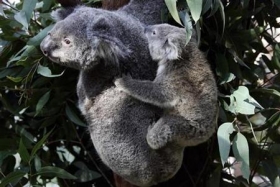
SYDNEY (Reuters) - Australia's unique tree-dwelling koalas may become a victim of climate change, new research reported on Saturday shows.

Australian scientists say that eucalyptus leaves, the staple diet of koalas and other animals, could become inedible because of climate change.

"What we're seeing, essentially, is that the staple diet of these animals is being turned to leather," Australian National University science professor Bill Foley was quoted as saying in the Weekend Australian.

"Life is set to become extremely difficult for these animals."

Increased carbon dioxide reduced nitrogen and other nutrients in eucalyptus leaves and boosted tannins, a naturally occurring toxin, greenhouse experiments by James Cook University researcher Ivan Lawler found.

This sharply reduced the levels of protein in the leaves, requiring koalas and other animals to eat more nutritionally-poor eucalyptus leaves to survive.

"The food chain for these animals is very finely balanced, and a small change can have serious consequences," the newspaper quoted Dr Lawler as saying.

Koalas and greater gliders, a large gliding possum, depend entirely on eucalyptus leaves for food. Some other marsupials, including brushtail and ringtail possums and many wallaby species, feed extensively on the leaves.

Many insect species also feed exclusively on the leaves.

(Reporting by Michael Byrnes; Editing by Sanjeev Miglani)

Involve indigenous people in climate policy, says report

From: , Science and Development Network, More from this Affiliate

/climate/article/34198

The ingenuity of indigenous peoples is too often overlooked by policymakers making decisions related to climate change — even though they are among the most vulnerable to its impacts, according to a new report.

The report from the International Union for Conservation of Nature (IUCN), released last month (March), points out that indigenous people usually occupy marginal and remote areas, such as small islands, coastal plains, mountain areas and drylands, where they are exposed to adverse environmental effects.

Although these populations develop coping strategies, the severity of future climate change may exceed this adaptive capacity, say the report's authors.

Furthermore, they are often socially vulnerable —— lacking rights, infrastructure and support, and with fragile livelihoods based only on natural resources.

The areas liable to the greatest changes in climate, and indeed already affected, include the Amazon region, the Caribbean, southern Africa and southern Latin America — all containing large numbers of indigenous people.

Gonzalo Oviedo, co-author of the report and IUCN senior advisor on social policy, told SciDev.Net, "Indigenous peoples' vast experience in adapting to climate variability will not be sufficient — they also need better access to other information and tools."

The report emphasises the need to involve indigenous communities more in research and debate on climate change. "In the Arctic, scientists and indigenous people work together. It opens doors to knowledge not accessible through Western scientific methods," says co-author Sarah Gotheil, programme officer of IUCN's Global Marine Programme.

Indigenous peoples' perspective and knowledge should be considered when making policies on adapting to climate change, the report recommends.

Their adaptation practices include rainwater harvesting, crop and livelihood diversification, and hunting and gathering timed with variations in animal migration and fruiting periods.

The challenge, says the report, is to find how best to combine traditional and scientific knowledge for incorporation into decision making.

The report advises that supporting indigenous peoples in their adaptation methods will help preserve the world's culturally and biologically most diverse areas.

"Their wise practices are also important for the younger generations," adds co-author Agni Boedhihartono, a landscape and community engagement officer for IUCN.

Link to full IUCN report [1.49MB]

Drought grows slightly in E. Australian farmlands

From: Reuters

/ecosystems/article/34210

SYDNEY (Reuters) - A key part of Australia's eastern farmlands slipped further into drought in March but record crops were still expected if good rains fell soon, New South Wales Primary Industries Minister Ian Macdonald said on Sunday.

New South Wales, one of Australia's biggest agricultural states, was hit hardest by the country's worst drought in 100 years before rain began falling early this year.

The rain reduced the area of the state in drought to around 40 percent from 99 percent during the worst of the drought in 2002.

However, in the latest month the drought-affected area of the state rose by around 2 percentage points to 42.9 percent, Macdonald said.

Winter crop prospects were still good if farmers received autumn rain, he said.

"They are anxiously waiting for quite good rainfall across the state so they can get their winter crops in," Macdonald said of farmers.

"We anticipate there'll be a record amount of cropping put into the ground if we can get some decent autumn rain," he said on ABC radio.

Australia, one of the largest farm goods exporters in the world, largely to Asia, will begin to plant its winter wheat crop in around three week's time.

Normally the second-largest wheat exporter in the world, Australian wheat crops have been decimated in three of the last six years because of drought. This recently sent world wheat prices soaring to record highs.

Recent forecasts put Australia's 2008/09 wheat crop at between 26 million tonnes and a record-breaking 27 million tonnes. All forecasts are based on good rain falling soon.

(Reporting by Michael Byrnes, editing by Jacqueline Wong)

Iceland: life on global warming's front line

From: Reuters

/wildlife/article/34208

By Adam Cox and Kristin Arna Bragadottir

REYKJAVIK (Reuters) - If any country can claim to be pitched on the global warming front line, it may be the North Atlantic island nation of Iceland.

On a purely physical level, this land of icecaps and volcanoes and home to 300,000 people is undergoing a rapid transformation as its glaciers melt and weather patterns change dramatically.

But global warming is also having a profound effect on Iceland economically -- and in many ways the effects have actually been beneficial.

Warmer weather has been a boon to Iceland's hydroelectric industry, which is producing more energy than before as melting glaciers feed its rivers.

Climate change, stoked by human use of fossil fuels, has also focused attention on Iceland's energy innovations and created demand for its ideas and expertise in fields such as geothermal energy and fuel technology.

Scientists from Africa to the Americas are exploring what Icelandic universities and energy researchers are up to. And foreign companies are teaming up with the small island's firms.

Two-thirds of electricity in Iceland is already derived from renewable sources -- its plentiful rivers and waterfalls and the geothermal heat that warms 90 percent of Iceland's houses.

Some observers say forward-thinking comes naturally on an island where climate change can already be seen in thawing ice and balmier winters.

"People are already now planning for a future that will be different from the past," said Tomas Johannesson, a geophysicist at the Icelandic Meteorological Office.

"We are in an unusual situation that many of the changes that are happening are maybe more beneficial than for the worse," he added.

The increase in waterflow in the island's rivers, because of melting glaciers, is one example.

"If you compare the hydrological data about how much energy is in the water for the last 60 years, and then the last 20 years, you see that there is an increase," said Thorstein Hilmarsson of the national power company Landsvirkjun.

This extra energy is needed in an economy driven partly by power-intensive industries such as aluminum smelting.

But Icelanders know that climate change is not a simple economic equation.

"If something serious happens to other nations, this can easily have an effect here. So people are not exactly welcoming these changes," Johannesson said.

CREATIVE JUICES

Carol van Voorst, U.S. ambassador to Iceland, has made the promotion of energy ventures in Iceland part of her mission.

"We're on the ground, we know the players, and we can be helpful in making the links and connections," she said.

"You quickly notice how creatively Iceland is using its natural resources," she said.

Among the initiatives that have caught her attention are a deep-drilling project to harness underground energy, technology to convert carbon dioxide into fuel and hydrogen-powered rental cars, which went into use in Reykjavik last year.

The Iceland Deep Drilling Project, a multi-national venture including Landsvirkjun, will start drilling a hole this year between 4 and 5 km (2.5 and 3 miles) deep to learn about "supercritical hydrous fluid" at temperatures of between 400 and 600 degrees Celsius (750 and 1,100 degrees Fahrenheit).

It might take decades to learn how to harness the energy, but it could radically change the way power is generated.

Iceland is also pushing hard to become the first nation to break free from the constraints of fossil fuel -- this year, the first hydrogen-equipped commercial vessel was due to start sailing around Reykjavik.

Iceland hopes to convert its entire transport system to hydrogen by 2050.

RAIN NOT SNOW

The flip side of this innovation, however, is concern.

Last October, Nordic nations, including Iceland, sounded the alarm about a quickening melt of Arctic ice and said the thaw might soon prove irreversible because of global warming.

The U.N. Climate Panel says temperatures are rising more rapidly in the Arctic because darker water and land soak up more heat than reflective ice and snow.

Nonetheless, even with higher temperatures, it could take centuries for Iceland's glaciers to melt, the national energy company says.

The Vatnajokull glacier in southeast Iceland is Europe's largest and is big enough to cover all of Iceland with 50 meters (160 ft) of water.

There are more immediate signs of climate change, though, and these are worrying Iceland's residents.

This winter, Reykjavik experienced double-digit swings in temperature, as the normally sub-zero conditions suddenly turned balmy. The capital was flooded.

"I don't think it's even a question," said Asta Gisladottir, asked whether the freak weather was caused by global warming.

"We're so close to the North Pole," the 36-year-old hotel worker said. "It's just in our backyard."

Gisladottir recalled winters during her childhood in the village of Siglufjordur, on the island's north, as very different. Then there was snow from November to April.

Now, it is mostly rain.

Geophysicist Johannesson, who has studied climate change since the early 1990s, said the evidence was not just anecdotal.

"What we see here is an overall warming from a rather cold 19th century," he said. "As a general rule, this is sufficient for us to have many significant changes in the environment."

(Editing by Clar Ni Chonghaile)

Wednesday, April 2, 2008

Do or die for threatened species

Marian Wilk, Environment Editor

Sydney Morning Herald print edition.

AUSTRALIA needs to urgently identify land that can act as refuges for native wildlife and plants threatened by climate change and decide how to minimise the number of species that will face extinction, a disturbing report by the CSIRO has warned.

While saving species should be a priority, the report finds, "it is almost certain that some species will become extinct in the wild".

The sweeping report highlights signs of climate change likely to impact on Australia's wildlife, such as the threat in the alps to the pygmy possum as reduced snow cover exposes it to predators while feral horses, pigs and rabbits prosper in the warmer temperatures.

In a major challenge to state and federal governments, the sweeping report by Michael Dunlop and Peter Brown calls for a re-examination of Australia's "core" conservation principles in the light of climate change. Instead of trying to prevent environmental change, the report says, governments and park managers will need to, "embrace the task of managing the change to minimise the loss".

The federal Environment Minister, Peter Garrett, said yesterday that the Government would begin acting on the report immediately to identify the refuges in the network of Australia's 9000 national parks, public and private reserves, including Aboriginal lands. Refuges will include the most resilient land where animals can retreat to and plants can survive.

"The refuges project will look at the existing refuges for threatened species and whether we need to extend their boundaries and identify what new protected areas are needed to reduce extinction risk for our native plants and animals," Mr Garrett said.

An initial $250,000 will be spent to identify the refuges but a significant increase in funds to protect wildlife and plants from climate change is expected to be announced soon.

Last year, scientific advice to the Government suggested $250 million over five years would be needed, shared between the states, Aboriginal groups and private landowners.

Leading conservation groups, including the Australian Conservation Foundation, WWF and International Union for the Conservation of Nature (IUCN), have been urging the policy shake-up since last year.

"Climate change has been perceived as principally stopping greenhouse gas emissions," said Penny Figgis, of the IUCN. "What we have been screaming from the rooftops is that, in the meantime, every scientist on Earth is saying that we are basically facing a global extinction crisis.

"As one of the epicentres of biodiversity on Earth, and as a developed country, we need to do all the things we can do to head off that outcome."

The CSIRO report examines the crucial role Australia's national reserve system will play in helping plants and wildlife cope with climate change. Preserving and expanding these reserves will be the best way to conserve threatened species, the report says.

The authors identify four threats that "will be particularly hard to manage", including an increase in pests and exotic species, changes in bushfire behaviour, changing land use - particularly grazing lands in wetter regions turning into crop land - and changing rainfall patterns.

The report warns that "mass mortality events" from bushfire and drought will have lasting effects on the landscape, like the 2003 bushfires in the Alps where in parts of Victoria almost no trees survived.

While the report says the trees will regenerate, the new growth faces increased threats from both fire and drought.

In other unusual patterns, the report cites studies showing how some bird species are already adapting to climate change as they shift their migration and breeding patterns, potentially having cascading impacts on insect species and plant seeds.

The forest kingfisher, for example, is now breeding twice a year rather than once. Some migratory birds are arriving earlier and leaving later. In Western Australia, tropical seabirds are pushing further south. This initial rich increase in some species as they adapt could result in pressure on others as competition for food increases.

While Australian plants and wildlife have adapted to change before and suffered extinction, the report finds the scale of changes from global warming are "unprecedented in their nature and rate [and] they may be outside any evolutionary coping range of many species".

Gore to recruit 10m-strong green army

· Huge drive for Congress action on global warming
· $300m TV campaign will focus on job opportunities

This article appeared in the Guardian on Tuesday April 01 2008 on p19 of the International section.
Al Gore at the UN climate change conference in Bali in 2007

Al Gore at the UN climate change conference in Bali in 2007. Photograph: Jewel Samad/AFP/Getty images

Al Gore yesterday launched a drive to mobilise 10 million volunteers to force politicians to act on climate change - twice as many as the number who marched against the Vietnam war or in support of civil rights during the heyday of US activism in the 1960s.

During the next three years, his Alliance for Climate Protection plans to spend $300m (about £150m) on television advertising and online organising to make global warming among the most urgent issues for elected American leaders.

The wecansolveit.org initiative aims to build up pressure on the next US president to support stringent mandatory emissions controls when they come before Congress, and take a leadership role at the renegotiation of the Kyoto treaty.

Environmental activists yesterday described the plan as the most ambitious public campaign launched in the US.

"The resources are completely unprecedented in American politics," said Philip Clapp, of the Pew Environment Group. It is equally ambitious in targets. The Alliance has already reached out to organisations as diverse as the Girl Scouts and the steelworkers union to try to broaden its appeal.

Gore told the Washington Post that he launched the initiative because of his concerns that US politicians had balked at supporting strong legislation on climate change.

"This climate crisis is so interwoven with habits and patterns that are so entrenched, the elected officials in both parties are going to be timid about enacting the bold changes that are needed until there is a change in the public's sense of urgency in addressing this crisis," Gore said. "I've tried everything else I know to try. The way to solve this crisis is to change the way the public thinks about it."

Environmental activists said it was crucial that the campaign focus attention on green jobs and other positive consequences of going green - rather than the potential costs.

"What I am particularly hopeful about is that their advertising campaign will emphasise the economic opportunities," said Reid Detchon, executive director for energy and climate change at the United Nations Fund. "That is where the political leverage is, particularly at a time when the economy is faltering. The opportunities for business and job creation are very large in this transition."

The initiative was widely seen as the logical extension of campaigns such as moveon.org, which supports liberal causes and Democratic candidates and has more than 3 million supporters, and stopglobalwarming.org, which has more than a million supporters.

Chris Miller, director of US Greenpeace's global warming campaign, said: "The movie An Inconvenient Truth and Gore's work were incredibly strong in raising awareness. The step that it didn't take is telling people how to solve the problem. This [campaign] is going to reinforce that there are steps we can take in our personal lives, but that ultimately it will take political leaders to solve the problem."

But channelling growing public awareness and concern into a political force has proved difficult. Gore wants a 90% reduction in greenhouse gases by 2050 - a more ambitious target than those of Hillary Clinton or Barack Obama, who favour an 80% cut, or John McCain, who supports only a 60% reduction.

Last January, the League of Conservative Voters analysed transcripts of television interviews and debates with all the Democratic and Republican contenders for the White House. By January 25, the candidates had been asked 2,975 questions on a range of issues.

Only six of those mentioned the words "climate change" or "global warming". That is not much greater than the level of media interest in the candidates' positions on UFOs. They were asked three questions on UFOs in the same study.

But as Gore told CBS on Sunday night: "I'm not finished yet."

The campaign

The campaign is getting a hefty kick-start from Gore. The former vice-president has donated earnings from his Oscar-winning film, An Inconvenient Truth, his Nobel peace prize, and his job at a venture capital firm. In the first ad, a voiceover by the actor William H Macy says: "We didn't wait for someone else to storm the beaches of Normandy. We didn't wait for someone else to guarantee civil rights." Future ads will feature political adversaries such as Newt Gingrich, a conservative Republican, in an attempt to elevate the cause above political divisions.

Viruses, oxygen and our green oceans

From: Society for General Microbiology

/ecosystems/article/33999

Some of the oxygen we breathe today is being produced because of viruses infecting micro-organisms in the world’s oceans, scientists heard today (Wednesday 2 April 2008) at the Society for General Microbiology’s 162nd meeting being held this week at the Edinburgh International Conference Centre.

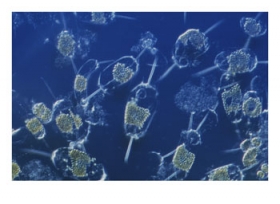
About half the world’s oxygen is being produced by tiny photosynthesising creatures called phytoplankton in the major oceans. These organisms are also responsible for removing carbon dioxide from our atmosphere and locking it away in their bodies, which sink to the bottom of the ocean when they die, removing it forever and limiting global warming.

“In major parts of the oceans, the micro-organisms responsible for providing oxygen and locking away carbon dioxide are actually single celled bacteria called cyanobacteria,” says Professor Nicholas Mann of the University of Warwick. “These organisms, which are so important for making our planet inhabitable, are attacked and infected by a range of different types of viruses.”

The researchers have identified the genetic codes of these viruses using molecular techniques and discovered that some of them are responsible for providing the genetic material that codes for key components of photosynthesis machinery.

“It is beginning to become to clear to us that at least a proportion of the oxygen we breathe is a by-product of the bacteria suffering from a virus infection,” says Professor Mann. “Instead of being viewed solely as evolutionary bad guys, causing diseases, viruses appear to be of central importance in the planetary process. In fact they may be essential to our survival.”

Viruses may also help to spread useful genes for photosynthesis from one strain of bacteria to another.

Monday, March 31, 2008

Undercut and under fire: UK biofuel feels heat from all sides

Sector faces hostility from competitors and campaigners

This article appeared in the Guardian on Tuesday April 01 2008 on p28 of the Financial section.

It was barely 18 months ago that the British biofuels industry was surfing on a wave of euphoria. There were almost weekly announcements from companies big and small that they were going to invest heavily in a sector that promised to play an important role in the battle against global warming.

On April 15, the sector is to be given an even bigger boost when the government introduces its Renewable Transport Fuels Obligation (RTFO) that requires the station forecourt to supply at least 2.5% a first, later 5%, of its petrol and diesel from plant-based materials at a time when oil prices have soared.

But instead of widespread glee, the domestic green fuels sector is in gloom, amid a flood of cheap imports from America. Subsidised US biofuels are threatening to wipe out UK capacity. Meanwhile, opposition grows from environmentalists and independent scientists who fear that biofuels could make climate change worse, not better.

There are fears that carbon-absorbing rainforest in countries such as Brazil is being cut down to provide land for fuel crops such as soya and palm and that biofuels crops are displacing land use for food and forcing up the price of staples. The price of wheat has doubled in the past 12 months.

Ruth Kelly, the transport minister, recently commissioned the new Renewable Fuels Agency to undertake a review of biofuels. A group of seven campaign groups, including Greenpeace and Oxfam, have called for her to postpone introduction of the RTFO until the benefits had been finally clarified.

Activists

The Renewable Energy Association says its members are deeply frustrated by the opposition from green activists. "It does seem to me to be potentially an own goal by the environment movement," a spokeswoman said.

"The UK industry has taken on board real concerns and been leading internationally on sustainability and CO2 standards - which are clearly essential elsewhere.

"There are no easy answers in transport and we don't pretend biofuels can be anything more than part of the answer. But the danger now is we are destabilising a technology at early stages of development with real future potential."

Karl Watkin, the founder and former chairman of D1 Oils, one of the pioneers of the British biofuels sector, resigned his position on the board of the company recently and issued his own broadside at NGOs, governments and the City. He said they were failing to support those who, like him, have been developing sustainable fuels - in D1's case from the jatropha plant.

"Over the past 12 months I have become increasingly frustrated by the inability of the investment community, governments and NGOs to differentiate D1's strategy from that of the suppliers of palm, soya and rapeseed whose biodiesel products have been well documented as being environmentally unsustainable," he said.

Disastrous

Another major British biofuels investor who asked not to be named said postponing the introduction of the RTFO at this stage would be disastrous. "People like us will not invest if there is no constancy of purpose and policy in Britain, while the global trade in biofuels will just go on regardless of what happens here," he said.

"No one believes that it is good to use rainforests or other delicate land to produce biofuels but there is a risk of the good being thrown out with the bad if we put a halt to the RTFO now."

Phil New, BP's global head of biofuels, agrees: "Ditching the RTFO would clearly make the UK a much more challenging place to invest in both biofuels manufacturing and research capacity."

D1 and others are also concerned about US biodiesel with its 11p-a-litre subsidy to undercut British products.

Around 1m tonnes of US B99 fuel, biodiesel with 1% petroleum diesel, is exported to Europe each year. Critics believe that some of the B99 is being made using product grown with subsidies in locations such as Argentina.

It has also become clear that it is not only US firms that are benefiting, but European firms are also using "splash and dash" operations to take biofuels over to America to blend them with small amounts of US biodiesel or even fossil fuels and bring them straight back to Britain and the Continent.

Low shipping costs make it worthwhile for those willing to exploit this trade, which is perfectly legal but environmentally damaging. Around 10% of the 1m tonnes of US imports that came into Europe last year is believed to come from splash and dash operations.

Ian Waller, a biofuels consultant from the FiveBarGate consultancy in the north-east of England, said: "My real concern about all this is that it undermines all the work we have been doing in the UK around sustainability. B99 is of completely unknown provenance. A lot of the 1m tonnes of biodiesel being exported out of America to Europe every year is not even locally produced. It could be palm oil from Indonesia or soya from Argentina."

Waller believes that some of those who were trying to produce sustainable biodiesel in Britain have turned to using B99 or other cheap foreign feedstocks in a bid to stay in business. But other traders are clearly only too happy to feed growing demand with US imports or "splash and dash" operations.

Watkin said he had raised the problems of B99 with the prime minister, Gordon Brown, when they were on a trade delegation to China. Pointing out that biodiesel gets a 20% sales subsidy in Britain compared with fossil fuels, he added: "Everyone agrees that this activity is all wrong but no one seems willing to really do anything about it. The reality is, governments have got themselves into a position where they are now supporting subsidies, not the fight against climate change."

Explainer: Splash and dash

For Europe's biodiesel producers, "splash and dash" is the salt being rubbed into what they see as the already open wound of US subsidies.

The industry reckons that around 1m tonnes a year of biodiesel is being imported from the US on the back of generous US subsidies. According to EU industry sources it would cost a European producer $1,625 in soya and $150 in production costs to make one tonne of biodiesel, a total of $1,775. In contrast, they say subsidised biodiesel imported from the US costs $1,400 a tonne. As a result European biodiesel producers are being forced into mothballing their capacity.

Biodiesel is also being sent to the US to have a tiny amount of mineral (conventional) diesel added, simply to make it qualify for the US subsidies before it is shipped to Europe. By topping up, for example, a 10m gallon tanker of biodiesel with about 10,000 gallons of mineral diesel in a US port, shippers qualify for the blender's tax credit, worth a dollar a gallon for the whole load - or $10m.

Industry sources say that about 10% of imports from the US are accounted for by such splash and dash operations. According to one, splash and dash could have undermined European prices by 10-15%.
Mark Milner

Time runs out for islanders on global warming's front line

Rising sea levels threaten to flood many of the islands in the fertile Ganges delta, leading to an environmental disaster and a refugee crisis for India and Bangladesh

This article appeared in the Observer on Sunday March 30 2008 on p46 of the World news section.

Dependra Das stretches out his arms to show his flaky skin, covered in raw saltwater sores. His fingers submerged in soft black clay for up to six hours a day, he spends his time frantically shoring up a crude sea dyke surrounding his remote island home in the Sundarbans, the world's largest delta.

Alongside him, across the beach in long lines, the villagers of Ghoramara island, the women dressed in purple, orange and green saris, do the same, trying to hold back the tide.

For the islanders, each day begins and ends the same way. As dusk descends, the people file back to their thatched huts. By morning the dyke will be breached and work will begin again. Here in the vast, low-lying Sundarbans, the largest mangrove wilderness on the planet, Das, 70, is preparing to lose his third home to the sea in as many years; here global warming is a reality, not a prediction.

Over the course of a three-day boat trip through the Sundarbans, The Observer found Das's plight to be far from unique. Across the delta, homes have been swept away, fields ravaged by worsening monsoons, livelihoods destroyed. It confirms what experts are already warning: that the effects of global warming will be most severe on those who did the least to contribute to it but can least afford measures to adapt or save themselves. For these islanders, building clay walls is their only option.

Lying one-third in India and two-thirds in Bangladesh, the Sundarbans are where two of Asia's biggest rivers, the Ganges and the Brahmaputra, broaden and violently roll into the Bay of Bengal. The source of the problem is 1,500 miles away, at the source of the Ganges, where melting Himalayan glaciers are raising river and sea levels.

Lohachara island, once visible from Ghoramara, a mile to the east, is already gone beneath the waves, succumbing to the ocean two years ago, leaving more than 7,000 people homeless. Ghoramara itself has lost a third of its land mass in the past five years. To the north, Sagar island already houses 20,000 refugees from the tides.

According to the geologist Sugata Hazra, who is the director of the School of Oceanography Studies at Kolkata's Jadavpur University, the people of the Sundarbans are the first global-warming refugees.

He said: 'These people are victims of global warming. The accelerated melt of the Himalayan glacier is producing larger volumes of water in the rivers, water that violently carves its way through the flat delta where they live. The Sundarbans and the four million people who inhabit the Indian side are dreadfully vulnerable. The area has lost 72 square miles of land in the past few decades. This entire region is holding back a disaster and could ultimately serve as a warning of what is to come.'

The hamlet on Ghoramara in which Gita Pandhar, 25, lives is reached by a narrow path along a mud dyke braced against the sea. Each day, to get to the market, she must walk through two miles of deep, slippery mud.

'When I was young, this was all rice-fields and herds of cows. It was beautiful, a wonderful place to grow up, in isolation away from the mainland. The farmland my grandfather first tended is now poisoned with salt. All the arable land has been replaced by swamp. We used to burn dung as fuel, but there is nowhere to graze and now we have to cut the last of the wood here to cook with.'

Flooding is normal in the Sundarbans. Hundreds of waterways flow through it, carrying 92 per cent of the water from Tibet, Bhutan, India and Nepal. Most of this water arrives during the monsoon, flooding on average 33 per cent of the countryside.

According to Gita, the severity of the storms has made the area one of the most dangerous places to live in the world.

'The sea is so violent at night. We know nothing of global warming. The scientists who visit tell us the West and their pollution is to blame. This is a very backward area, so we are the first people to suffer from global warming and the last to find out why we are suffering.

'You can see our houses, they are made of the same mud that props up the dykes. When the water rushes through the dykes it does the same to our homes. When the typhoons come we lose everything.

'Nature used to give us food and crops, now all it gives us is misery, a cruel sea that covers us in sores, destroys our homes and threatens to take our families' lives. We are living in hell.'

As rising sea levels in the Sundarbans continue to destroy lives, critics argue that the Indian government remains consumed with protecting its own interests rather than the vulnerable. Over the past few years, in a construction project that will eventually reach across 2,050 miles, India has been quietly sealing itself off from Bangladesh, its much poorer neighbour. Fence sections totalling about 1,550 miles have been built since 2004, many traversing the fringes of the Sundarbans.

Today the frontier between the countries is defined by two rows of 10ft barbed-wire barriers. In New Delhi the belief is that the fence is being built to 'keep in' an anticipated flood of refugees from Bangladesh, a crowded country more prone to devastating floods than anywhere else on the planet.

'You've got an increasing population with a violently shrinking land mass,' said Ajai Sahni, head of the New Delhi-based Institute for Conflict Management, who worries that the Indian government is not building the fence fast enough.

At night Ghoramara's landscape dramatically comes alive as water pours its way onto the beaches and through the mud dykes protecting the villages. At high tide, the water flows inland as the sea builds up, submerging most of the mangroves. Everywhere you look narrow channels of brackish water burrow into the land, snaking their way through the dense brush. Each evening tens of thousands go to sleep in fear of the sea.

'We have no safety net when the sea comes. So many times the embankment we have built collapses under the weight of the rising tide,' says Malata Bala Das.

'We can't rest our heads at night, we all listen for the water. Many of our young people have already left for Kolkata or the Andaman Islands to find work. It is a struggle here, but we are too old, we know no other life. Soon there will be only old people and grandchildren left, until our island is gone.'

In Rudranadar colony, a refugee camp for the latest exiles from Ghoramara, families huddle around oil lamps in tiny huts. Angurbala recalls the night she lost her home late last year: 'Everything changed when the water burst through our home. My grandson drowned, the water took everything. We left for a government camp, but here is no better. We were promised our own freshwater well, but the land here on Sagar is also bad. Now all the water is salty and you can't use it.

'We worry that the same thing could happen to us here. It feels like we have no escape from the sea.'

Activists slam changes to green grants

This article appeared in the Guardian on Tuesday April 01 2008 on p28 of the Financial section.

The government announced a shake-up of its controversial grant system for renewable energy technologies yesterday but was sharply criticised by green campaigners who said it does not go far enough.

The Department for Business (BERR) said that the system for allocating grants in the Low Carbon Buildings Programme would be speeded up and more generous grants would be available for technologies such as wind turbines or biomass boilers for public buildings or those owned by charities. Grants available to households would be extended until 2010.

However, a BERR spokeswoman said no extra money would be put into the scheme, which was launched two years ago with total funding of about £80m over three years. The scheme has suffered from a series of problems with applications leading to a huge underspend, enabling the department to relaunch the programme with the original funding. The £12m initially allocated for households still has £10m in the pot while the £50m for public buildings has only seen £9m committed.

Britain installed fewer than 300 solar photovoltaic systems on houses last year while Germany, for example, installed 130,000. Britain remains one of the worst countries in Europe for installing renewable energy, which accounts for less than 2% of its total energy supply.

Energy minister Malcolm Wicks said: "Many people tell me they want to do their bit to help combat climate change but are put off by the hassle involved. These changes remove those barriers."

But campaign groups were furious. Friends of the Earth's low carbon homes campaigner, Ed Matthew, said: "The government's response continues to be woeful. The LCBP should be 10 times bigger, with funds of £1bn, providing at least 50% grants for renewable technologies for every household."

Andrew Cooper of the Renewable Energy Association said he was "shocked". "Making a failing programme fail over a longer period is not a solution. It is no longer the Low Carbon Buildings Programme it is the Slow Carbon Buildings Programme."

Video

"Manufactured Landscapes" SEE THIS BRILLIANT MOVIE! You'll never have the same shopping experience again.