Tuesday, October 7, 2008

Met Office's bleak forecast on climate change

The head of the Met Office centre for climate change research explains why the momentum on emissions targets must not be lost

When it comes to climate change, the scientific evidence has to be at the core of any decision-making. Governments need to understand the consequences of choosing particular targets, but they also need to understand what will happen if targets are missed or if they cannot be agreed on by all countries. Failures could have far-reaching consequences.

The latest climate model projections from the Met Office Hadley Centre show clearly that such failures could have worrying and significant consequences for the world's climate. Even with large and early cuts in emissions, these projections indicate that temperatures are likely to rise to around 2C above pre-industrial levels by the end of the century. If action is delayed or is slow, then there is a significant risk of much larger increases in temperature. The uncertainties in the science mean that even if the most likely temperature rise is kept within reasonable limits, we cannot rule out the possibility of much larger increases. Adaptation strategies are therefore needed to deal with these less likely, but still real, possibilities.

Temperature rises

Jason Lowe, a climate scientist, and other colleagues at the Hadley Centre have conducted a series of "what if" climate projections, to give a better understanding of the temperature rises we could expect if action on reducing greenhouse gas emissions is slow or delayed.

In the first scenario, emissions continue to rise throughout the century. In the other scenarios, emission reductions have been imposed at various times and at various rates.

In the most optimistic scenario, emissions start to decrease in 2010, and reductions quickly reach 3% per year. This contrasts sharply with current trends, where the world's overall emissions are increasing at 1% per year - faster than even the worst cases used in the Intergovernmental Panel on Climate Change (IPCC) emissions scenarios.

What is very clear is that some increase in temperature is inevitable in the next century, and that the decisions and actions that the world takes now will have a profound impact on the climate later this century.

Even if emissions start to decrease in the next two years and reach a rapid and sustained rate of decline of 3% per year, temperatures are likely to rise to 1.7C above pre-industrial levels by 2050 and to around 2C by 2100. This is because carbon dioxide already in the atmosphere will be around for many years to come and the climate takes some time to respond to these changes. Only an early and rapid decline in emissions gets anywhere close to the target of 50% reduction in emissions by 2050 put forward by the G8.

Contrast that with a world where no action is taken to curb global warming. Then, temperatures could rise as high as 7C above pre-industrial values by the end of the century. This would lead to significant risks of severe and irreversible impacts.

Lowe's two other scenarios are also significant. The consequences of a late decline in emissions are apparent by 2050. Delaying reduction of emissions until 2030, results in a further 0.5C of warming by 2050 compared with early, if slow, reduction from 2010. By the end of the century the differences are even greater - more than 1C.

The consequences of an early but slow decline in emissions of 1% per year, compared with a rapid decline, appear to be small in 2050. However, they increase to 0.8C by the end of the century.

Overall, a delayed and slow decline in emissions would probably lead to nearly 2C more warming than an early and rapid decline in global emissions - a total temperature rise of 4C above pre-industrial levels.

The implications of these levels of temperature change are very serious, but the central projections are not the only things we should be worried by. When commentators look at these projections, they tend to concentrate on the most likely temperature rises. However, if we are concerned about keeping to a minimum the risks of avoiding dangerous climate change, we should also consider the worst case outcome. This will occur if the climate turns out to be particularly sensitive to increases in greenhouse gases and the Earth's biological systems cannot absorb very much carbon.

Dangerous impacts

The risks for worst case outcomes amplify much more quickly than the risks for most likely outcomes. For an early and rapid decline in emissions, the worst case outcome is around 0.7C higher than the most likely temperature rise. With much slower action taken much later, the difference between the most likely and worst case outcome is almost twice as wide, at 1.2C. This takes a worst case temperature rise of less than 3C to one just above 5C by the end of this century, bringing with it significant risk of dangerous impacts to our environment, society and economy.

A major reason for this amplification is the so-called "carbon cycle effect". Plants, soils and oceans currently absorb about half of the carbon dioxide emitted by humankind's activities, limiting rises in atmospheric CO2 and slowing global warming. As temperatures increase, this absorption is very likely to decrease.

For example, plant matter in the soil breaks down more quickly at higher temperatures, releasing carbon more quickly, and amplifying the warming trend. Methane released from the thawing of permafrost will add to the warming. This methane release is currently not included in the calculations, and becomes more of a risk for larger temperature rises.

Hence, the risks of dangerous climate change will not increase slowly as greenhouse gases increase. Rather, the risks will multiply if we do not reduce emissions fast enough.

• Vicky Pope is head of climate change for government at the Met Office's Hadley Centre.

Is There a Green Upside to the Economic Meltdown?

From: , Triple Pundit, More from this Affiliate
Published October 7, 2008 09:14 AM

Is There a Green Upside to the Economic Meltdown?

/business/article/38354

The economic meltdown could be good news for the area of clean energy investing, according to Steven Fraser, a senior lecturer at the University of Pennsylvania and author of the recently published "Wall Street: America's Dream Palace." Fraser believes that backlash to the recent economic crisis will result in a new era of enlightened regulation and investment akin to Roosevelt's New Deal, which helped America climb out of the Great Depression. Fraser offered these opinions in a recent interview on WHYY's Fresh Air program.

In the interview, Fraser said he felt "very confident" that "real anger at Wall Street" will result in better regulation and more oversight of commercial and investment banking. The steady deregulation of these sectors over the past 25 years has created an "orgy of speculation" and brought us to the current crisis. The future of our economy will depend on rebuilding our infrastructure and a shift to new forms of clean energy, according to Fraser. Any overhaul of our banking and investment sectors should move capital into these areas and away from highly leveraged speculation.

America Doesn't Make Anything Anymore

The growth of the financial sector as the engine of the economy over the past 25 years has corresponded with a "de-industrialization" of our economy. The result: we don't make anything anymore. Instead, we've become infatuated with highly speculative forms of investment that don't produce anything except bubbles and burst bubbles. America must re-industrialize its economy based on high technology, environmentally responsible industries.

What can a government do to encourage this? Any new or revised regulations should provide incentives to move capital resources in to productive means. An example Fraser cited would be to change the asset reserve requirement that a bank must meet to receive a license to operate and insurance coverage by the federal government. A new regulation could require investment banks to invest at least 5% of their assets in clean energy projects. Or an example of a dis-incentive would be to tax gains from speculative paper transactions.

The Free Market?

Many of the rules put in place during the New Deal of the 1930s prevented banks from engaging in risky activities and encouraged investment in to productive enterprises. The Glass-Steagall Act of 1933 established the Federal Deposit Insurance Corporation (FDIC) in the United States and included banking reforms, some of which were designed to control speculation, and an attempt to bring Wall Street under some level of supervision. Starting in the Reagan era, many of these reforms were repealed by the Depository Institutions Deregulation and Monetary Control Act of 1980, and further in 1999, by the Gramm-Leach-Bliley Act, which was signed by President Clinton. This steady march of deregulation eliminated much of the oversight or gutted enforcement agencies like the SEC. Many trace this version of the free market mindset back to the ideas of Milton Friedman, who launched a counterrevolution against the New Deal from his perch at the University of Chicago economics department.

The freewheeling "free market" movement launched by Friedman, introduced by Ronald Reagan and entrenched under Clinton has produced massive wealth for some, but also gave us the savings and loan default (and bailout), the junk bond scandal, Enron, the housing bubble, the sub-prime bust and now the credit crisis. This version of the free market is a fallacy, according to Fraser, because the great speculators never pay for their mistakes. Instead this free market "created privatization of reward, but socialization of risk" where the government freely uses taxpayer money for bailouts. Is there any mystery why the income gap has accelerated during this period? According to theCongressional Budget Office, from 1979 to 2005, the after-tax income of the top 1 percent of U.S. households soared 139 percent, while the income of the middle fifth rose only 17 percent and the income of the poorest fifth climbed just 9 percent. Last year American CEOs earned 262 times the average wage of their workers—up tenfold from 1970!

Stay Angry!!

We are certainly ready for an energy-based New Deal, but who will be the next Roosevelt to lead us out of this mess? McCain's economic advisor is the former Texas Senator Phil Gramm - the ultimate free market maven. During his time in the Senate, Gramm authored several of the bills that further deregulated the financial industry. Barack Obama's chief economic advisor isAustan Goolsbee, a University of Chicago economist. He is known as a centrist, not necessarily a disciple of Milton Friedman, so perhaps he has some ideas about how government can creatively fiddle incentives and regulations controlling the market.

Obama called the government's proposed $700 billion Wall Street bailout "sobering" and blamed the deregulation generally favored by Republicans. Is this a firm stance or campaign rhetoric? Clinton also favored reform until he did a U-turn on the economy just before his inauguration. He met with then-Goldman Sachs chief Robert Rubin, who convinced him to embrace more liberalization. Rubin is now an adviser to the Obama campaign.

If you are angry about the current crisis, stay that way! Use this anger to motivate our next government to begin this period of enlightened investing in America's infrastructure and industry described by Steven Fraser. There will be a lot of losers as a result of this meltdown, will the clean energy sector be one of the winners?

Jim Witkin is a marketing and content consultant focusing on ICT4D and social enterprise. He is also pursuing an MBA in Sustainable Management. You can reach him at jameswitkin at yahoo dot com

Monday, September 22, 2008

Climate sceptics have their head in the sand, says the Met Office

An apparent cooling trend is exaggerated by a record high temperature in 1998 caused by El Niño, experts say

Climate change graph

Global average temperature anomaly from 1975-2007, relative to the 1961-1990 average. The black line shows the annual figure. The red line shows the trend over the full 23 years. The blue lines show the varying rate of the trend over 10 year periods. Source: The Met Office

Climate sceptics such as Nigel Lawson who argue that global warming has stopped have their "heads in the sand", according to the UK's Met Office.

A recent dip in global temperatures is down to natural changes in weather systems, a new analysis shows, and does not alter the long-term warming trend.

The office says average temperatures have continued their rising trend over the last decade, and that humans are to blame.

In a statement published on its website, it says: "Anyone who thinks global warming has stopped has their head in the sand.

"The evidence is clear, the long-term trend in global temperatures is rising, and humans are largely responsible for this rise. Global warming does not mean that each year will be warmer than the last."

The new research confirms that the world has cooled slightly since 2005, but says this is down to a weather phenomena called La Niña, when cold water rises to the surface of the Pacific Ocean. Despite this effect, the office says, 11 of the last 13 years are the warmest ever recorded.

Vicky Pope of the Met Office said the new research was in response to high-profile claims made by Lawson the former chancellor, and others that the recent cooling showed that fears of climate change are overblown, and that temperatures are unlikely to rise as high as predicted.

She said: "I think it has confused people. We got a lot of emails asking whether global warming had stopped and it prompted us to look at the data again and try and understand the situation better."

The apparent cooling trend is exaggerated by a record high temperature in 1998 caused by a separate weather event, El Niño, she said. "You could look at what happened in 1998 and say that global warming accelerated and that's not true either.

"Any statistician will tell you that you can't just draw a straight line between two points, you need to look at the underlying trend."

Despite the recent cooling, average temperatures are still rising at 0.09C per decade, the office says - down from the record 0.33C per decade measured during the 1990s.

U.S. companies see climate risk, but lack plan

rom: Timothy Gardner, Reuters

/business/article/38242

NEW YORK (Reuters) - U.S. companies judge climate change a risk to their business, but lag global companies in setting targets to cut emissions, according to a global survey.

"We're seeing the U.S. play catch up here, but they've got a way to go," Paul Dickinson, chief executive of the Carbon Disclosure Project, which administers the annual survey, said in an interview ahead of the formal release of the 2008 CDP survey in New York on Monday.

Dickinson said the gap demonstrates the difference between the climate culture of companies in Europe and the United States.

The European Union has had mandatory greenhouse emissions caps since 2005, while the United States, historically the world's top greenhouse gas polluter, has no federal limits on the gases blamed for warming the planet.

About 81 percent of U.S. companies responding to this year's survey, or about 255 companies, perceived climate change as a risk. Yet only 33 percent of U.S. respondents had greenhouse gas reduction targets in place.

"They are not listening to themselves," Dickinson said.

In contrast, 74 percent of global companies that responded to the survey have set emissions reduction targets.

Only 14 percent of U.S. oil and gas companies that responded disclosed greenhouse gas emissions reduction targets.

One U.S. oil company, Occidental Petroleum, responded that it "does not have sufficient information to establish a cost basis for future financial risks since no regulations requiring greenhouse gas emissions controls have been implemented by governments in the areas where Occidental operates."

Dickinson said companies should be spurred by the debt-related financial crisis to determine undiscovered risk and act on it.

"If everybody is reporting a risk, but not everybody is starting to act on it, that would seem to imply things are going to change," he said.

U.S. presidential candidates Senators John McCain and Barack Obama have both said they favor regulating greenhouse gases.

Some 81 percent of European companies answered the survey's questions, while 64 percent of U.S. companies responded.

(Editing by David Gregorio)

Indigenous Groups Criticize Climate Talks

From: Ben Block, Worldwatch Institute, More from this Affiliate

/climate/article/38244

As international climate negotiations move closer to including forests in the successor agreement to the Kyoto Protocol, indigenous and traditional peoples realize they have either a lot to gain or everything to lose.

If industrialized countries are allowed to purchase the carbon rights of forests, groups from the Americas, Africa, and Asia fear their ancestral lands may be taken away. They worry that the benefactors of the carbon market will be governments or wealthy landholders, and not them.

At a time when their concerns should be at the forefront of debates, the venues for indigenous peoples to express themselves have so far been limited. They are granted observer status at United Nations climate negotiations, but they do not have voting rights - leading many to demand a stronger voice in the process.

"When you don't have recognized status, you're not existent. You're not at the table," said Kanyinke Sena, the Indigenous People of Africa Coordinating Committee's Eastern Africa representative.

Forests were not considered as carbon sinks in the Kyoto Protocol, but realization that deforestation accounts for almost 18 percent of global greenhouse gas emissions has led to their reconsideration. Industrialized nations may be allowed to offset their emissions by paying developing nations to protect their forests, known as reducing emissions from deforestation and forest degradation (REDD).

Several indigenous groups initially opposed REDD due to their suspicion that it would be another form of Western land-grabbing. But climate negotiators say a solution would ideally benefit the traditional stewards of the world's forests through some sort of financial compensation. As awareness grows about the potential benefits for forest peoples, some indigenous leaders are shifting towards wary support. But they still emphasize that without official land rights for indigenous peoples, REDD will likely lead to further suffering.

Indigenous representatives from across the globe have joined The Forest Dialogues - a gathering of environmentalists, business leaders, financial donors, and government officials who are forming a joint policy recommendation on REDD. Their inclusion should lead to a greater presence in the REDD debate.

"This is the first time indigenous and non-indigenous groups are meeting at this type of forum," said Parshuram Tamang, the International Alliance of Indigenous and Tribal Peoples of Tropical Forests' climate negotiations representative and a member of the Tamang ethnic group of Nepal. "This is very important for indigenous people."

The presence of indigenous groups at the dialogues' meetings has helped shape a consensus, which although it has yet to be finalized, stresses the "fundamental importance of the free, prior, and informed consent of Indigenous Peoples, small forest owners, and local communities."

Participation in the dialogue meetings, held last week at the World Bank, has also provided indigenous leaders with access to a network of influential forestry officials. Leaders of the Amazon Alliance, representatives of indigenous organizations and NGOs from nine South American countries, hand-delivered a letter to World Bank President Robert Zoellick that demanded the Bank "cease its exclusion of indigenous peoples and the violation of our rights." Zoellick told them that the bank will try to work on these issues.

The alliance's letter also accused the bank of ignoring indigenous people in a REDD pilot program that was launched in July with 14 tropical nations. "I am trying to show the World Bank that indigenous people are well organized," said Juan Carlos Jintiach, the alliance's executive co-director and a member of the Shuar tribe of Ecuador. "I don't want them to ever forget us. There are not just trees there; there are human begins there now."

Despite the criticisms, the pressence of indigenous peoples at United Nations Framework Convention on Climate Change meetings has increased recently, according to Steve Schwartman, co-director of the Environmental Defense Fund's international program. "More indigenous leaders are there participating as observers," he said. "There is much more discussion going on about it. Issues are slowly gaining visibility."

Also, the World Bank has held several workshops with indigenous leaders in Africa, Asia, and Latin America this year to inform them about the REDD negotiations. And the United Nations Permanent Forum on Indigenous Issues made climate change awareness a theme of its annual meeting in April.

But for leaders such as Tamang, being informed is not enough. "[The U.N.] should give indigenous people specialty status... because we are affected by the decision," he said. "We are the victims of climate change and we are the impact of a solution to climate change."

Ben Block is a staff writer with the Worldwatch Institute. He can be reached at bblock@worldwatch.org.

For permission to reprint this article, please contact Julia Tier at jtier@worldwatch.org.

Monday, September 15, 2008

Roll back time to safeguard climate, expert warns

A return to pre-industrial levels of carbon dioxide urged as the only way to prevent the worst impacts of global warming

Scientists may have to turn back time and clean the atmosphere of all man-made carbon dioxide to prevent the worst impacts of global warming, one of Europe's most senior climate scientists has warned.

Professor John Schellnhuber, director of the Potsdam Institute for Climate Impact Research in Germany, told the Guardian that only a return to pre-industrial levels of CO2 would be enough to guarantee a safe future for the planet. He said that current political targets to slow the growth in emissions and stabilise carbon levels were insufficient, and that ways may have to be found to actively remove CO2 from the air.

Schellnhuber said: "We have to start pondering that it might not be enough to stabilise carbon levels. We should not rule out that it might be necessary to bring them down again."

Carbon levels have fluctuated over the last few hundred thousand years, but have rarely gone much beyond 280 parts per million (ppm), which is commonly referred to as the pre-industrial concentration. Over the last few centuries, human emissions of greenhouse gases have forced that concentration up as high as 387ppm, and it is rising at more than 2ppm each year.

World governments are currently trying to agree a deal that would restrict emissions and stabilise carbon levels at 450ppm, in an effort to limit global temperatures to 2C warmer than pre-industrial times.

Schellnhuber, who has advised the German government and European Commission on climate, said: "It is a compromise between ambition and feasibility. A rise of 2C could avoid some of the big environmental disasters, but it is still only a compromise."

He said even a small increase in temperature could trigger one of several climatic tipping points, such as methane released from melting permafrost, and bring much more severe global warming.

"It is a very sweeping argument, but nobody can say for sure that 330ppm is safe," he said. "Perhaps it will not matter whether we have 270ppm or 320ppm, but operating well outside the [historic] realm of carbon dioxide concentrations is risky as long as we have not fully understood the relevant feedback mechanisms."

He calls the plan to remove man-made emissions "atmospheric restitution" and has discussed it at recent seminars, but not written it up for a scientific journal. "It's such a bold idea and sounds very desperate," he said.

Schellnhuber said the most severe long-term impact could be sea-level rise. Over several centuries or more, a 1C global rise would correspond to a 15-20m rise in sea level. "Since we have built all our coastal zones for the current sea level we should not change [it] by tens of metres."

If CO2 levels are stabilised over the next decades, he said, then "science fiction" technology could be developed to bring the level down again by 2200. He suggested the large-scale burning of plant material for energy, with the resulting carbon dioxide captured and stored, could reduce CO2 levels by about 50ppm. Other techniques would be needed as well, he said.

Scientists in the US, led by Klaus Lackner at Columbia University, are developing a device that could scrub carbon dioxide from the air using absorbent plastic strips. Richard Branson has promised $25m (£14m) to the inventor of a machine that could take CO2 from the air on a large scale.

Schellnhuber's warning comes as climate experts say current emissions trends show the world is unlikely to stabilise carbon dioxide levels below 650ppm, which could see a 4C rise. Alice Bows and Kevin Anderson, of the Tyndall Centre for Climate Change Research at the University of Manchester, say carbon pollution is rising faster than officially admitted. They say emissions would need to peak by 2015 and then decrease by up to 6.5% each year for atmospheric CO2 levels to stabilise at 450ppm.

Even a goal of 650ppm – way above most government projections – would need world emissions to peak in 2020 and then reduce 3% each year. They say this year's G8 pledge to cut global emissions 50% by 2050, in an effort to limit global warming to 2C, has no scientific basis and could lead to "dangerously misguided" policies.

China mulls green tax to curb pollution: report

From: Reuters

/pollution/article/38182

SHANGHAI (Reuters) - China is studying whether to impose an environmental tax on polluters to cut their emissions, the official China Daily reported on Saturday.

The newspaper quoted Pan Yue, a deputy minister for environmental protection, as saying several government agencies had formed a team of experts to research the issue.

Pan gave no details of the proposed tax or when it might be introduced. But he said the team was also studying the issues of compensation for environmental damage, and the creation of a system for companies to trade rights to emit polluting gases.

China has increasingly turned to its tax system to fight severe pollution created by its economic boom. Last year, it cut export tax rebates for energy-intensive products, and this month it raised consumption taxes on large passenger vehicles.

(Reporting by Andrew Torchia, editing by Roger Crabb)

Where have all the Bahamian flamingos gone?

From: Reuters

/wildlife/article/38184

NASSAU (Reuters) - The southern Bahamian island of Great Inagua is known for two things -- its old salt plant and a 60,000-strong flamingo flock.

Now some Bahamians wonder if they might end up losing both after Hurricane Ike ripped across the island last week causing millions of dollars in damage.

Most of the flamingos, which attract bird-watchers from all over the world, took off before Ike arrived and have not been seen since, according to officials in charge of the islands' national parks.

Left behind were 30 dead birds, thought to have been entangled in trees as they tried to flee, and a few hundred live ones that might have taken shelter in the mangroves.

Glenn Bannister, president of the Bahamas National Trust, said all of the island's birds -- including Bahama parrots and White Crown pigeons -- vanished before the storm hit.

The parrots returned after the storm, desperately seeking food among the storm-blasted trees and plant life. But for now, most of the flamingos have not come back and Bannister has no idea where they've gone.

"Some of the flamingos are now reappearing, but it could be one or two years before they get back to their regular nesting pattern," said Lynn Gape, also of the National Trust. She said wardens had only reported sightings of "several hundred" compared to the thousands there before.

"There's no doubt many left, but it's possible others sought protection in the mangroves," said Gape, adding that flamingos are sensitive to barometric pressure and they fly off or take cover when a major storm approaches.

With leaves and berries blown away by the wind, life is likely to be hard for Great Inagua's bird population until buds begin to appear, said Bannister.

"In a few months, this place is going to look like spring," he said. "But the birds are in trouble for the time being."

Meanwhile, bird watchers in the southern U.S. states have reported unprecedented flamingo sightings, like the one spotted in the beach town of Destin in the Florida Panhandle.

"His feathers are beat up and he looks like he has been through a hurricane," said Donald Ware, bird count coordinator of the Choctawhatchee Audubon in Fort Walton Beach, Florida.

Wild flamingos are occasionally sighted in Florida's southern tip but that was the group's first recorded sighting in Okaloosa County in the northern part of the state.

There have also been flamingo sightings in Mississippi in late August, after Tropical Storm Fay swept through parts of the Caribbean and Florida, and in early September.

"This is the first documented record for flamingos for Mississippi. They are subtropical birds and just don't fly this way," said Mark LaSalle, director of the Pascagoula River Audubon Center in Moss Point, Mississippi. "It has certainly gotten people's attention."

But Bannister did not think those birds were from the Bahamas. "Whenever they seek a safe haven they fly south to Bonaire, Venezuela or Cuba," he said.

Bannister is hoping the flamingos will return when the breeding season begins in January.

Meanwhile, islanders are pondering another possible loss.

Owners of Morton Salt, which employs 60 percent of the workforce on Inagua and is the only industry on the island of 1,000 people, have cast doubt on the salt plant's future.

The company said it "cannot say with 100 percent certainty" that the badly damaged plant will continue operating.

(Additional reporting by Verna Gates in Birmingham, Alabama; editing by Jane Sutton)

Migratory Waterbird Populations in Decline

From: U.N.E.P

/wildlife/article/38188

New study shows a sharp drop in migratory waterbird populations along main migration routes in Africa and Eurasia.

The report: 'Conservation Status of Migratory Waterbirds in the African-Eurasian Flyways' prepared by Wetlands International for the African-Eurasian Migratory Waterbird Agreement (AEWA), reveals that of 522 studied migratory waterbird populations on routes across Africa and Eurasia, 40 per cent are in decline.

The report is being presented to delegates from over 80 countries at the Fourth Meeting of the Parties to the African-Eurasian Migratory Waterbird Agreement (AEWA) in Antananarivo, Madagascar, today.

Simon Delany, Waterbird Conservation Officer at the Netherlands-based headquarters of Wetlands International and principal author of the report, said: "The main causes of declining waterbird numbers along the African-Eurasian Flyways are the destruction and unsustainable exploitation of wetlands, which are largely driven by poorly-planned economic development."

The main causes of population decrease include, infrastructure development, wetland reclamation, increasing pollution and hunting pressure.

These impacts are in many cases compounded by impacts of climate change and associated phenomena, such as increased frequency of droughts, sea-level rise and changes in Arctic tundra habitats.

"Climate change... is likely to affect all ecosystems, but wetlands are especially vulnerable because of their sensitivity to changes in water level and susceptibility to changes in rainfall and evaporation." said Delany.

Sea-level rise threatens coastal and inland wetland areas. These are crucial habitats for millions of migratory waterbirds. Huge numbers of waterbirds also breed in Arctic tundra habitats which too are threatened by climate change.

Migratory waterbirds, and in particular long-distance migrants, are highly vulnerable to environmental changes. To complete their annual life-cycles, they depend upon separate geographic regions in breeding and non-breeding seasons which may be thousands of kilometres apart, as well as a network of stop-over sites along the route.

"International cooperation is essential in protecting the network of sites required by migratory waterbirds. AEWA was put into place by countries to foster such cooperation for migratory waterbirds along the African-Eurasian Flyways. The evidence presented in this report shows that countries will have to have a clear vision as to how to address these challenges and work together to make sure the objectives of this Agreement can be met." said Bert Lenten, the Executive Secretary of AEWA.

Lowest ever sea ice in Arctic

From: WWF


/ecosystems/article/38183Declining ice thickness and what is looking like the second lowest coverage on record means that Arctic sea ice may well have reached its lowest levels ever in terms of total volume.

Final figures on minimum ice coverage for 2008 are expected in a matter of days, but they are already flirting with last year’s record low of 1.59 million square miles, or 4.13 million square kilometres.

“If you take reduced ice thickness into account, there is probably less ice overall in the Arctic this year than in any other year since monitoring began,”� said Martin Sommerkorn, WWF International Arctic Programme’s Senior Climate Change Advisor. “This is also the first year that the Northwest Passage over the top of North America, and the Northeast Passage over the top of Russia are both free of ice.”�

Dr. Sommerkorn said the continuing loss of older, thicker ice, means that the Arctic ice cover is following a trend of becoming younger and thinner each year. The area of ice that is at least 5 years old has decreased by 56% between 1985 and 2007. The oldest ice types have essentially disappeared. Taken together, the new figures clearly show the Arctic is experiencing the continuation of an accelerated declining trend.

“We are expecting confirmation of 2008 being either the lowest or the second-lowest year in terms of summer ice coverage,”� Dr. Sommerkorn said. “This means two years in a row of record lows since we started recording Arctic sea ice coverage, and a continuing catastrophic downward trend.

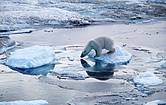
“There are already signs that species such as polar bears are experiencing negative effects as climate change erodes the ice platform on which they rely. These changes are also affecting the peoples of the Arctic whose traditional livelihoods depend on healthy ecosystems.”�

The trend of melting Arctic ice is also alarming for the rest of the world. “The Arctic is a key factor in stabilising the global climate,”� Dr Sommerkorn said.

“Arctic ice is like a mirror, reflecting the sun’s heat back into space. As that ice goes, Arctic waters absorb more heat, adding to global warming. The local warming of the Arctic will also soon release more greenhouse gases from the Arctic that were previously locked in permanently frozen ground. This means there will be two powerful feedbacks from the Arctic affecting the global environment. This is not just an Arctic problem, it is a global problem, and it demands a global response.”�

The governments of the world are currently negotiating a new climate agreement to come into force from 2013 when the first phase of the Kyoto Protocol has ended. Governments must speed up these talks and ensure to agree the new climate deal at the UN Summit in Copenhagen in December 2009, just fifteen months from now, Dr Sommerkorn said.


For further information:Clive Desiré-Tesar, Head of Communications WWF International Arctic Programme
Telephone: +47 9 262 3030, E-mail: ctesar@wwf.no

Monday, September 8, 2008

UN says eat less meat to curb global warming

· Climate expert urges radical shift in diet
· Industry unfairly targeted - farmers

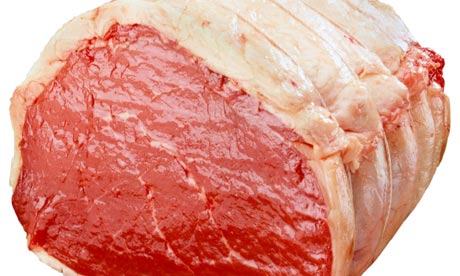
A joint of beef

A joint of beef. Photograph/Alamy

People should have one meat-free day a week if they want to make a personal and effective sacrifice that would help tackle climate change, the world's leading authority on global warming has told The Observer

Dr Rajendra Pachauri, chair of the United Nations Intergovernmental Panel on Climate Change, which last year earned a joint share of the Nobel Peace Prize, said that people should then go on to reduce their meat consumption even further.

His comments are the most controversial advice yet provided by the panel on how individuals can help tackle global warning.

Pachauri, who was re-elected the panel's chairman for a second six-year term last week, said diet change was important because of the huge greenhouse gas emissions and other environmental problems - including habitat destruction - associated with rearing cattle and other animals. It was relatively easy to change eating habits compared to changing means of transport, he said.

The UN's Food and Agriculture Organisation has estimated that meat production accounts for nearly a fifth of global greenhouse gas emissions. These are generated during the production of animal feeds, for example, while ruminants, particularly cows, emit methane, which is 23 times more effective as a global warming agent than carbon dioxide. The agency has also warned that meat consumption is set to double by the middle of the century.

'In terms of immediacy of action and the feasibility of bringing about reductions in a short period of time, it clearly is the most attractive opportunity,' said Pachauri. 'Give up meat for one day [a week] initially, and decrease it from there,' said the Indian economist, who is a vegetarian.

However, he also stressed other changes in lifestyle would help to combat climate change. 'That's what I want to emphasise: we really have to bring about reductions in every sector of the economy.'

Pachauri can expect some vociferous responses from the food industry to his advice, though last night he was given unexpected support by Masterchef presenter and restaurateur John Torode, who is about to publish a new book, John Torode's Beef. 'I have a little bit and enjoy it,' said Torode. 'Too much for any person becomes gluttony. But there's a bigger issue here: where [the meat] comes from. If we all bought British and stopped buying imported food we'd save a huge amount of carbon emissions.'

Tomorrow, Pachauri will speak at an event hosted by animal welfare group Compassion in World Farming, which has calculated that if the average UK household halved meat consumption that would cut emissions more than if car use was cut in half.

The group has called for governments to lead campaigns to reduce meat consumption by 60 per cent by 2020. Campaigners have also pointed out the health benefits of eating less meat. The average person in the UK eats 50g of protein from meat a day, equivalent to a chicken breast and a lamb chop - a relatively low level for rich nations but 25-50 per cent more than World Heath Organisation guidelines.

Professor Robert Watson, the chief scientific adviser for the Department for Environment Food and Rural Affairs, who will also speak at tomorrow's event in London, said government could help educate people about the benefits of eating less meat, but it should not 'regulate'. 'Eating less meat would help, there's no question about that, but there are other things,' Watson said.

However, Chris Lamb, head of marketing for pig industry group BPEX, said the meat industry had been unfairly targeted and was working hard to find out which activities had the biggest environmental impact and reduce those. Some ideas were contradictory, he said - for example, one solution to emissions from livestock was to keep them indoors, but this would damage animal welfare. 'Climate change is a very young science and our view is there are a lot of simplistic solutions being proposed,' he said.

Last year a major report into the environmental impact of meat eating by the Food Climate Research Network at Surrey University claimed livestock generated 8 per cent of UK emissions - but eating some meat was good for the planet because some habitats benefited from grazing. It also said vegetarian diets that included lots of milk, butter and cheese would probably not noticeably reduce emissions because dairy cows are a major source of methane, a potent greenhouse gas released through flatulence.

Antarctic Earthquakes Shake at Glacial Speed

Live Science

/ecosystems/article/38125

Wide rivers of ice, called ice streams, flow through relatively slow-moving polar ice sheets, en route to the sea. Glaciologists had assumed that ice streams just creep steadily along—until one was recently shown to pack a powerful one-two punch, generating seismic waves twice a day.

The seismic signals from Antarctica's 60-mile-wide Whillans Ice Stream are as strong as those of a magnitude-7 earthquake, which could cause major damage in a developed area. But, whereas an earthquake of magnitude 7 might last 10 seconds, the Whillans signals continue for ten minutes or longer. They resemble earthquakes at glacial speed, says Douglas A. Wiens of Washington University in St. Louis.

[Because of the relatively long time over which the slip takes place, scientists standing right on the slipping ice stream feel nothing. In contrast, most rock earthquakes, which can take place in as little as a few seconds, are felt intensely by people in the area.

Video

"Manufactured Landscapes" SEE THIS BRILLIANT MOVIE! You'll never have the same shopping experience again.