Friday, November 23, 2007

The world's first climate change election.

The Australian prime minister, John Howard, has poured scorn on the idea of global warming. But now the trees are dying, the crops are failing and the rivers are drying up. As the country prepares to go to the polls, Julian Glover reports on the world's first climate change election.
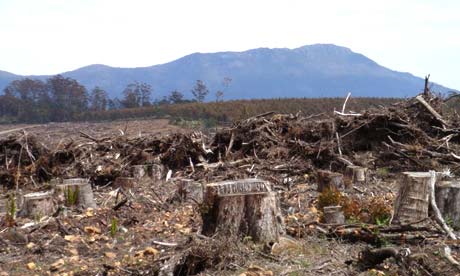
The loggers are moving in on the Tamar valley

The loggers are moving in on the Tamar valley. Photograph: Julian Glover

On an early summer's morning in northern Tasmania, the Tamar valley looks like an Australian slice of Tuscany. There are groves of walnut trees beside white-barked eucalyptus, a lavender farm, apricot orchards and small fields of olives. Vineyards run down to the river and fat black cattle graze the pasture. Yachts are anchored in the winding reaches of the tidal river. The Tamar seems a model of sustainable development - green and welcoming.

Except that the Australian government has just approved the building of one of the world's largest pulp mills in the middle of this scene. A 200-hectare (500-acre) polluting giant by the side of the Tamar river, the factory would accelerate - some say double - the already rapid pace of logging in the mountainous and verdant island state. Turned into woodchip and then exported as chlorine-bleached pulp, much of what remains of Tasmania's native forests may end up as cheap paper for the hungry markets of Asia.

This is not the first time that the island has found itself caught up in environmental conflict. The logging industry has long been a source of controversy as well as local jobs. The successful 1970s campaign to stop a dam being built on the wild Franklin river led to the birth of the world's first Green party. The Bell Bay pulp mill is now part of a much wider public debate over Australia's environmental future that is now shaping the country's politics.

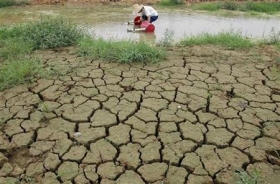
Australia goes to the polls tomorrow in what is arguably a milestone in 21st-century history: the world's first climate-change election. It comes after a five-year drought that has seen some of the country's greatest rivers dry up and crops fail. A land that has grown rich over two centuries on the back of what seemed like unlimited space and resources - and which is booming through the shipping of coal and iron ore to fuel the furnace of China's economy - is confronting a far less comfortable reality of water shortages, failing crops and environmental collapse. But the logic of the new debate is emerging faster than the old politics can catch up. As the 21st-century wind changes, political faces are caught in 20th-century grimaces. There is a disconnect between national arguments and Saturday's election choices.

The story begins with Australia's conservative prime minister, the Liberal leader John Howard, the man who the polls say will be defeated tomorrow night - though Australians know there is a chance that the great survivor could pull off one last victory. His downfall, if it comes, will be symbolic for reasons that run well beyond climate change. An icon of global conservatism, he is the last of the Iraq warriors to seek re-election, after Tony Blair and George Bush. He stood alongside the United States in refusing to sign the 1997 Kyoto agreement. Howard poured scorn on the existence of climate change, though he has now been forced to change his mind. Australians can see for themselves that he was wrong.

"Salt is coming up out of the ground, trees are dying," says Geoffrey Cousins, a well-known Sydney businessman and former adviser to Howard who has now turned his efforts to stopping the pulp mill. "It is quite clear to anyone living in Sydney that rainfall patterns have changed, the pattern of storms is different. There has been a big shift in thinking and the mill became a concrete, readily understandable example of all of this, something we could actually do something about."

Facing Howard is the man who expects to become Australia's prime minister tomorrow night, the Labor party's leader, Kevin Rudd. A clever, bespectacled former bureaucrat from the tropical state of Queensland, he recently used his fluent Mandarin to chat to the Chinese premier Hu Jintao in front of the anglophile Howard - a humiliation that symbolised the way national priorities are shifting to Asia.

Yet Rudd has fought a highly restricted, personalised campaign, aping Howard more than opposing him on most issues. Friends - including Britain's former cabinet minister Alan Milburn - have turned Rudd into a brand: Kevin07. It is very reminiscent of New Labour. Rudd has fought on a handful of issues targeted at working families in suburban seats, especially the changes to employment law that were pushed through by Howard. Such caution has disappointed some supporters. Controversially, Rudd has also backed the construction of the Tasmanian mill - shaken by a Labor defeat in 2004, when the party promised to save the island's native forests in the last week of the campaign, only to be savaged on polling day.

But Rudd has been much bolder on climate change, making it a defining point of difference. He has promised to sign the Kyoto protocol as his first act of government - and the fact that the decade-old agreement is still a live issue in Australia is a sign of how far debate is behind Europe. For a car-addicted nation that was last week named as the world's biggest per-capita emitter of greenhouse gasses - Australians produce 27% more tonnes of carbon dioxide per head than Americans - it would be a significant moment.

"There is no doubt that over the past few years the impact of the drought has been to make voters personally experience what they see as a changing climate," says Lynton Crosby, the pollster and campaign strategist who helped Howard to win four elections in a row and directed the Conservative party campaign in Britain in 2005. "For the first time in 25 years in this country, the environment is an important voting issue." Crosby is no new-generation eco-rebel. That he can see the way the wind is blowing speaks volumes.

By the banks of the Tamar river in Tasmania, winegrower Peter Whish-Wilson has built up the Three Wishes vineyard and is also in no doubt that the climate is changing in politics as well as the skies. "We have had storms come through that we have never seen before," he says. "In the last five years we have broken every single temperature record - highest temperature, lowest, highest rain. Climate change is tangible; we can see it in the country. Farmers are coping with the worst droughts on record.

"The country is learning the hard way. It has always been seen as the lucky country, with a lot of land and resources, but you can't live in a lot of Australia now."

For him, the pulp mill is part of the choice facing Australia: between exploiting its natural resources or managing them. On the road that runs past his farm, huge logging trucks already pass every few minutes, loaded with wood cut from the hills. The scene confronting visitors to the forests is almost apocalyptic. Trees are bulldozed or blown apart with explosives and the ground cleared by fires, started by napalm dropped from helicopters. Any native wildlife that survives is culled by sodium fluoroacetate poison, allowing regimented new saplings to grow - monoculture on an industrial scale.

This, and the sense that the island is in thrall to the power of the giant timber business Gunns, is one reason Howard's Liberal party fears it will lose two key marginal seats in Tasmania tomorrow, on the back of Green party votes redistributed to Labor under Australia's preferential system.

Gunns, the company that wants to build the plant, argues that it will be "the world's greenest pulp mill". Opponents dispute that: they say that its chlorine processes are outdated and will pump dioxins into the fishing grounds of the Bass Strait. They also question the economics: the A$1.7bn (£720m) plant will require state funding and huge bank loans.

The logging company argues that "opponents of the development have resorted to misinformation, scaremongering and false claims". It has not been shy of taking on Tasmania's green movement, and in 2004 launched a multimillion-dollar claim for damages against a group of environmentalists. It is true that, as Gunns say, part of the Tamar valley is already industrialised. There is a metals plant at one end, and a woodchip mill, which will feed the pulp plant. But the planned site is untouched. "If it can happen here, it can happen anywhere. People have got to come to grips with the fact there has got to be a balance," says Whish-Wilson.

The journey from Tasmania to Sydney's eastern suburbs involves a dramatic switch of cultures. In the richest part of the country's largest city, Saabs and Range Rovers crowd narrow streets of Victorian terraced houses and huge glass and stone millionaires' palaces tumble down to the harbourside. There are boutiques and designer coffee bars, the haunt of Australia's pinot grigio classes, as well as Bondi beach and Australia's biggest gay community.

This is the Wentworth constituency of Malcolm Turnbull, the millionaire lawyer who took on the British establishment in the Spycatcher trial and went on to campaign, unsuccessfully, for a republic in a referendum opposed by most Liberals. By saving the monarchy, he said, Howard was "the prime minister who broke Australia's heart". At least until tomorrow, Turnbull is also the environment minister and one of the most striking players in Australian politics - a man of ability and undisguised ambition.

He could hope to replace Howard as Liberal party leader. Instead, Turnbull's political career may be cut short. As environment minister, Turnbull himself led the way in announcing a ban on the sale of tungsten light bulbs, a world first. But his seat ... solidly conservative for more than a century - is at risk after a backlash from voters who oppose the Tasmanian pulp mill. Lampposts across the constituency sport Green party slogans. The Greens expect a record vote in this election, but their vote is not concentrated enough to win seats in parliament. The irony is that if Turnbull is defeated, Labor, which also supports the mill, will win.

The scale of Green activism in Wentworth is one sign of a changing country. Another is the background of the man picked by Labor to fight the Sydney seat that sits next to Turnbull's. Elected as a Labor MP in 2004, and now - like Turnbull - his party's environment spokesman, Peter Garrett is the closest Australia gets to Bono. As the lead singer of Midnight Oil, a rock group that formed the soundtrack to rebellion for a generation of Australians, Garrett used his music to campaign for Aboriginal rights and environmental change.

Now he is accused of being a sell-out in a suit, kept out of the limelight during the election campaign by a party worried that he might frighten voters. In the ferocious TV attack ads allowed by Australian electoral law, he has been repeatedly described by the Howard campaign as one of Labor's "fanatics, extremists and learners" - after a supposed slip when he admitted that Labor's green policies appeared cautious but that "once we get in, we'll just change it all".

Garrett and Turnbull might deny it, but the two Sydney MPs have much in common. Both want to push further on the environment than their parties allow. Both probably privately wish the Tasmanian pulp mill plan would disappear. And both are tall poppies in a political culture that punishes individuality.

Westminster is a model of freethinking compared with Australia's House of Representatives and elected Senate. Rebellion against the party whip is not just frowned upon but banned: any MP who tries it risks expulsion. The result is a form of processed politics that encourages caution and blandness. David Cameron's attempt to modernise the Tories produces puzzled looks from Australian Liberals, still a party of white men sweating slightly in heavy suits and loud striped ties.

Howard himself will soon leave office whether he wins or loses - and he may lose in the most dramatic form possible, since his marginal Sydney seat of Bennelong will swing to Labor if the polls are right. Even if he survives, he faces a fate familiar to Tony Blair. Having long fended off the prime ministerial ambitions of his treasurer Peter Costello, he has been forced by a cabinet revolt to promise to stand down after the election. But Costello is an unconvincing performer with the droopy looks of a fall guy in a New York cop show and a political agenda almost as antique as Howard's.

According to Crosby, "the government is campaigning on the risk associated with change to an inexperienced team". It is a tactic Gordon Brown will surely use in Britain next time - and it might work. But it has allowed the Rudd campaign to set the terms of the debate. The Howard government has proposed an aggressive plan to intervene in Aboriginal affairs. Though it was much-discussed before the campaign, Labor has not challenged its fundamentals. Nor has Australia's presence in Iraq, or the future of the monarchy, caught national attention.

Politicians blame Australia's media culture for the decline in debate, but the fault lies with parties too. They have reduced campaigning to the mechanistic manipulation of numbers - seeking to catch the attention of the sort of disengaged and easily scared wavering voters who do not turn out in Britain but must do so by law in Australia or risk a $20 fine. That leads to turnout of more than 90%, but also crude tactics such as Howard's scare stories over asylum seekers in past elections, and a Liberal leaflet discovered this week that claimed to be from a Muslim group backing suicide bombers and thanking Labor from its support. Howard distanced himself from it quickly.

Labor has also indulged in attention-grabbing: Rudd exposed himself to an interview in which he was asked whether he would win a bar fight against Howard, and who he "might turn gay for". "My wife," he replied - which led the host to ask, not unreasonably, if she was therefore a man.

That demeaning of debate is common to many modern democracies: caught on camera seemingly eating his own earwax, Rudd faced mockery. The British tabloids would surely do the same to Cameron or Brown. Underneath all this there is a serious election trying to escape: it's about a society that is more prosperous than ever, but uncomfortable about the effect of prosperity on the way people live and on the planet's ecosystem.

"The Howard government has degenerated and is purely obsessed with its own re-election," says Lindsay Tanner, the Labor MP for inner-city Melbourne, a seat where the Green party is also strong. He is hopeful that the necessary superficialities of a campaign will not prevent the election of a government that can respond to environmental and social change. "We have been disciplined and focused and kept political attention on critical issues, with climate change and Workchoices employment legislation as the most obvious priorities," he says.

Back in Tasmania, Gunns claim that its timber industry will be part of this sustainable future. If elected, Labor will have to decide if it agrees. It will not have much time to think. Logging of new sections of native forest is set to start on Monday. Work on the pulp mill will begin within weeks.
Thursday, November 22, 2007

Spain hydroelectric reserves cut in half

From: Reuters

/energy/article/25608

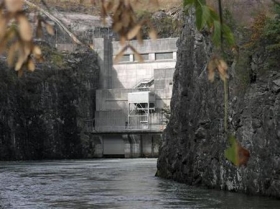
MADRID (Reuters) - Water levels in Spain's hydroelectric reservoirs dropped to under half capacity in the week to Monday night, official data showed, as Spain's dry autumn continued to worry power companies and farmers.

Hydroelectric reservoir levels fell to 49.4 percent from 50.3 percent of capacity a week earlier. As little as four months ago, Spain's hydro reservoirs were more than 80 percent full.

In contrast to normally-rising levels in the autumn, Spain's hydro-reserves have fallen consistently this season and volumes are now nearing multi-year lows hit in 2005/06.

However there was better news from Tuesday as heavy rains fell across much of Andalucia and Galicia and as wide-spread showers forecast for at least the next three days.

Tuesday's level compares to 69.5 percent in the same week in 2006 and a 10-year average of 63.8 percent for the 47th week of the year, the Environment Ministry said.

That means there are 7,594 gigawatt hours (GWh) of electricity available, 184 less than the previous week, and 73.9 percent of capacity available a year ago.

In the last week, power companies have generated 317.9 GWh of hydroelectric power, taking the total so far this year to 24,392 GWh, which is still 27.8 percent more than in the same period last year.

In a good year, some 12 percent of Spain's electricity comes from hydropower, but in dry years like 2005 and 2006, this falls to about 8 percent.

Spain's biggest utility, Iberdrola produced 22.6 percent of its power in Spain from hydro-electricity in the first nine months of the year -- more than any other source.

Drinking water reservoir levels slipped to 38.0 percent from 38.2 percent last week, 39.6 percent in the same week last year and an average 48.3 percent in week 47 over the last 10 years.

(Reporting by Ben Harding; Editing by Chris Johnson)

Water runs dry in rural Tennessee town

From: Reuters
Pu
/ecosystems/article/25603

By Matthew Bigg

ORME, Tennessee (Reuters) - A small town tucked away in the mountains of southern Tennessee is getting by on just a few hours of water a day because its spring has run dry in the drought sweeping the Southeast.

The worst drought to hit the region in decades prompted Georgia to impose water-use restrictions including a ban on outdoor residential watering.

It has also sparked a political battle between Georgia, Alabama and Florida over how to share water from north Georgia's Lake Lanier, which serves cities such as Atlanta as well as industries and a nuclear power plant

But rural Orme with its population of just 140 people has become a symbol of the drought because few other places appear to have been so directly hit.

Each evening, residents wait for Mayor Tony Reames to make the short drive from his home where he keeps chickens up to a water tower on a wooded hill above the town to open a valve.

When the water is flowing families can fill buckets and water jars, do laundry, take showers and wash dishes before the faucets run dry and they wait for the next evening.

Resident Julie Hoover described Orme as a "hideaway" and a "piece of heaven" because it was safe and everyone knew each other but she said the water shortage had created serious problems.

"People don't like change and they don't like losing their water," said Hoover, who started filling up buckets with water draining from an air-conditioner to get water to flush toilets when the spring ran dry in August.

Hoover and her sisters have also taken to cooking one big family meal for all their children to save water, something she said had proved a blessing.

HELP AT HAND

Sporadic water supply is the norm for much of the world's population but for Orme, near the border of Alabama and Georgia, help is at hand. Local businesses and churches donate bottled water, bringing it to the town's one-room fire house for residents to collect.

Orme received a $377,590 grant from the Department of Agriculture plus a further grant of $229,000 to build a water pipe from Bridgeport, Alabama, to the town's water tower, Reames said.

Workmen laying down sections of the bright blue pipe beneath the side of a road leading to the town move closer each day.

A century ago, Orme was a bustling coal mining town with a railroad running down the main street but when the coal industry left, the town declined. Many residents are now elderly and average per capita income is around $15,000, according to government figures.

Reames, 48, said he had spent his whole life in the town, which has two small churches, no school, no shops and no cell phone service.

In the past, a creek and a waterfall fed the town but the creek dried up years ago and the waterfall slowed to a trickle in August, exposing a fissure in the rock that leads down to a big network of caves, residents said.

"Back then you could ride ponies and horses up on the mountains and you didn't need to go half a mile and you would find a stream," Reames said, adding: "A person don't know what they have got till it's gone."

Orme votes mainly Democratic, but the town's water problems had made the 2008 presidential election and other national issues seem less important, according to Reames.

"This (drought) ain't nothing more than a disaster. I ain't saying he (President George W. Bush) shouldn't be giving money to other countries but he has a problem right here."

(Editing by Eddie Evans)

Wednesday, November 21, 2007

Billions of jellyfish wipe out N. Irish salmon farm

CNN
  • Jellyfish came in 10-square-mile, 35-foot deep pack
  • Company boats couldn't make way through jellyfish to rescue salmon
  • Mauve stinger jellyfish normally found in Mediterranean

DUBLIN, Ireland (AP) -- The only salmon farm in Northern Ireland has lost its entire population of more than 100,000 fish, worth $2 million, to a spectacular jellyfish attack, its owners said Wednesday.

art.salmon.afp.gi.jpg

Farm-raised salmon swim in a pen off Norway.

The Northern Salmon Co. Ltd. said billions of jellyfish -- in a dense pack of about 10 square miles and 35 feet deep -- overwhelmed the fish last week in two net pens about a mile off the coast of the Glens of Antrim, north of Belfast.

Managing director John Russell said the company's dozen workers tried to rescue the salmon, but their three boats struggled for hours to push their way through the mass of jellyfish. All the fish were dead or dying from stings and stress by the time the boats reached the pens, he said.

Russell, who previously worked at Scottish salmon farms and took the Northern Ireland job just three days before the attack, said he had never seen anything like it in 30 years in the business.

"It was unprecedented, absolutely amazing. The sea was red with these jellyfish and there was nothing we could do about it, absolutely nothing," he said.

The species of jellyfish responsible, Pelagia nocticula -- popularly known as the mauve stinger -- is noted for its purplish night-time glow and its propensity for terrorizing bathers in the warmer Mediterranean Sea. Until the past decade, the mauve stinger has rarely been spotted so far north in British or Irish waters, and scientists cite this as evidence of global warming.

Russell said the company, which bills its salmon as organic and exports to France, Belgium, Germany and the United States, faces likely closure unless it receives emergency aid from the British government.

"It's a disaster," he said.

Tuesday, November 20, 2007

Solar power on the rise in Africa

Solar power on the rise
The East African, Kenya

By Ayoki Onyango

Installation of solar panels in homes is on the rise following the recent rise in oil prices, which has led to an increase in the cost of electricity.

Jua Moto Systems marketing manager, Mr Prakash Wanzah (left), explains to former Mombasa Mayor, Mr Hamisi Mwidani, how one of their latest solar energy products works. Picture by Ayoki Anyango

Not only is electricity expensive due to a fuel surcharge, but there have also been numerous and unexplained power disconnections, particularly in Nairobi. This has caused a surge in demand for fuel-powered generators, and a growing interest in solar energy.

Mr Prakash Wanzah, the marketing manager of Jua Moto Systems, who sell solar energy systems, says: "The uptake is very high, but there is lack of sensitisation, complete solution providers and service to the rural areas".

Another vendor, Mr Pavin Chukla of Solar Africa, is even more upbeat. "Demand is too much. We used to sell ten pieces of various sizes of solar panels per day. Today we are selling 30 pieces every day," he says.

Products on offer range from solar power packs, solar home light systems, solar concentrating cookers, solar parabolic cookers, wind generators, solar lanterns, solar electric water pumping system, evacuate tube collector, solar water heating system, flat plate water heating systems and solar street lights among others.

According to Mr Leornard Makuli of Solar World East Africa, installation of a solar heating and lighting system for a three-bedroom house in Nairobi costs an estimated Sh230,000 inclusive of Value Added Tax.

This includes two solar panels at Sh51,000 each, two solar batteries at Sh19,500 each, a 20amps charge controller at Sh8,500, electrical connections at Sh18,000, a 1000 watts inverter at Sh4,450, five energy savers at Sh450 each, solar connecting accessories at Sh4,500 and an installation charge of Sh8,500.

Says Chukla of Solar Africa: " the installation of a solar system can cut Kenya Power and Lighting Company bills from say Sh2,000 monthly to about Sh1,300 per month. What you get is more power for less money".

Wanzah says solar power packs are electricity-generating systems that make use of benign solar power to generate electricity cleanly, quietly and without causing any damage to the surrounding environment.

"Such systems are ideal for locations where the main electricity grid is unreliable or inaccessible or the access is prohibitively expensive," he says.

The salient features are clean, silent, eco-friendly sources of power and advanced controls for remote operation and monitoring. "There is little maintenance required as there are no moving parts," say Wanzah.

Further, solar energy offers a stable grid quality output without power fluctuations. "It is easy to install with no recurring fuel costs," he says.

Wanzah says the solar homelight system is a small electricity generating kit that makes use of the benign, clean and non-polluting energy from the sun. It powers appliances like lights, small television sets, fans and radios, adding that the solar homelight system consists of solar modules, deep cycle battery, compact fluorescent lamps and wires and hardware required to set the system up.

The solar home light systems, notes Wanzah, serve as an invaluable source of power in remote places off the national grid. These include communication outposts, forest reserves, campsites, and rural communities among others. It can also be used as a stand –by source during power outages.

The vendors say the rural areas need to be sensitised on the availability of solar energy systems. "When it is sunny like this, you can use solar energy for two to three days without switching on the mains. We need to see more demonstrations and advertising in rural areas," says Chukla.

Jua Moto now intends to introduce solar concentrating cookers and concentrating parabolic cookers. "The solar concentrating cooker is many times more useful that conventional box type solar cookers. The system can thus be used to cook a wide variety of foods, including chapatis, and other traditional preparations that require roasting, frying or baking," insists Wanzah.

The solar concentrating cooker can be easily installed, and can cater to the cooking requirements of 80 to 100 persons in a rural or urban environment. "Solar cookers are easy to install, easy to use and deliver years of trouble free service," says Jua Moto Systems Managing Director, Mr Jayesh Dave.

Solar cookers were introduced to two refugee camps, Kakuma, and Dadaab with relative success. Women were taught how to use the cookers, which are made out of cardboard and foil, and given a portion of food to cook so they did not have to use their own.

According to Mr Daniel Kammen, in the July 1995 issue of Scientific American, the average Kenyan spends about 40 per cent of earned income on fuel, 74 per cent of which is used for cooking. Using solar cookers has the potential to save each family 60 per cent of its fuel wood. Not to mention the benefits of decreased deforestation, which include rebuilding carbon, sinks, providing habitat for animals, and beautifying villages. The United Nations estimates that solar cooking will reduce the felling of trees around villages by 40 per cent.

The solar cookers are not as fast as traditional fires, but they are cleaner and require fewer raw materials. Another disadvantage is that they do not work as well on rainy or cloudy days. However, they do free up a substantial amount of time for women. It is estimated that women spend about five hours every day searching for fuel wood. With solar cookers, that time could be used to care for children or improve.

A solar lantern is a portable source and handy source of light ideal for use both indoors and outdoors. The solar lantern consists of a solar module, sealed maintenance free battery, charge controller, inverter and a compact fluorescent lamp.

The solar lantern uses solar energy to charge a battery inside the lantern. "The high efficiency inverter in the solar lantern uses battery power to operate a 5W or 7W compact fluorescent lamp for between two to six hours," says Wanzah.

Solar Water Pumping Systems are ideal water pumping solution when access to power is not readily available.

Then there are water heaters. Evacuated tube solar water heaters are a product, which is and reliable solution to conserve energy. Evacuated tube solar water heater use the abundant energy of the sun to heat water to temperatures as high as 85C and result in quantum savings in electricity or fuel oil. The abundantly available, free energy from the sun, can be tapped anywhere the evacuated tube collector water heating systems, says Wanzah adding that the systems can be easily installed and integrated with existing water heating systems such as a geysers in houses, steam boilers in industries, or pressurized systems in hotels.

"What is more, the water heating system pays back your investment in two to three years. With an estimated life span of 25 years, this represents excellent value for money," reveals Wanzah. Hot water is available round the clock, with significant energy savings. It is non polluting and environmentally friendly, with an operating life of 25 to 30 years.

Neighbourhood organisations and companies can also explore solar powered outdoor lighting systems, solar streetlights and solar garden lights. The lights can be used in locations where the supply of electricity is erratic or unobtainable.

Solar Streetlights are available in a wide range and can also be custom designed to meet particular service or aesthetic requirement.

Efforts have been made to decrease Kenya’s dependence on hydropower, mainly building diesel based or geothermal based power plants. In July of 1981, Kenya became the first country in Africa to install a geothermal unit. The unit is in Olkaria, near Lake Naivash, which is about 80 km northwest of Nairobi. Fuel oil is also being used to power generators to feed the national grid.

However, solar power has not been as thoroughly explored as hydroelectric and geothermal power in Kenya, but the country stands to benefit from its use because of its equatorial location.

There is a small but growing market for PV systems. Currently, PV cells are restricted to affluent society.

Still, the use of wind and solar energy has remained low, just like in the rest of Africa.

Whereas Egypt and South Africa are slightly advanced than the rest of Africa, they have also failed in providing complete turnkey solutions

"The significance of the carbon credit has not been fully exposed to the developed world. The Government should provide income tax relief to users of renewable energy products," says Prakash.

MIT sees acceleration in US greenhouse emissions

From: Massachusetts Institute of Technology

/pollution/article/25505

CAMBRIDGE, Mass.--U.S. greenhouse gas emissions could grow more quickly in the next 50 years than in the previous half-century, and technological change may cause increased emissions rather than control them, according to a new study by an MIT economist and his colleague.

What's more, technology itself cannot be relied on as the most efficient tool for reducing carbon dioxide (CO2) emissions or solving the global energy crisis, said Professor Emeritus Richard Eckaus of the MIT Department of Economics and his co-author, Ian Sue Wing, of Boston University.

Their paper, "The Implications of the Historical Decline in U.S. Energy Intensity for Long-Run CO2 Emission Projections," was published in the November issue of Energy Policy. In it, the pair portray the changing interplay among technology, energy use and CO2 emissions based on a simulation of the U.S. economy.

"We found that, in spite of increasing energy prices, technological change has not been responsible for much reduction in energy use, and that it may have had the reverse effect," said Eckaus, who with Sue Wing is also affiliated with the Joint Program on the Science and Policy of Climate Change at MIT.

The researchers studied the periods 1958 to 1996 and 1980 to 1996 and projected from 2000 to 2050. Based on their findings from the past 50 years, and adjusting for a more realistic expectation for technological changes, they found that the rates of growth for energy use and emissions may accelerate from the historical rates of 2.2 percent and 1.6 percent, respectively.

"The rates of growth could be higher by a half percent or more, which becomes significant when compounded over 50 years," Eckaus says.

Eckaus acknowledged it has become counter-intuitive to question technology's potential to solve the energy problem. But U.S. steelmaking illustrates how fossil fuel consumption can increase along with technological change: Steelmakers' furnaces are now electrical, reducing coal use at the plant. But coal generates some of the electricity that powers the factory furnace, resulting in more CO2 emissions.

"The net savings in this case comes from the use of scrap steel instead of iron ore, not from new furnace technology," Eckaus said.

"There is no 'a priori' reason to think technology has the potential for reducing energy use while meeting the tests of economics. It's politically unappetizing in the U.S., but in Europe, gas costs six dollars a gallon. Make energy more expensive: People will use less of it," Eckaus said.

A former consultant to the World Bank, Eckaus has been an adviser on economic policy to Egypt, India, Mexico and Portugal, among other countries; he advocates policies to control both energy use and CO2 emissions.

Autumn rain down 90 percent in China rice belt

From: Reuters

/ecosystems/article/25470

BEIJING (Reuters) - Large areas of south China are suffering from serious drought, with water levels on two major rivers in rice-growing provinces dropping to historic lows, state media said on Tuesday.

Rainfall since the beginning of October had dropped by 90 percent in Jiangxi and 86 percent in neighboring Hunan, the country's largest rice-growing province, from average figures, Xinhua news agency said.

Rice is a staple for most Chinese and a crop which needs a constant supply of water

The Gan and Xiang rivers running through the two provinces had seen their lowest water levels in history, Xinhua said. The shallow water has caused a jam of barges in some sections of the Gan.

Authorities had rushed to ensure drinking water supplies in big cities along the rivers and irrigation of fields by diverting water from reservoirs and installing pumps, Xinhua said.

Water levels on China's longest river, the Yangtze, and on the Pearl River in the southern province of Guangdong had also dropped, Xinhua said.

Drought and floods are perennial problems in China where meteorologists have complained about the increased extreme weather, partly blaming it on climate change.

More than 1,100 Chinese were killed during summer floods this year.

But some parts of the south were hit by weeks of scorching heat and drought in the summer, when as much as a third of farmland was damaged and millions of people were short of drinking water.

It was not immediately clear how much damage had been caused to the rice crop.

The China National Grain and Oils Information Centre early this month estimated rice production this year would rise by 2 percent to 186.5 million tons.

(Reporting by Guo Shipeng and Niu Shuping, editing by Nick Macfie)

Brittish PM outlines climate action plan

Gordon Brown
Mr Brown said there were hard choices ahead

Prime Minister Gordon Brown has said there will be a "green hotline" to advise people on what they can do to cut their impact on the environment.

Mr Brown, who said the UK's emission target of a 60% cut by 2050 could be increased to 80%, said he would also seek the end of one-use plastic bags.

He committed Britain to meeting EU targets on boosting renewable energy.

There would be "hard choices and tough decisions" but he said a new low carbon economy could bring thousands of jobs.

The new Green Homes Service - a telephone line, website and advice centres - aims to provide a single point of contact for people who want a "home energy audit".

Home energy

It will also give advice on saving water, reducing waste and other ways to be more environmentally friendly.

Mr Brown said that in 50 of Britain's poorest areas homes would be offered energy efficiency deals, and for those selling or buying energy wasting homes it would offer discounted help.

While the richest countries have caused climate change it is the poorest who are already suffering its effects
Gordon Brown

He said it represented "the biggest improvement in home energy efficiency in our history", with a third of households offered help over the next three years to reduce their emissions.

In his wide-ranging speech, the prime minister said climate change had been the product of many generations, but "overcoming it must be the great project of this generation".

Emissions cap

Mr Brown said: "I believe it will require no less than a fourth technological revolution. In the past the steam engine, the internal combustion engine, the microprocessor transformed not just technology but the way our society has been organised and the way people live.

"Now we're about to embark on a comparable technological transformation to low carbon energy and energy efficiency and this represents an immense challenge to Britain, but it is also an opportunity."

Chimneys billowing smoke
High targets have been set for Britain's cut in emissions

Mr Brown said he wanted Britain to become a "world leader" in building a low carbon economy, which could lead to thousands of new British businesses, hundreds of thousands of new jobs and a "vast export market".

And the prime minister also said he wanted to work with countries like the US and Japan to establish a new "funding framework", to help developing countries adjust to low carbon growth, adapt to climate change and tackle deforestation.

"While the richest countries have caused climate change it is the poorest who are already suffering its effects," Mr Brown said.

Renewable targets

Britain was "absolutely committed to meeting our share" of the EU's 2020 renewable energy target, he said.

It could mean the UK will have to produce between 40 and 50% of its electricity from renewable sources by 2020 - the current figure is about 5%.

BBC environment analyst Roger Harrabin said this would be "staggering", but he said that the government was seeking to negotiate down the EU target.

Until Gordon Brown learns that tough action is needed to back up his warm words, he cannot be the change the country needs
Peter Ainsworth
Conservative Party

Mr Brown said the Climate Change Bill put a "statutory cap" on Britain's carbon emissions - with five year "carbon budgets" to give certainty for businesses and investors.

And he said he wanted the post-2012 agreement, to be discussed at a climate change summit in Bali in December, to include "binding emissions caps" for all developed countries.

The Climate Change Bill would ensure Britain met its target of a 60% reduction in emissions by 2050.

Plastic bags

But he said new evidence suggested developed countries may have to reduce emissions by up to 80% - and he would ask the committee on climate change "to advise us, as it begins to consider the first three five-year budgets, on whether our own domestic target should be tightened up to 80%".

Mr Brown also said the government would convene a forum of supermarkets, the British Retail Consortium and others to look at how to reduce plastic bags to cut landfill waste.

"I am convinced that we can eliminate single-use disposable bags altogether, in favour of long-lasting and more sustainable alternatives," he said.

The government blithely talks of the opportunities created by green industries yet refuses to promote fledgling initiatives properly
Chris Huhne
Liberal Democrats

Shadow environment secretary Peter Ainsworth said Mr Brown's record on the environment consisted of "missing targets, then scrapping them, then cutting the budgets that deal with them".

"Just this weekend, we learnt of a further £300m of crippling cuts to key environmental services.

"Until Gordon Brown learns that tough action is needed to back up his warm words, he cannot be the change the country needs," he said.

Global deal

Liberal Democrat environment spokesman Chris Huhne said he wanted to see whether Mr Brown was prepared to meet promises on renewable energy without counting nuclear power.

And he added: "The government blithely talks of the opportunities created by green industries yet refuses to promote fledgling initiatives properly.

"Boasts of a new green home service seem shallow when recent cuts to the New Millennium Grants will dissuade many homeowners from installing energy saving measures in their homes."

United Nations Secretary General Ban Ki-moon has challenged governments to act on the findings of a major new report on climate change, saying real and affordable ways to deal with the problem existed.

The Intergovernmental Panel on Climate Change says climate change is "unequivocal" and may bring "abrupt and irreversible" impacts.

Climate change will be discussed at a forthcoming summit of Commonwealth leaders, just ahead of a UN meeting in Indonesia where a new global deal on emissions will be considered.

UN scientists urge carbon tax to fight global warming

· Temperatures may rise 6C by 2100, says panel
· Report marks effort to find post-Kyoto consensus

Graphic: How the earth will heat up by 2099 (pdf)

All sources of carbon pollution - from flights to inefficient light bulbs - must become more expensive if the world is to tackle global warming, an influential panel of scientists and government officials will say today.

Putting a price on harmful emissions from goods and services would require a fundamental shift in the world's economy, but "could realise significant mitigation potential in all sectors" according to a report from the UN's Intergovernmental Panel on Climate Change (IPCC).

The report will be launched today in Valencia by Ban Ki-moon, the UN secretary general, and marks the start of an international effort to agree a worldwide treaty to regulate greenhouse gas output.

The IPCC, which won this year's Nobel peace prize jointly with Al Gore, will confirm it is 90% sure that recent global warming is down to human activity, and warn that the impact of future temperature rise will be severe. It will say action to cut emissions is needed in the coming decades to stop global temperatures rising by as much as 6C by 2100, and that most of the technology needed already exists. Even deep cuts in carbon production would have only a marginal effect on economic growth, the IPCC will say.

Today's report comes two weeks before a UN meeting on climate in Bali, when countries will try to map out the timescale and structure of an agreement to replace the Kyoto protocol, the existing treaty which regulates greenhouse gases, when it expires in 2012. Analysts say the post-Kyoto deal needs to be finalised by 2009 for it to start in time.

Today's report combines and summarises three other papers from the IPCC earlier this year, which discussed the science of global warming, its likely impact, and possible ways to tackle the problem. Scientists and officials were still working yesterday on the final wording of the document. "This report is the blueprint for Bali and every country wants their own position represented. They know ... they can't ignore what it says," said one source close to the process.

The IPCC does not recommend specific policies, but a draft summary obtained by the Guardian highlights the introduction of an "effective carbon price signal". It says a carbon price of between $20-$80 (£10-£40) per tonne by 2030 should be enough to limit the expected temperature rise. How such a worldwide price could be introduced will be one focus of the Bali talks. Europe favours cap-and-trade systems, which place a mandatory limit on pollution from countries, companies and even individuals, who must buy the right to pollute more.

Despite reports that the US delegation was unhappy with the report, one of the senior authors told the Guardian yesterday there had been few serious disagreements. The draft report also restores the phrase "dangerous anthropogenic interference with the climate system" which was removed from the key summary chapters of the IPCC reports earlier this year after US protests.

Main points

A draft of today's synthesis report from the UN Intergovernmental Panel on Climate Change presents the challenge in five key areas.

Observed changes Warming of the system is visible in increases in air and sea temperatures, melting snow and ice, and rising sea levels. All regions are getting hotter. The extent of Arctic sea ice is shrinking by 2.7% a decade. More areas are affected by drought.

Causes of change Human greenhouse gas emissions grew by 70% from 1970 to 2004. Carbon dioxide output rose by 80%. Carbon dioxide in the atmosphere is highest for 650,000 years.

Projected change Greenhouse gas emissions are projected to almost double by 2030. Depending on emissions, temperatures to 2100 could increase by 1.1C to 6.4C. With no policies to curb pollution, the most likely increase is 4C. Sea levels could rise 0.18m to 0.59m by 2100. Heatwaves and hurricane strength will increase. Hundreds of millions more will suffer water shortages, up to 30% of species will risk extinction and food production will be hit.

Adaptation and mitigation options There are lots of cost-effective ways to mitigate greenhouse gas emissions using existing technology. An effective carbon price signal from governments could bring significant emission cuts across all sectors.

Monday, November 19, 2007

Bangladesh cyclone death toll passes 3,000

In pictures: Bangladesh assesses cyclone damage

Randeep Ramesh, South Asia correspondent, Owen Bowcott, Haroon Siddique and agencies
Monday November 19, 2007
Guardian Unlimited
Aid poured into Bangladesh today as the death toll from Cyclone Sidr spiralled above 3,000, with fears that thousands more bodies have yet to be found.

The government rapidly deployed naval and military helicopters as rescue workers made their way to outlying areas where entire villages are believed to have been flattened.

Sorties were being flown to the devastated areas, dropping food, drinking water and medicine for the survivors, but they were limited as to where they could land.

The official death toll reached 3,113 today, with 3,322 injured and 1,063 missing, according to Lieutenant Colonel Main Ullah Chowdhury.

However, a government "early warning programme" had saved a vast number of lives, the UN resident coordinator, Renata Dessallien, said. About 1.5 million people on the coast were able to flee to shelters.

Unicef said the cyclone had affected 3.2 million people.

"We are trying to reach all the affected areas on the vast coastline as soon as possible, when we will know how many people exactly have died in the devastation," one government official said.

The UN said it was making available $7m (£3.4m) from its central emergency fund, and the World Food Programme (WFP) was rushing in aid. Britain announced a £2.5m relief package last night, and Washington said two ships would deliver 35 tonnes of non-food aid. The Dhaka foreign ministry said King Saud of Saudi Arabia had announced a $100m grant for the victims and Riyadh would airlift 300 tonnes of food and relief materials.

International aid organisations promised initial packages of $25m in total during a meeting with Bangladesh agencies today, said Emamul Haque, from the Dhaka office of the WFP, which is coordinating international relief efforts.

During his Sunday blessing from the Vatican, Pope Benedict XVI called for "every possible effort to help our brothers who have been so sorely tested".

Cyclone Sidr, which produced winds of 150mph, demolished houses, crops, trees and shrimp farms. Disaster officials put the number of homes destroyed at more than 750,000. Although the main port, Chittagong, was back in operation yesterday, many ships were still missing.

Suman Sengupta, the director of Save the Children in Bangladesh, said he feared the final death toll could be as high as 10,000 to 15,000.

His assessment was based on the widespread extent of disruption caused by floods that have cut off many areas of the country, creating isolated islands.

"A lot of fishermen are not yet accounted for," a London-based spokeswoman for the charity added. "At this stage we simply don't know how many people have been killed. We expect that when communications improve and these isolated areas are contacted, the death toll will rise. It's such a vast area where the roads have been destroyed."

The Bangladesh Red Crescent agreed that thousands more may have died. "Based on our experience in the past, and reports from the scene, the death toll may be as high as 10,000," its chairman, Muhammad Abdur Rob, told Reuters.

"We have seen more bodies floating in the sea," a fisherman, Zakir Hossain, from the south-west of the country, told the Associated Press after reaching shore with two decomposing bodies he and other fishermen had picked up.

In many areas mass graves have been created and grieving families have been begging for clothes to wrap around the bodies for burial.

Aid agencies also warned that floods in the summer had ruined one harvest and the havoc wreaked by the cyclone would compound the country's food situation. It is estimated that at least half the coastal crop was destroyed in a matter of hours.

Another fear was that many areas would be cut off for days. Oxfam said its teams took one and a half days to reach towns that were normally just five hours' drive from the capital, Dhaka.

Heather Blackwell, the head of Oxfam in Bangladesh, said: "There are many villages in remote areas, including on sandbank islands, that are yet to be reached. It could take weeks before we know how bad this cyclone was."

Impoverished, low-lying Bangladesh is battered by cyclones and floods every year. In 1991, more than 130,000 people died in a storm of similar size and strength.

Japan urged to recall whaling fleet

Japan urged to recall whaling fleet


· Humpbacks hunted for first time since 1963
· 'Scientific' hunting claims disputed
· Campaigners accuse fleet of underhand tactics


Justin McCurry in Tokyo
Monday November 19, 2007
Guardian Unlimited


A humpback whale
A humpback whale takes a dive. Photograph: Ormuzd Alves/AP


New Zealand and Australia today called for a Japanese whaling fleet to return to port a day after it set off for the southern ocean whale sanctuary vowing to slaughter more than 1,000 whales.

Among the targets of the hunt, which is being carried out in the name of scientific research, are 50 protected humpbacks.

The demand follows international protest at the fleet's departure yesterday. Britain is one of several other countries to have condemned the expedition, which will see humpbacks killed for the first time since they became a protected species more than 40 years ago.

Helen Clark, the New Zealand prime minister, said the fleet should have stayed at home, and condemned the expedition as commercial whaling in the guise of scientific research.

In a TV interview, Clark said she hoped there would be no repeat of last year's clashes between the whalers and protesters, and indicated that New Zealand was not in a position to assist the Japanese fleet. "It is very difficult for us, as the nearest country with any sort of search and rescue capacity, to offer any help," she said.

"Of course, we don't like the Japanese whaling fleet being down there at all. It would just be better if the Japanese stayed home and didn't come down under the guise, the deception, the claim, that it is scientific whaling when they want to take 1,000 whales."

Under the 1986 International Whaling Commission's ban on commercial whaling, Japan is allowed to hunt whales for scientific research.

Japan says such research is vital to understanding the size of whale populations, the age and reproductive status of the creatures and the effects of environmental damage, but critics denounce it as commercial whaling in disguise. Most of the meat from the scientific hunts is sold to markets and restaurants, and the profits are used to fund future expeditions.

Japan has killed almost 10,500 whales, mainly minkes and Brydes, since the commercial ban was introduced. This year, the fleet expects to catch 835 minke whales and 50 endangered fin whales in its biggest scientific expedition yet. But most international anger is directed at plans to kill humpback whales for the first time since the species was protected in 1963.

Having dwindled to just 1,200 in the 1960s, the humpback population now stands at between 30,000 and 40,000, according to the American Cetacean Society. The species is listed as vulnerable by the World Conservation Union.

Known for their size, complex songs and athleticism, humpbacks are a favourite among the estimated 1.5 million whale-watchers, who watch them make their way along the Australian coast every year.

Alex Dower, the Australian foreign minister, said he was "deeply disappointed" with Japan's decision to go ahead with the hunt.

"The government again appeals to Japan to reconsider its position on this inhumane practice, which is also opposed by the majority of nations," he said.

Robert McClelland, foreign affairs spokesman for the opposition Labour party, suggested the Australian military could be dispatched to track the whalers if, as the polls indicate, Labour takes power in elections this weekend.

"We really need to rattle a cage here," he said. "It's unacceptable that it's not only going on but getting worse."

Britain is also considering making a "high-level diplomatic protest" to Japan, according to the Department for Environment, Food and Rural Affairs.

Anti-whaling campaigners today accused the fleet of using underhand tactics after the vessels, led by the factory ship the Nisshin Maru, left port following a send-off from a brass band and flag-waving supporters.

Greenpeace said it had yet to locate the whaling vessels, which had sailed into international waters under cover of darkness after switching off their automated identification system, preventing other vessels from learning their location.

"They are operating by stealth, and we see that as a demonstration that that they don't want to be seen for what they are," Dave Walsh, a Greenpeace spokesman, told the Guardian from aboard the group's ship the Esperanza. "But we're confident we'll find them."

Walsh said the group would attempt to frustrate the whalers by positioning themselves between the whales and whalers and creating "walls" of water to bock the harpoonists' view of their prey.

"But we are also stepping up our campaign in Japan, because change will start there, not in the southern ocean," he added.

Greenpeace is understood to be seeking legal advice after Japanese officials repeatedly denounced it and other campaigners as terrorists.

In a speech at the weekend, the hunt's leader, Hajime Ishikawa, said: "They are violent environmental terrorists. Their violence is unforgivable ... We must fight against their hypocrisy and lies."

Last year's expedition was marred by clashes on the high seas between the whalers and the Sea Shepherd Conservation Society, which favours direct action.

The hunt was abandoned in February after the Nisshin Maru caught fire, killing a crewman. The current expedition is expected to end in April.

Sunday, November 18, 2007

Destination of 'recycled' electronics may surprise you

CNN
SAN FRANCISCO, California (AP)
-- Most Americans think they're helping the earth when they recycle their old computers, televisions and cell phones. But chances are they're contributing to a global trade in electronic trash that endangers workers and pollutes the environment overseas.
art.electronics.ap.jpg

Discarded electronics pile up at a recycling event Thursday in Bloomington, Minnesota.

While there are no precise figures, activists estimate that 50 to 80 percent of the 300,000 to 400,000 tons of electronics collected for recycling in the U.S. each year ends up overseas. Workers in countries such as China, India and Nigeria then use hammers, gas burners and their bare hands to extract metals, glass and other recyclables, exposing themselves and the environment to a cocktail of toxic chemicals.

"It is being recycled, but it's being recycled in the most horrific way you can imagine," said Jim Puckett of the Basel Action Network, the Seattle-based environmental group that tipped off Hong Kong authorities. "We're preserving our own environment, but contaminating the rest of the world."

The gear most likely to be shipped abroad is collected at free recycling drives, often held each April around Earth Day, recycling industry officials say. The sponsors -- chiefly companies, schools, cities and counties -- often hire the cheapest firms and do not ask enough questions about what becomes of the discarded equipment, the officials say.

Many so-called recyclers simply sell the working units and components, then give or sell the remaining scrap to export brokers.

"There are a lot of people getting away with exporting e-waste," said John Bekiaris, chief executive of San Francisco-based HMR USA Inc., which collects and disposes of unwanted IT equipment from Bay Area businesses. "Anyone who's disposing of their computer equipment really needs to do a thorough inspection of the vendors they use."

Don't Miss

The problem could get worse. Most of the 2 million tons of old electronics discarded annually by Americans goes to U.S. landfills, according to U.S. Environmental Protection Agency data. But a growing number of states are banning such waste from landfills, which could drive more waste into the recycling stream and fuel exports, activists say.

Many brokers claim they are simply exporting used equipment for reuse in poor countries. That's what happened in September, when customs officials in Hong Kong were tipped off by environmentalists and intercepted two freight containers. They cracked the containers open and found hundreds of old computer monitors and televisions discarded by Americans thousands of miles away.

China bans the import of electronic waste, so the containers were sent back to the U.S.

The company that shipped out the containers was Fortune Sky USA, a Cordova, Tennessee-based subsidiary of a Chinese company. General manager Vincent Yu said his company thought it was buying and shipping used computers, not old monitors and televisions, and is trying to get its money back.

Fortune Sky exports used computers and components to China, Malaysia, Vietnam and other Asian countries.

"There's a huge market over there for secondhand computers that we don't use anymore," Yu said. "I don't think it's going to cause any pollution. If the equipment can still be used, then that's good for everybody."

Discarded electronics

  • Most of the 2 million tons of annual discarded U.S. electronics ends up in landfills, says EPA.
  • 50 to 80 percent of the 300,000 to 400,000 tons of U.S. electronics annually gathered for recycling ends up overseas, activists estimate.
  • Hong Kong returned 85 shipping containers of electronic junk, including 20 from the United States.
  • Eight states have passed laws requiring manufacturers to take back and recycle their old electronics.
  • U.S. bars export of monitors and televisions with cathode-ray tubes without permission from the importing country, but federal authorities don't have the resources to check most containers.
  • Yu refused to say where he bought the material, but Basel Action Network tracked it to a San Antonio, Texas, company that collects computers, printers and other electronics from schools and businesses.

    Activists complain that most exporters don't test units to make sure they work before sending them overseas.

    "Reuse is the new excuse. It's the new passport to export," said Puckett of Basel Action Network. "Other countries are facing this glut of exported used equipment under the pretext that it's all going to be reused."

    At the other end at customs, the goods don't always get checked either.

    "It is impossible to stop and check every single container imported into Hong Kong," said Kenneth Chan of Hong Kong's Environmental Protection Department. "Smugglers may also deliberately declare their ... waste as goods."

    In the first nine months of this year, Hong Kong authorities returned 85 containers of electronic junk, including 20 from the U.S.

    Exporting most electronic waste isn't illegal in the United States. The U.S. does bar the export of monitors and televisions with cathode-ray tubes without permission from the importing country, but federal authorities don't have the resources to check most containers.

    The EPA recognizes the problem but doesn't believe that stopping exports is the solution, said Matt Hale, who heads the agency's office of solid waste. Since most electronics are manufactured abroad, it makes sense to recycle them abroad, Hale said.

    "What we need to do is work internationally to upgrade the standards (for recycling) wherever it takes place," he said.

    The EPA is working with environmental groups, recyclers and electronics manufacturers to develop a system to certify companies that recycle electronics responsibly. But so far the various players have not agreed on standards and enforcement.

    Many activists believe the answer lies in requiring electronics makers to take back and recycle their own products. Such laws would encourage manufacturers to make products that are easier to recycle and contain fewer dangerous chemicals, they say.

    Eight states, including five this year, have passed such laws, and companies such as Apple, Dell, Hewlett-Packard and Sony now take back their products at no charge. Some require consumers to mail in their old gear, while others have drop-off centers. HP says it also now designs its equipment with fewer toxic materials and has made it easier to recycle

    Video

    "Manufactured Landscapes" SEE THIS BRILLIANT MOVIE! You'll never have the same shopping experience again.