Democracy Now! http://www.democracynow.org
Environmental Journalist Bill McKibben on the Links Between Global
Warming & the California Wild Fires
"This is the kind of disaster we see more and more of as we begin to
change the basic physics and chemistry of the planet we live on," says
McKibben, who is organizing the Nov. 3 Step It Up National Day of
Climate Action. [includes rush transcript]
What does global warming have to do with the fires raging in Southern
California? More than 500,000 people in San Diego County have been
ordered to evacuate. Over 900 homes have already been destroyed. At
least one person has died in the fires. Another 37 people have been
reported injured, including 17 firefighters. The fires extend from the
Mexican border to Santa Barbara. The most devastating fires were in
San Diego County. Governor Arnold Schwarzenegger has declared a state
of emergency.
* Bill McKibben, leading environmentalist and one of the leading
forces behind Step It Up. In 1989, he wrote the book "The End of
Nature," one of the first books to describe global warming as an
emerging environmental crisis. His latest book is "Fight Global
Warming Now: The Handbook for Taking Action in Your Community."
Related Links: StepItUp2007 RUSH TRANSCRIPT
This transcript is available free of charge. However, donations help
us provide closed captioning for the deaf and hard of hearing on our
TV broadcast. Thank you for your generous contribution.
Donate - $25, $50, $100, more...
AMY GOODMAN: As we continue on this issue of global warming, what does
global warming have to do with the fires raging in Southern
California? More than a half a million people in San Diego County have
been ordered to evacuate. Over 900 homes have been destroyed. At least
one person has died. Another thirty-seven people have been reported
injured, including seventeen firefighters. The fires extend from the
Mexican border to Santa Barbara, the most devastating fires in San
Diego County. Governor Arnold Schwarzenegger has declared a state of
emergency.
Bill McKibben is a leading environmentalist and one of the leading
forces behind Step It Up. In 1989, he wrote the book The End of
Nature, one of the first books to describe global warming as an
emerging environmental crisis. His latest book is called Deep Economy:
The Wealth of Communities and the Durable Future. Bill McKibben,
joining us from Boston, welcome to Democracy Now!
BILL McKIBBEN: Amy, it's good to be with you, as always.
AMY GOODMAN: It's good to have you with us. The fires in Southern
California and global warming, is there a connection?
BILL McKIBBEN: I'm afraid that there is. This is the kind of disaster
that we see more and more of as we begin to change the basic physics
and chemistry of the planet we live on. One of the people leading the
really brave rescue effort out there yesterday said, one of the San
Diego authorities said, this is the driest it's been in at least
ninety years. It's dry because they've had terrific heat and not much
rain. And those are just the conditions for that part of the world
that all the modeling suggests come about when you begin to raise the
temperature.
AMY GOODMAN: I wanted to ask you about Tom Swetnam of the University
of Arizona, one of the ecologists there. He has written about the
connection to global warming. He published a study in the journal
Science, saying global warming has increased temperatures in the West
about one degree, and that's caused four times more fires.
BILL McKIBBEN: This is the problem. Things don't work in a linear
smooth relationship, you know? You raise the temperature a little bit,
and you begin to get very large cascading effects. So, for instance,
across much of the West in Alaska, warmer temperatures have brought
with them infestations of new kinds of insects. Those insects have
killed off hundreds of thousands of square miles of forest. That
forest catches fire once those trees die. All that burning forest
sends yet more carbon into the atmosphere. On and on and on. We see
the same kind of dynamics playing out now with this drought in the
Southeast, with the ongoing drought in the Southwest. And, of course,
the US has been hit less hard by these changes than much of the rest
of the world so far.
What's important to remember and the reason that we spend all our time
organizing now, trying to change all this, is that so far human beings
have raised the temperature of the planet about one degree Fahrenheit.
The computer modeling makes it very clear that before the century is
out, unless we take very strong action, indeed, we're going to raise
the temperature of the planet another five degrees Fahrenheit. So,
take whatever you see now, multiply it by five, and then toss in all
those cascading effects that come, as we exceed one threshold after
another.
AMY GOODMAN: And yet, we hardly see, with the massive coverage of
what's going on in California, which is very significant, these fires
raging in Southern California, the words "global warming" mentioned.
BILL McKIBBEN: Well, it's like Katrina. I mean, the sheer horror of it
in the moment is so enormous that it's hard to focus on causes. That's
why we've got to be building that movement all the time, doing the
kind of stuff that Ted Glick is doing in Washington, doing the kind of
stuff that at stepitup2007.org we're doing all across the country, as
we get ready for our next round of big nationwide protests on November
3rd.
It's only, you know, when we're able to take a step back -- I mean,
you know, the people in California today can't be concentrating on
global warming; they've got to be concentrating on getting people out
of harm's way and fast. My aunt was evacuated yesterday afternoon, and
I'm worried sick about her. But the rest of us can't be in there --
AMY GOODMAN: Where does she live?
BILL McKIBBEN: She lives near San Diego. The rest of us can't be in
there fighting fires, you know? We're thousands of miles away. What we
can be doing is trying to put out, or at least damp down, the big fire
that's causing all these other effects, and that's global warming. And
that can only be done with federal action soon. That's what we're
pushing for on November 3rd.
AMY GOODMAN: I want to go to New Orleans for a minute. You mentioned
Hurricane Katrina. They are experiencing a massive rainstorm, at least
eight inches yesterday. The forecast: it will continue. Mayor Ray
Nagin closed City Hall. They closed the schools. They told people not
to drive in the streets. The waves, they were afraid, would inundate
the buildings that have just been cleaned up from Hurricane Katrina.
That connection?
BILL McKIBBEN: Look, when you raise -- warm air holds more water vapor
than cold air does, right? That means that in arid areas, you get more
evaporation and hence more drought. And we're seeing that around the
world. Once that water is up there in the atmosphere, it's got to come
down someplace. In wet areas or in big storms, we see way more
precipitation. The number of storms that drop more than two inches of
rain in a twenty-four-hour period has grown by something like 25%, the
real gulley washers.
We're -- to call it "global warming" is correct, but almost a
misnomer. What we're really doing is adding immense amounts of energy
to a system, and that energy is expressing itself in all kinds of
ways: more evaporation, more precipitation, higher wind speeds, rapid
melt of ice across the Arctic and across every glacial system that we
know about, on and on and on.
It is -- you know, we used to think that we were still a decade or two
away from the real emergency. That's what we would have said twenty
years ago, when I wrote The End of Nature. Now, we understand, the
modeling makes clear, that the planet was more finely balanced than
we've understood. What we've done so far has been enough to throw
every physical system on earth out of kilter. What we're fighting for
now is not to prevent global warming. There is going to be some global
warming; there already is. What we're fighting for now is to keep that
miserable and difficult century of global warming from turning into an
absolute catastrophe that rewrites the geology and biology of this
planet for eons to come.
AMY GOODMAN: Bill McKibben, in the Southeast, several states are in
the midst of a major drought. As of last week, seventy-one of North
Carolina's hundred counties were in exceptional drought, the federal
government's highest classification. Georgia has declared a state of
emergency, appealed for federal aid. The drought has also affected
large swaths of Alabama, Tennessee, South Carolina?
BILL McKIBBEN: When you increase the temperature, what you're really
doing -- I mean, if I say the temperature has gone up one degree, it
doesn't sound like much, but that masks enormous increases in the
extremes, much longer and stronger heat waves. You know, we keep
having one record warm year after another across this globe. And that
doesn't happen without consequences. The earth is a physical system,
and those inputs start to change the outputs pretty darn dramatically.
AMY GOODMAN: The action that you're planning as one of the lead forces
behind Step It Up on November 3rd, can you talk about what your
demands are? You say the federal government has to take action.
BILL McKIBBEN: Absolutely. We're talking about three things at
stepitup2007.org. One of them is the same call for an 80% reduction in
carbon emissions by 2050 that we called for last spring, when we
organized 1,400 demonstrations in all fifty states. Those
demonstrations were very successful in getting that demand deep into
the agenda. It went from being a kind of radical and fringe idea to
being very much part of the legislative mix that's reflected in what
Congress is thinking about now.
Second demand is that we need an immediate moratorium on new
coal-fired power. No such thing, at least at the moment, as clean
coal; it's dirty where it comes from, and it's dirty when we burn it.
And that -- you know, if we build any significant percentage of the
150 coal-fired power plants now on the books, then the discussion
about dealing with global warming is moot; we will put so much carbon
in the atmosphere that we can't control it.
Third thing, we need to make sure that the big economic transition
that's coming with global warming, with fighting global warming, the
move to a new set of energy sources, doesn't leave behind the same
people that our last economy left behind. So we're stressing very hard
this Green Jobs For All campaign.
What we're trying to do this time is find out which of our politicians
are actually going to become leaders. People who go to the
stepitup2007.org website can use the nifty new invite tool devised by
my colleagues, all of whom are twenty-two and twenty-three and who
actually know how the internet really works, and with this neat tool,
they can easily invite their senators, congressmen and the
presidential candidates to come appear at one of these hundreds of
rallies that will be taking place across the country on November 3rd.
They can find out where in their community people will be gathering to
make their voices heard.
We need a movement as strong, as willing to sacrifice, as morally
urgent, as passionate, as the Civil Rights Movement was a generation
ago. If we don't get it soon -- and we have a real time limit here --
if we don't get it soon, then we're not going to be able to force the
changes that we need over the power of the very strong vested
interests that would like to keep things the way they are, even though
it's now destabilizing the planet in the most powerful and most tragic
ways. Those pictures of that smoke pouring out of those canyons in
California should remind us at the deepest level what's at stake and
what we can do to help right now.
AMY GOODMAN: Bill McKibben, you mentioned Congress. What about the
presidential candidates, the Democratic presidential candidates? What
about the Democrat-led Congress, both the House and the Senate? What
are they doing to deal with this crisis?
BILL McKIBBEN: They're getting closer. They've started. We haven't
done anything about climate change for the twenty years that we've
known about it -- I mean, literally zip, zilch, nothing in Washington.
Finally, this year there's legislation on the table. There's very good
legislation from Senator Bernie Sanders and Representative Henry
Waxman. That bill is being watered down at the moment by Senator
Lieberman of Connecticut and Senator Warner of Virginia. It's a big
fight as to what kind of bill will go through. It may not matter,
unbelievably, at the moment, because President Bush is going to veto
whatever happens. We do need, however, to get the framework for strong
legislation, and then we need to make sure that whoever wins the
presidency really steps up to this challenge. They're all saying --
AMY GOODMAN: What about before? What about before? This is the chance
that constituencies have all over the country to make demands of
candidates, and then afterwards -- I don't want to say "hold their
feet to the fire," given what's happening right now.
BILL McKIBBEN: Well, I think that would be, in fact, an appropriate
and correct thing to say right now. That's what we're trying very hard
to do. Look, the presidential candidates, the Democrats, have so far
mostly said the right things. After our demonstrations on April 14th,
all the leading candidates signed onto this Sanders bill for an 80%
reduction. However, none of them have yet shown that they're
determined to make this the central organizing principle of their
presidency, which it pretty much has got to be.
This is the biggest thing human beings have ever done, and if we don't
get on it right away, none of the other issues will matter. We'll find
out on November 3rd which of these people show up to talk to America
about this question, and we'll find out what they say, whether or not
they're going to go beyond saying the right thing and starting to work
and offering solemn assurance.
AMY GOODMAN: Bill McKibben, we have to leave it there. I want to thank
you for being with us. November 3rd, declared a day against global
warming. They're stepping it up.
www.democracynow.org
Wednesday, October 24, 2007

Tuesday, October 23, 2007
Bee Expert: Insecticides, Climate, Malnutrition, Parasites And Microbes Collapsing Bee Colonies
From: Paul Schaefer, ENN

Davis, California - Noted University of California, Davis honey bee specialist Eric Mussen fingered a line-up of prime suspects in the case of Disappearing Bees. Mussen identified malnutrition, parasitic mites, infectious microbes and insecticide contamination as among the possible culprits. It's a complex issue, he said, but one thing is certain: "It seems unlikely that we will find a specific, new and different reason for why bees are dying.""
One third of our U.S. diet depends on honey bees," Mussen said. "If bees produce fruits and vegetables somewhere else, do we (Americans) want to be as dependent on food as we are on oil?"One-third of America's honey bees vanished this past year due to the mysterious CCD, characterized by almost total hive abandonment. Nearly all adult worker bees unexpectedly fly away from the hive, abandoning the stored honey, pollen, larvae and pupae. Usually they leave in less than a week, and only the queen and a few young workers remain, Mussen said. Colony collapse disorder (CCD), a phenomenon where bees mysteriously abandon their hives, is not a new occurrence, said Mussen. Similar phenomena have been observed since 1869," he said. "It persisted in 1963, 1964 and 1965 and was called Spring Dwindling, Fall Collapse and Autumn Collapse. Then in 1975, it was called Disappearing Disease.
But the disease wasn't what was disappearing," Mussen quipped. "The bees were." Massive bee die-off also occurred during the winter of 2004-05, but only those who read bee journals knew about it, Mussen told the crowd in the campus Activities Recreation Center. The latest die-off caught the attention of the national media last fall when a Pennsylvania beekeeper asked researchers at Pennsylvania State University to look at samples of his dying bees in Pennsylvania and Florida. "The local media picked up the story and the rest is history, including yours truly on the Lehrer Hour." Honey bees normally do not abandon their brood, he said. " Nurse bees" continually feed the young, which increase 1000-fold in size in six days. "That's like an 8-pound baby weighing 4 tons in six days," Mussen said.Mussen, who received the American Association of Professional Apiculturists' excellence award in January for his bee industry leadership and apicultural research publications, and was named the California State Beekeepers' Association's 2006 "Beekeeper of the Year" for his industry-wide contributions, finds the silence of the bees troubling." The real reason bees are important is that we rely on them for crop pollination," he said. Commercial honey bees pollinate about 90 of the country's crops, valued at $15 billion. Bees are especially crucial to California's 600,000 acres of almonds, he said. To pollinate the almonds, growers need 1.2 million bees, "but California doesn't have 1.2 million bees, so they have to be trucked here." That, he said, can add to the bee stress.
Mussen linked malnutrition as a key factor in CCD. Honey bee nutrition is "weather dependent," he said. " The best-fed bees are the healthiest, while malnourished bees are less resistant." Malnutrition and climate-linked issues include:--Did local weather events affect pollen-producing plants negatively?--Was there a lack of bloom (nectar and pollen) due to lack of rain or too much heat?--Was there reduced access to flowers due to excess rain?--Did cold nights interfere with meiosis that led to "sterile" or "non-viable" pollens?--Do these types of pollen contain the usual proteins, vitamins, minerals and lipids required by the bees?
Mussen said that many regions in the United States experienced significant drought in 2006."The U.S. honey crop was off 11 percent, one of the lowest on record. The California crop was off 30 percent; North and South Dakota crops were off nearly 15 and 40 percent respectively." If there's malnutrition in August and September, that adversely affects the winter bees, he said. "A mix of quality pollens is required to rear healthy winter bees." Unlike the California definition based on amount of water in the reservoirs, "The beekeepers' definition of drought is: Is there enough soil moisture to keep the flowers growing? This year there was not." Malnourished bees are more susceptible to disease, predators and insecticides, he pointed out. The Varroa destructor mites, introduced here in 1987 from the Asian bee (Apis cerana), spread across the country in five years, killing the American bee (Apis mellifera), known as the European bee.Compared to fruit flies and mosquitoes, "bees have a limited immune system; they're pretty anemic," he said. Another problem: "Varroa mites have become resistant to most legal chemical controls that used to keep them in check."
Mussen cast suspicion on several viruses as CCD factors: the Kashmir bee virus, acute bee paralysis virus, deformed wing virus, black queen cell virus, and the Israel acute paralysis virus."Honey bees have about 20 known viruses, most of which can cause disease," he said. Some viruses remain latent, just like chicken pox in humans, which can show up as shingles later in life. USDA scientists found the Israeli acute paralysis virus (IAPV), in nearly all of the CCD colonies they tested, but none in the control group. In addition, they found the Kashmir bee virus in all the CCD colonies tested. Also found in all the CCD colonies tested were the infectious microbes Nosema ceranae and Nosema apis. N. ceranae, a relatively new fungal disease of American honey bees, was imported from the Asian honey bee, Apis cerana. N. apis, its American counterpart, has been around for at least a century.
A favorite suspect among the beekeepers is neonicotinoids, chemicals designed to mimic the toxic effects of a neurotoxin from the tobacco family. The nicotine-like insecticide kills fleas on cats and dogs, and is used as a seed treatment and in side dressing and foliar spray applications."The insecticides enter various plant tissues and become distributed, systemically, throughout the plant," he said. "Nicotine is so toxic to humans that if you put a drop of pure nicotine on your finger, you're dead." Neonicotinoids have been formulated to be nearly non-toxic to mammals, birds, and fish but remain extremely toxic to invertebrates. Laboratory studies showed that miniscule doses of neonicotinoids increased the rate of learning in bees, but at high doses, bees failed to respond to training. "It wasn't memory loss; it was intoxication," Mussen said. "They were drunk."
Another suspect: Gaucho® (imidacloprid), used as a seed treatment on sunflowers. Beekeepers claimed that when bees visited sunflowers, they never returned to their hives; "they lost their memory." France and Spain banned imidacloprid, but "bees are still failing in their hives," Mussen noted. Mussen said no scientific documentation exists yet to blame imidacloprid for the bee die-off. A study found only 5 parts per billion (ppb) maximum in the nectar of sunflowers and canola, he said. The Bayer fact sheet indicates that the insecticide is toxic to honey bees at 192 ppb.Among the more "quirky" explanations for CCD: cell phone usage, alien encounters, honey bee "rapture" (where hive populations "ascend to that big honeycomb in the sky en masse"); and chemtrails, aircraft-released vapors."Some thought chemtrails was a military-industrial complex plan to kill all children and old people-and got the bees and birds by mistake," Mussen said. Mussen said he hopes that the current fascination with honey bees will lead to more research and more research funding. "And we need a honey bee toxicologist on the staff of some of our governmental institutions."
During the question and answer period, commercial beekeeper Rich Schubert of the Vacaville-Winters area said that if 5600 dead cows were found in a pasture, instead of 5600 dead bees, people would start paying attention. Mussen agreed. "There's a lot more veterinarians out there than apiculturists," Mussen said.In introducing Mussen, entomology professor and department chair Walter Leal said that "When issues arise with bees and pollination, Eric is one that everyone turns to for insight. He's a tireless advocate of the beekeeping industry nationwide." Mussen received his Ph.D. degree in entomology from the University of Minnesota in 1976 and then joined the UC Davis faculty, based at the Harry Laidlaw Jr. Honey Bee Research Facility.
Massive evacuations ordered as onslaught of fires spreads through Southern California
La Times

Robert Gauthier / Los Angeles Times
Volunteer firefighters from Running Springs try to halt the spead of flames in Green Valley Lake, a community about 12 miles east of Lake Arrowhead.
The number of blazes and their wind-whipped ferocity strain the area's firefighting resources to the limit.
Wind-whipped firestorms destroyed more than 700 homes and businesses in Southern California on Monday, the second day of its onslaught, and more than half a million people in San Diego County were told to evacuate their homes.
The gale-force winds turned hillside canyons into giant blowtorches from Santa Barbara to the Mexican border. Although the worst damage was around San Diego and Lake Arrowhead, dangerous fires also threatened Malibu, parts of Orange and Ventura counties, and the Agua Dulce area near Santa Clarita.
Late Monday night, new blazes were menacing homes near Stevenson Ranch and in Soledad Canyon in northern Los Angeles County. The Soledad Canyon fire burned multiple mobile homes and evacuations were underway, fire officials said.
Gov. Arnold Schwarzenegger, calling it "a tragic time for California," declared a state of emergency in seven counties and redeployed California National Guard members from the border to support firefighters. Schwarzenegger stressed how much California officials have learned since the devastating wildfires of October 2003, which raged over much of the same terrain.
But as the day wore on, it became clear that any hard-earned knowledge was no match for natural forces overrunning the ability of firefighters to control them.
"The issue this time is not preparedness," said San Diego City Council President Scott Peters. "It's that the event is so overwhelming."
Pat Helsing, 59, evacuated her home in the Scripps Ranch area, much as she had done four years ago.
"It seems scarier this time," she said. "The fire is everywhere in San Diego now. You don't know where you can go to escape it."
By late Monday, Southern California fires had burned 269,000 acres -- about 420 square miles -- and destroyed at least 892 buildings. Remarkably, only one person was known to have died, although it was possible that more fatalities would be discovered. At least 37 people had been injured, including 17 firefighters.
Near Malibu, where fire Sunday had burned into the center of town, the focus Monday was in the hills, where firefighters on the ground and in the air were trying to prevent flames from marching across Las Flores Canyon and into Topanga Canyon.
"It's trying to move toward Topanga Canyon, parallel to the coastline," said Manhattan Beach Battalion Chief Frank Chiella, near the Rambla Pacifico area. Firefighters were attempting to stay ahead of the fire and funnel it toward the ocean.
"If you let it get wide, that's a lot more homes it could take out," Chiella said. "We're doing what we can to keep it from getting bigger; we've only lost one home today."
Two fires on opposite sides of Lake Arrowhead had burned about 2,000 acres by Monday evening, destroying 138 buildings and prompting the evacuation of hundreds of residents from mountain resort communities.
In northern Los Angeles County, the Buckweed fire had swept through 35,000 acres by Monday evening, destroying 20 homes and two bridges, and causing the evacuation of about 15,000 people. It was burning toward Magic Mountain, but was partially contained.
In Orange County, where a suspected arson fire stretched the resources of local crews, residents along Calle Cabrillo in Foothill Ranch were packing cars and preparing to evacuate.
"We've been through this before," Karen Royer said. "I believe in God, and I know everything will be good."
Minutes later, a plume of dark smoke lifted over a ridgeline.
"Can I revise that?" she said. "Now I'm scared."
The Orange County blaze, called the Santiago fire, was leaping relentlessly in a southeasterly direction, burning ominously close to the Foothill Ranch and Portola Hill communities. About 500 firefighters and two water-carrying helicopters stood between the fire and hundreds of homes, Battalion Chief Kris Concepcion said.
Several firefighters escaped major injuries when they deployed fire-retardant survival tents as they were overtaken by flames along Santiago Canyon Road
Carbon output rising faster than forecast, says study
· Global warming 'will come sooner and be stronger'
· Chinese growth and loss of natural 'sinks' highlighted
The Guardian, UK
Scientists warned last night that global warming will be "stronger than expected and sooner than expected", after a new analysis showed carbon dioxide is accumulating in the atmosphere much faster than predicted.
Experts said that the rise was down to soaring economic development in China, and a reduction in the amount of carbon pollution soaked up by the world's land and oceans. It also means human emissions will have to be cut more sharply than predicted to avoid the likely effects.
Corinne Le Quere, a climate expert at the University of East Anglia and British Antarctic Survey, who helped conduct the study, said: "It's bad news because the increase in atmospheric carbon dioxide has accelerated since 2000 in a way we did not expect. My biggest worry is people are discouraged by this and do nothing. I hope political leaders will act on this, because we need to do something fast."
The study worsens even the gloomy predictions of this year's report from the Intergovernmental Panel on Climate Change. The IPCC, which shared the Nobel peace prize this month with Al Gore, said there were only eight years left to prevent the worst effects of global warming, by acting to curb emissions.
Dr Le Quere said: "We are emitting far more than anticipated when the IPCC scenarios were drawn up in the late 1990s." Global carbon dioxide emissions from fossil fuel burning has risen by an average 2.9% each year since 2000. During the 1990s the annual rise was 0.7%.
The new study explains abnormally high carbon dioxide measurements highlighted by the Guardian in January. At the time, scientists were puzzled why dozens of measuring stations across the world were showing a CO2 spike for 2006, the fourth year in the last five to show a sharp increase in the greenhouse gas.
Carbon dioxide concentration in the atmosphere is measured in parts per million (ppm); from 1970 to 2000, the concentration rose by about 1.5ppm each year; since 2000 the annual rise has leapt to an average 1.9ppm.
The new study, published in the US journal Proceedings of the National Academy of Sciences (PNAS), says three processes have contributed to this increase: growth in the world economy, heavy use of coal in China, and a weakening of natural "sinks" - forests, seas and soils that absorb carbon.
Pep Canadell, executive director of the Global Carbon Project, which carried out the research, said: "In addition to the growth of global population and wealth, we now know that significant contributions to the growth of atmospheric CO2 arise from the slowdown of natural sinks and the halt to improvements in the carbon intensity of wealth production."
The overall growth of the economy is the only one of the three factors accounted for in scientists' forecasts of climate change, which means the growth in atmospheric CO2 is about 35% larger than they expected. About half of this is down to the Chinese reliance on coal, which has forced up the carbon intensity of the overall world economy since 2000, reversing a trend of increasing energy efficiency since the 1970s. The rest of the rise is explained by the weakening of the natural carbon sinks.
Scientists assume about half of human carbon emissions are reabsorbed into the environment, but computer models predictincreased temperatures will reduce this effect. The PNAS report is the most convincing evidence so far that the global sinks have weakened over the last 50 years, though the large natural variations in carbon exchange between the earth and the atmosphere mean the team can be only 89% certain they have found an effect, short of the usual 95% confidence required to publish scientific findingsMonday, October 22, 2007
Southland wildfires rage
La Times

Carlos Chavez / Los Angeles Times
The Agua Dulce fire reached the edge of Santa Clarita Valley late Sunday evening. The blaze destroyed several homes, including this one on Camp Plenty Road.
There are more than a dozen blazes across seven counties. Flames threaten northern San Diego, forcing 30,000 homes to be evacuated.
Unrestrained fires stoked by gale-force winds moved into northern San Diego this morning, prompting authorities to evacuate more than 30,000 homes and leading to clogged roads in one of more than a dozen fast-moving blazes burning across Southern California."If you see a fire, please evacuate immediately. Don't wait to be told to leave," San Diego Mayor Jerry Sanders said at a news conference this morning. Some evacuated were hundreds of patients at Pomerado Hospital and a nursing home in suburban Poway, officials said.
Qualcomm Stadium and the Del Mar Fairgrounds opened as evacuation centers, and officials made more than 30,000 "reverse 911" calls to tell people to evacuate. Schools throughout the county and at UC San Diego were closed. At least a dozen homes were lost.
"I could see the flames when I was trying to get the cats in the car. I couldn't breathe unless I pressed my face into the car. I'd just take a deep breath and run back into the house to get more things. It was very scary," said Shannon Spilman, 31, who had evacuated to Escondido High School north of San Diego late Sunday night.
Hundreds of people were pouring into the school this morning.
The Witch Creek Fire in the northeast part of the county and the Harris Fire near the Mexican border were burning out of control, just two of the fires that scarred more than 40,000 acres in California from the Mexican border to Santa Barbara County. At least one person was killed and about 20 injured Sunday as hard-pressed firefighters fought against Santa Ana winds.
Winds that mellowed overnight were likely to exceed 60 mph by mid-morning, fire officials said, as they worried whether their resources were stretched too thin. Red-flag conditions, indicating high winds and low humidity, were expected throughout the region.
San Diego County was among the hardest hit, and Interstate 15 was closed south of Escondido. Fire moved south into the city of San Diego through the San Pasqual Valley, heading toward the Wild Animal Park. The animal park evacuated its staff to the San Diego Zoo, and some animals were moved to a fire-resistant hospital on the park property, including California condors, several bird species, some snakes and some smaller mammals. Larger animals were in their open areas.
"There are lots of ponds for the animals to retreat to," said a Wild Animal Park spokesman. The park has fire breaks around its perimeter, and the fire has not entered the park.
The community of Ramona, with about 36,000 people, was evacuated. But officials said they were frustrated that some people were not leaving, forcing agencies to send personnel needed elsewhere.
"The public has to respond better than they are," said San Diego County Sheriff Bill Kolender.
Firefighters targeted the Guejito Fire, burning in Rancho Bernardo, a northern neighborhood of San Diego, near Interstate 15 and Highway 56, said John Langford, a spokesman for San Diego Fire and Rescue Department. The fire started near Santa Ysabel, a small city to the northeast of San Diego, and burned west throughout the night, Langford said.
"It's burning so fast we don't have an acreage" count, he said.
Rancho Bernardo is known for its elderly residents, Langford said. He said the department was focusing on trying to rescue people from homes and alerting people to evacuate to Qualcomm Stadium.
Fewer than 100 firefighters are in reserve to protect the 400-square-mile city of San Diego, Langford said.
"We're stripped down to that," he said. "We have all our forces trying to fight this, everything available."
It was a complaint common among officials throughout the region.
Battling fires on so many fronts was straining local supplies, said Inspector Sam Padilla, a spokesman for the Los Angeles County Fire Department. Firefighters "have had little sleep. Individuals are doing what they can," he said.
Gov. Arnold Schwarzenegger proclaimed a state of emergency in Los Angeles, Orange, Riverside, San Bernardino, San Diego, Santa Barbara and Ventura counties. At least one blaze, the Santiago Fire in Orange County, was believed to be arson, officials said this morning. Two other fires might have been caused by downed power lines.
"We'll be going door to door," said one deputy as he headed off in his cruiser.
More than 1,500 firefighters were battling the blaze in Malibu. On Sunday, helicopters had been especially valuable, dropping retardant. The aircraft were on the ground during the night, but some reconnaissance flights resumed this morning with full aerial attacks expected after daylight.
Los Angeles County Fire Department Capt. Bob Goldman stood this morning on the driveway of Fire Station No. 70 at Carbon Canyon Road and Pacific Coast Highway. Flames headed his way.
"This fire really fooled me. Last night when I went to bed I thought, 'Ah, this fire is just going to punk around on the hillside, it's not particularly active.' But when I woke up this morning, I was shocked. I never thought it would reach my fire station."
Like many fire officials, he said he was worried that the fire was on the verge of moving into nearby Las Flores Canyon, just to the east. The canyon is a designated "trigger point," meaning that if it becomes engulfed in flames, plans call for ordering the evacuation of the 12,000 to 14,000 people who live in Topanga Canyon to the east.
Authorities had gone on fire alert over the weekend as the desert winds began their annual attack on the region. But no one expected the number of the fires that lighted up the area.
There was no immediate cause of the fires, though downed power lines were reported in the Malibu area. An estimated 17,000 homes were without power in the region.
Some of the worst devastation included two beloved landmarks in Malibu. Among the losses this time were Castle Kashan, an ornate, 10,000-square-foot hillside home that loomed over Malibu Lagoon, and the Malibu Presbyterian Church.
In Orange County, a fire that broke out in the area of Silverado Canyon and Santiago Canyon roads quickly swelled Sunday evening and moved toward the Portola Springs and Northwood communities. At 11 p.m., fire officials said they were asking residents to evacuate two of the most endangered neighborhoods. Orange County Fire Authority Chief Chip Prather told a televised news conference that the fire was arson and that officials had identified three points where it began.
The South Coast Air Quality District issued a warning that air quality in portions of Los Angeles County could reach unhealthy levels because of the fires and urged residents to avoid unnecessary outdoor activities in smoky areas.
The Agua Dulce blaze, dubbed the Buckweed fire, began shortly before 1 p.m. Sunday and grew in just a few hours into a dynamo that had charred about 25,000 acres. The fire, which doubled overnight, moved so rapidly that firefighters had to move their command center five times, retreating gradually to Santa Clarita.
According to Henry Rodriguez, public information officer for Los Angeles County Fire Department, the fire is 10% contained but is spreading to the southwest.
Twenty-five homes have burned, and 800 people were evacuated.
"This fire is the No. 1 priority in the state," Rodriguez said.
In Ventura County, crews were battling the Ranch Fire, which started Saturday night in Angeles National Forest about eight miles northeast of Castaic. Early today, it was burning toward Fillmore, where residents were encouraged to evacuate Sunday afternoon. Later Sunday, the evacuation order became mandatory.
In all, the Los Angeles County Sheriff's Department ordered evacuations for more than 1,000 people living in Hasley, Oak, Piru, Dominguez and Lackler canyons.
The fire, which charred about 12,500 acres and destroyed 25 sheds, corrals and other structures, was 10% contained. The cause was unknown.
"On the list of priorities, it's No. 1," said Roger Richcreek, a spokesman for the U.S. Forest Service.
The Forest Service said the fire threatened at least 300 homes as it traveled southwest from Los Angeles County into Ventura County.
Also in Ventura County, the Night Sky fire, which started in the Lexington Community south of Moorpark, threatened some 250 homes and other buildings.
In San Bernardino County, the largest of three brush fires was about 300 acres near the Sierra Lakes subdivision in Fontana.
"That's our wind tunnel for the Santa Anas," said Tracey Martinez of the San Bernardino County Fire Department. Residents of about 500 homes were evacuated and one vacant structure burned, but authorities were hopeful they could head off any other damage.
Times staff writers Bettina Boxall, Molly Hennessy-Fiske, Scott Glover and Mitchell Landsberg contributed to this report.
Sunday, October 21, 2007
Steep decline in oil production brings risk of war and unrest, says new study
· Output peaked in 2006 and will fall 7% a year
· Decline in gas, coal and uranium also predicted
Ashley Seager
The Guardian, UK

Oil platform in the Gulf of Mexico at sunset. Photo: Larry Lee/Corbis
· Decline in gas, coal and uranium also predicted
Ashley Seager
The Guardian, UK
Oil platform in the Gulf of Mexico at sunset. Photo: Larry Lee/Corbis
World oil production has already peaked and will fall by half as soon as 2030, according to a report which also warns that extreme shortages of fossil fuels will lead to wars and social breakdown.
The German-based Energy Watch Group will release its study in London today saying that global oil production peaked in 2006 - much earlier than most experts had expected. The report, which predicts that production will now fall by 7% a year, comes after oil prices set new records almost every day last week, on Friday hitting more than $90 (£44) a barrel.
"The world soon will not be able to produce all the oil it needs as demand is rising while supply is falling. This is a huge problem for the world economy," said Hans-Josef Fell, EWG's founder and the German MP behind the country's successful support system for renewable energy.The report's author, Joerg Schindler, said its most alarming finding was the steep decline in oil production after its peak, which he says is now behind us.
The results are in contrast to projections from the International Energy Agency, which says there is little reason to worry about oil supplies at the moment.
However, the EWG study relies more on actual oil production data which, it says, are more reliable than estimates of reserves still in the ground. The group says official industry estimates put global reserves at about 1.255 gigabarrels - equivalent to 42 years' supply at current consumption rates. But it thinks the figure is only about two thirds of that.
Global oil production is currently about 81m barrels a day - EWG expects that to fall to 39m by 2030. It also predicts significant falls in gas, coal and uranium production as those energy sources are used up.
Britain's oil production peaked in 1999 and has already dropped by half to about 1.6 million barrels a day.
The report presents a bleak view of the future unless a radically different approach is adopted. It quotes the British energy economist David Fleming as saying: "Anticipated supply shortages could lead easily to disturbing scenes of mass unrest as witnessed in Burma this month. For government, industry and the wider public, just muddling through is not an option any more as this situation could spin out of control and turn into a complete meltdown of society."
Mr Schindler comes to a similar conclusion. "The world is at the beginning of a structural change of its economic system. This change will be triggered by declining fossil fuel supplies and will influence almost all aspects of our daily life."
Jeremy Leggett, one of Britain's leading environmentalists and the author of Half Gone, a book about "peak oil" - defined as the moment when maximum production is reached, said that both the UK government and the energy industry were in "institutionalised denial" and that action should have been taken sooner.
"When I was an adviser to government, I proposed that we set up a taskforce to look at how fast the UK could mobilise alternative energy technologies in extremis, come the peak," he said. "Other industry advisers supported that. But the government prefers to sleep on without even doing a contingency study. For those of us who know that premature peak oil is a clear and present danger, it is impossible to understand such complacency."
Mr Fell said that the world had to move quickly towards the massive deployment of renewable energy and to a dramatic increase in energy efficiency, both as a way to combat climate change and to ensure that the lights stayed on. "If we did all this we may not have an energy crisis."
He accused the British government of hypocrisy. "Tony Blair and Gordon Brown have talked a lot about climate change but have not brought in proper policies to drive up the use of renewables," he said. "This is why they are left talking about nuclear and carbon capture and storage. "
Yesterday, a spokesman for the Department of Business and Enterprise said: "Over the next few years global oil production and refining capacity is expected to increase faster than demand. The world's oil resources are sufficient to sustain economic growth for the foreseeable future. The challenge will be to bring these resources to market in a way that ensures sustainable, timely, reliable and affordable supplies of energy."
The German policy, which guarantees above-market payments to producers of renewable power, is being adopted in many countries - but not Britain, where renewables generate about 4% of the country's electricity and 2% of its overall energy needs.
Oceans seen soaking up less CO2
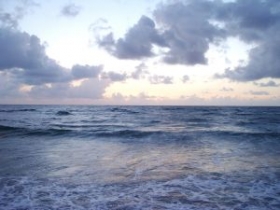
LONDON (Reuters) - The world's oceans appear to be soaking up less carbon dioxide, new environmental research has shown, a development that could speed up global warming.
A 10-year study by researchers from the University of East Anglia has shown that the uptake of CO2 by the North Atlantic ocean halved between the mid-1990s and 2002-2005.
"Such large changes are a tremendous surprise," said Dr Ute Schuster, who will publish the findings with professor Andrew Watson in the Journal of Geophysical Research next month.
"We expected that the uptake would change only slowly because of the ocean's great mass."
There is also evidence of a slowdown in the uptake of CO2 by the Southern ocean, although it is not as great or as sudden as in the North Atlantic.
The scientists based their findings on data collected by merchant ships fitted out with equipment to automatically measure the levels of carbon dioxide in the water.
One ship that sailed between Britain and the West Indies made more than 90,000 measurements in recent years.
The oceans are one of two major carbon "sinks" for CO2 emissions, the other being the land biosphere, which together absorb about half of all CO2 emitted into the atmosphere.
If the oceans soak up less CO2, it means CO2 levels in the atmosphere will rise much faster and the climate could warm more rapidly, the researchers said in a statement.
"The speed and size of the change show that we cannot take for granted the ocean sink for the carbon dioxide," said Watson.
"Perhaps this is partly a natural oscillation or perhaps it is a response to the recent rapid climate warming. In either case we now know that the sink can change quickly and we need to continue to monitor the ocean uptake."
© Reuters2007All rights reserved
Friday, October 19, 2007
Drought stricken Georgia to sue over water

ATLANTA, Georgia (CNN) -- The state of Georgia, stricken by months of drought, confirmed Friday that it will sue the Army Corps of Engineers.

A view of the East Point Reservoir in Lithia Springs, Georgia, in 2006 ...
Georgia Gov. Sonny Perdue had said Wednesday the state would seek an injunction forcing the Corps to stem the flow of water from Lake Lanier, Atlanta's primary water source.
The Corps administers the lake, which supplies most of the water to Georgia's capital and feeds the Chattahoochee River, which winds through three states.
Rainfall in the area is about 15 inches below normal for the year.
Atlanta Mayor Shirley Franklin said, "This is dire, severe, extreme drought."
In the city of Atlanta and surrounding counties, outdoor watering is banned except for a few commercial uses. The state is looking into which businesses would be forced to cut back water use if the drought worsens.

The Army Corps of Engineers says there is about a three-month supply of water left in Lake Lanier, which is 15 feet below its capacity. The corps -- under an agreement reached in the 1980s with U.S. Fish and Wildlife Service, the state and downstream users -- releases 5,000 feet of water per second from the dam between the man-made lake and the river.
The figure was based on a Florida hydroelectric power plant's needs, as well as concern for endangered species in the river, including mussels and sturgeon.
But officials from the U.S. Fish and Wildlife officials told CNN that no one knows exactly what flow is needed to keep the mussels or the sturgeon alive.
Perdue calls the current water flow policy a "nonsensical action."
"We shouldn't have to fight this out in court," Franklin said Thursday. "We don't want to hurt [the cities and businesses] downstream but we'd like to see some middle ground and hope people would join with us."
But even if an agreement is reached soon, the mayor said her city, which has doubled in population since 1980, needs to do a better job of conserving water.
Franklin also admitted that the Atlanta area did little to add to storage facilities during years of recent explosive growth, but says the city has now purchased a stone quarry to be developed into a new reservoir.
Atlanta is spending $4 billion to fix the city's water infrastructure. According to Franklin, 14 percent of the city's pipes, many of which date back to the 1890s, leak. Though the mayor says the percentage of leaky pipes has dropped each of the last six years.
But the remaining repairs will take four to five years and won't address the current crisis. Atlanta may soon have to resort to drastic action like some other Southeastern towns have already taken.
In Siler City, North Carolina, residents and businesses have been ordered to cut water use by 50 percent or face penalties. Many restaurants and schools are serving meals on paper plates so they don't have to wash dishes. Two poultry plants have cut production by one day a week to curtail water use and are also trucking water in for other uses.
The town of Orme, Tennessee, also trucks in water, three times a week -- for everybody.
"We are high and dry," Mayor Tony Ream said.
Meanwhile, Franklin has enacted her own personal measures.
"I've cut the time in the shower," she said. "I don't wait for the water to get hot. I kinda shiver for a few minutes.
Solar power edges towards boom time
From: Gerard Wynn -Reuters

LONDON (Reuters) - Solar power could be the world's number one electricity source by the end of the century, but until now its role has been negligible as producers wait for price parity with fossil fuels, industry leaders say.
Once the choice only of idealists who put the environment before economics, production of solar panels will double both next year and in 2009, according to U.S. investment bank Jefferies Group Inc, driven by government support especially in Germany and Japan.
Similar support in Spain, Italy and Greece is now driving growth in southern Europe as governments turn to the sun as a weapon both against climate change and energy dependence.Subsidies are needed because solar is still more expensive than conventional power sources like coal, but costs are dropping by around 5 percent a year and "grid parity," without subsidies, is already a reality in parts of California.
Very sunny countries could reach that breakeven in five years or so, and even cloudy Britain by 2020.
"At that point you can expect pretty much unbounded growth," General Electric Co's Chief Engineer Jim Lyons told the Jefferies conference in London on Thursday, referring to price parity in sunny parts of the United States by around 2015.
"The solar industry will eventually be bigger than wind."
The United States' second largest company, GE is a big manufacturer of wind turbines and wants to catch up in solar, said Lyons.
CUTTING COSTS
Grid parity is considered vital for freedom from potentially fickle governments for support. Established solar power companies are more optimistic than GE about the timing.
The crux is how fast the industry cuts costs and how fast power prices rise. European power prices neared all-time highs this week, driven by record oil prices.
The industry could halve costs and achieve parity in significant markets including the United States, Japan and parts of southern Europe by 2012, said Erik Thorsen, chief executive of the world's biggest solar power company Renewable Energy Corp
(REC).
"If grid prices go up at the present rate if could happen before," he told Reuters.
REC expects to halve costs on new production by 2010. German solar power company Q-Cells AG, the world's second biggest maker of solar cells, expects similar cuts by making more components itself, thinner than before, and by using cheaper techniques for processing the silicon raw material.
The solar sector has grown at 40 percent per year despite a shortage of silicon, but that bottleneck should ease over the next two to three years, said executives.
But all the growth is from a tiny base. The sun supplies just 0.3 percent of electricity even in market leader Germany, says Jefferies.
"It doesn't even register statistically outside Germany," said Jefferies analyst Michael McNaQuarter of China's carbon emissions due to exports
From: Jeremy Lovell -Reuters
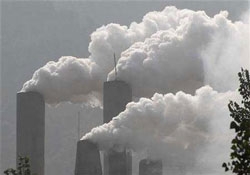
LONDON (Reuters) - One quarter of China's booming emissions of climate warming gases are from its export trade to Europe and the United States, a report said on Friday, calling for a new way of calculating national carbon emissions.
The report for the widely-respected government-funded Tyndall Centre for Climate Change Research by Tao Wang and Jim Watson said the current method of assessing national emissions was unfair to rapidly developing countries.
"A focus on emissions within national borders may miss the point," the report said. "Whilst the nation state is at the heart of most international negotiations and treaties, global trade means that a country's carbon footprint is international."
It said that not only were industrialized countries responsible for most carbon emissions to date, but they also had significant responsibility for driving the rapid growth in emissions from industrializing countries like China.
"Without this demand, China would not have developed so rapidly and its emissions would not have risen so sharply," the report said, proposing that so-called imported carbon be included in national emission calculations.
BALI MEETING
The issue is likely to feature heavily when environment ministers meet in December on the Indonesian island of Bali to try to kickstart negotiations on a successor to the Kyoto Protocol on curbing carbon emissions which only runs to 2012.
The findings echo those of the New Economics Foundation which earlier this month in its "Chinadependence" report accused the developed nations of "carbon laundering" their economies.
It said Britain among others was understating its carbon emissions because it in effect exported its smokestack industries to China in the 1990s and was now importing products it would have been making itself.
"Because of the way that data on carbon emissions gets collected at the international level, this has the effect of 'carbon laundering' economies like those of Britain and the U.S.," said NEF director Andrew Simms.
China has plentiful supplies of coal but precious little other fuel for electricity generation, and is building on average a coal-fired power station every five days to feed its booming economy.
China is poised to overtake the United States as the world's biggest carbon emitter, and Washington insists that Beijing take urgent steps to curb its rising carbon emissions. The United States has not ratified the Kyoto Protocol on global warming.
The Tyndall report noted that the United States is the top destination for Chinese made goods.
It said net Chinese exports -- that is exports minus imports -- accounted for 1.1 billion tons of carbon dioxide or 23 percent of Chinese emissions in 2004.
That was equal to Japan's total CO2 emissions as currently calculated and more than double Britain's, and the figure was surging annually.
Continent-size toxic stew of plastic trash fouling swath of Pacific Ocean
At the start of the Academy Award-winning movie "American Beauty," a character videotapes a plastic grocery bag as it drifts into the air, an event he casts as a symbol of life's unpredictable currents, and declares the romantic moment as a "most beautiful thing."
To the eyes of an oceanographer, the image is pure catastrophe.
In reality, the rogue bag would float into a sewer, follow the storm drain to the ocean, then make its way to the so-called Great Pacific Garbage Patch - a heap of debris floating in the Pacific that's twice the size of Texas, according to marine biologists.
The enormous stew of trash - which consists of 80 percent plastics and weighs some 3.5 million tons, say oceanographers - floats where few people ever travel, in a no-man's land between San Francisco and Hawaii.
Marcus Eriksen, director of research and education at the Algalita Marine Research Foundation in Long Beach, said his group has been monitoring the Garbage Patch for 10 years.
"With the winds blowing in and the currents in the gyre going circular, it's the perfect environment for trapping," Eriksen said. "There's nothing we can do about it now, except do no more harm."
The patch has been growing, along with ocean debris worldwide, tenfold every decade since the 1950s, said Chris Parry, public education program manager with the California Coastal Commission in San Francisco.
Ocean current patterns may keep the flotsam stashed in a part of the world few will ever see, but the majority of its content is generated onshore, according to a report from Greenpeace last year titled "Plastic Debris in the World's Oceans."
The report found that 80 percent of the oceans' litter originated on land. While ships drop the occasional load of shoes or hockey gloves into the waters (sometimes on purpose and illegally), the vast majority of sea garbage begins its journey as onshore trash.
That's what makes a potentially toxic swamp like the Garbage Patch entirely preventable, Parry said.
"At this point, cleaning it up isn't an option," Parry said. "It's just going to get bigger as our reliance on plastics continues. ... The long-term solution is to stop producing as much plastic products at home and change our consumption habits."
Parry said using canvas bags to cart groceries instead of using plastic bags is a good first step; buying foods that aren't wrapped in plastics is another.
After the San Francisco Board of Supervisors banned the use of plastic grocery bags earlier this year with the problem of ocean debris in mind, a slew of state bills were written to limit bag production, said Sarah Christie, a legislative director with the California Coastal Commission.
But many of the bills failed after meeting strong opposition from plastics industry lobbyists, she said.
Meanwhile, the stew in the ocean continues to grow.
The Great Pacific Garbage Patch is particularly dangerous for birds and marine life, said Warner Chabot, vice president of the Ocean Conservancy, an environmental group.
Sea turtles mistake clear plastic bags for jellyfish. Birds swoop down and swallow indigestible shards of plastic. The petroleum-based plastics take decades to break down, and as long as they float on the ocean's surface, they can appear as feeding grounds.
"These animals die because the plastic eventually fills their stomachs," Chabot said. "It doesn't pass, and they literally starve to death."
The Greenpeace report found that at least 267 marine species had suffered from some kind of ingestion or entanglement with marine debris.
Chabot said if environmentalists wanted to remove the ocean dump site, it would take a massive international effort that would cost billions.
But that is unlikely, he added, because no one country is likely to step forward and claim the issue as its own responsibility.
Instead, cleaning up the Great Pacific Garbage Patch is left to the landlubbers.
"What we can do is ban plastic fast food packaging," Chabot said, "or require the substitution of biodegradable materials, increase recycling programs and improve enforcement of litter laws.
"Otherwise, this ever-growing floating continent of trash will be with us for the foreseeable future."
How to help
You can help to limit the ever-growing patch of garbage floating in the Pacific Ocean. Here are some ways to help:
Limit your use of plastics when possible. Plastic doesn't easily degrade and can kill sea life.
Use a reusable bag when shopping. Throwaway bags can easily blow into the ocean.
Take your trash with you when you leave the beach.
Make sure your trash bins are securely closed. Keep all trash in closed bags.
Trash is also a problem in parts of San Francisco Bay. For an interactive map showing some of the worst locations, go to www.savesfbay.org/baytrash.
- Justin Berton jberton@sfchronicle.com
Tuesday, October 16, 2007
Climate Change: Arctic Sea Ice Heading for Rapid Disintegration
Arctic summer sea ice is headed towards rapid disintegration as early as 2013, a century ahead of the International Panel on Climate Change (IPCC) projections, according to 'the Big Melt' (PDF), a new review of recent scientific literature on climate change produced by www.carbonequity.info. We have gone past the tipping point for Arctic sea ice and now we watch the disintegration of the Greenland and the West Antarctic ice sheets which will result in catastrophic changes in sea level of 5 metres or more in the next 100 years.

arctic_seaice_extent_2007...
These changes are happening at much lower average temperature rises than predicted. The rapid loss of Arctic sea ice will speed up the disintegration of the Greenland ice sheet. Scientists are still arguing over the impact on the thermo-haline circulation or the Great Ocean Conveyor belt that transports heat in the oceans around the world from the Pacific to the North Atlantic and back. This great current has already slowed by a third by some measurements. The release of vast amounts of fresh water from the Greenland Ice cap may cause the current to stop for a period or produce another climate tipping point that will heavily impact the climate of east coast North America and Northern Europe.
"Every now and then enough fresh water goes into the North Atlantic that it actually stops its circulation," Dr Timothy Burrows said "And when that happens Europe cools dramatically," he said. Dr Burrows, a paleoclimatologist at the Australian National University, made these remarks in an article just published in Science journal detailing that Australia may not be affected as much as northern hemisphere countries if and when the next Ice Age hits. "The way our world works, we actually transport heat from the southern hemisphere into the north, because of this ocean conveyer belt," he said. "And when you stop that, the heat doesn't have anywhere to go and it accumulates in the southern hemisphere." he was reported the Sydney Morning Herald.
The disintegration of the Arctic Sea Ice will also curtail polar bear populations, presently numbering about 22,000. Polar bears rely on sea ice to live and hunt for their prey. Reports prepared for the US Geological Survey and released in September 2007 say that two-thirds the world's polar bears could be threatened with extinction by 2050. If Summer sea ice vanishes on a quicker timetable, so will the polar bear, the largest of the carnivorous mammals.
With the reduction in the sea ice extent, there is increasing activity to explore and later exploit the oil and mineral resources under the arctic sea. One study has estimated that a quarter of the world’s oil and gas reserves might be found in the region, as well as significant deposits of other mineral riches. So the rush is on for claims by the five countries with territory inside the Arctic Circle – Russia, the US, Norway, Denmark and Canada. Use of the Northwest passage for a short route for shipping from the Atlantic to Asia is also in dispute with Canada asserting it has a right to control, regulate and tax shipping. America and the European Union say the passage is an international strait and that all foreign ships have the right of "transit passage." But it will probably be sometime before commercial shipping lines judge the cost benefit is greater than the increased risk.
Carbon Dioxide Growing more Rapidly than Business As Usual Projections
Carbon dioxide emissions are now growing more rapidly than "business as usual", and at a much greater rate than the more pessimistic forecasts in IPCC scenarios. The US and Australia are still refraining from signing the Kyoto protocol and setting minimal progressive targets for greenhouse gas reduction. At the recent APEC meeting in Sydney a Climate Declaration was signed which only had non-binding aspirational targets.
Sea level rise already affects people such as the Carteret Islanders forced to evacuate their homes. (Listen to them on this video by Pip Starr). On the impact of sea level rise the report states that
"one-quarter of Bangladesh’s population (~35 million people) lives within the coastal floodplain. Many of the world’s major cities (22 of the top 50) are at risk of flooding from coastal surges, including Tokyo, Shanghai, Hong Kong, Mumbai, Calcutta, Karachi, Buenos Aires, St Petersburg, New York, Miami and London. In almost every case, the city relies on costly flood defences for protection. Even if protected, these cities would lie below sea level with a residual risk of flooding like New Orleans today. The homes of tens of millions more people are likely to be affected by flooding from coastal storm surges with rising sea levels. People in South and East Asia will be most vulnerable, along with those living on the coast of Africa and on small islands" (Stern, 2006b). A rise of 5 metres would affect 669 million people and 2 million square kilometres of land of land would be lost (Kahn, 2007)."
Rising sea levels will also impact underground freshwater acquirfers which more than 2 billion people depend on. These acquifers will become contaminated by the salt water producing a crisis in drinking water in cities such as Shanghai, Manila, Jakarta, Bangkok, Kolkata, Mumbai, Karachi, Lagos, Buenos Aires and Lima. "The water supplies of dozens of major cities around the world are at risk from a previously ignored aspect of global warming. Within the next few decades rising sea levels will pollute underground water reserves with salt... Long before the rising tides flood coastal cities, salt water will invade the porous rocks that hold fresh water... The problem will be compounded by sinking water tables due to low rainfall, also caused by climate change, and rising water usage by the world's growing and increasingly urbanised population" (Pearce, 2006a).
If you want to see the impact of sea level rise on coastal geography visit http://flood.firetree.net/ for a Google earth mashup showing what a 1m to 14 m rise in sea level might do.
Scientific reticence and Diplomatic and political conservatism
The IPCC reports, have suffered from a scientific and diplomatic reticence and conservatism which has under-estimated the extent, impact and speed of climate change. The report quotes Barry Pittock, an Australian CSIRO scientist on the limitations of the IPCC process:
"Vested interests harboured by countries heavily reliant on fossil fuels for industry and development, or for export, lead to pressure to remove worst case estimates; scientists... tend to focus on “best estimates”, which they consider most likely, rather than worst cases that may be serious but which have only a small probability of occurrence; many scientists prefer to focus on numerical results from models, and are uncomfortable with estimates based on known but presently unquantified mechanisms; and due to the long (four-year) process of several rounds of drafting and peer and government review, an early cut-off date is set for cited publications" (often a year before the reports appear)."
The report heavily criticise the IPCC process saying "The data surveyed suggests strongly that in many key areas the IPCC process has been so deficient as to be an unreliable and indeed a misleading basis for policy-making." and that "The primary assumptions on which climate policy is based need to be re-interrogated."
"Take just one example: the most fundamental and widely supported tenet — that 2°C represents a reasonable maximum target if we are to avoid dangerous climate change — can no longer be defended. Today at less than a 1°C rise the Arctic sea ice is headed for very rapid disintegration, in all likelihood triggering the irreversible loss of the Greenland ice sheet and catastrophic sea level increases. Many species are on the precipice, climate-change-induced drought or changing monsoon patterns are sweeping every continent, the carbon sinks are losing capacity and the seas are acidifying."
The report urges in the conclusion that "The simple imperative is for us to very rapidly decarbonise the world economy and to put in place the means to draw down the existing excess CO2 levels. We must choose targets and take actions that can actually solve the problem in a timely way. It is too late not to be honest with ourselves and our fellow citizens."
This report does not propose solutions, although elsewhere on carbonequity.info you can find discussion and proposals for carbon rationing, carbon taxes, and links to articles on increasing energy efficiency and renewable energy. What it does advocate is that political leaders need to make the hard decisions now to set binding targets on climate emissions and set in place the essential regulatory framework and infrastructure for a carbon neutral society, and establish a system where atmospheric carbon is reduced to stand a reasonable chance of limiting impacts on society.
If you don't believe we are facing a climate disaster, then read the report, and its extensive scientific references.
Source:
- 'the Big Melt' (PDF), a new review of recent scientific literature on climate change produced by www.carbonequity.info. Published 6 October 2007.
- Sydney Morning Herald October 5, 2007 - Ice ages affect Australia less: expert. See also ABC radio, The World Today October 5, 2007 - New ice age might not affect Australia: research
- Mongabay.com September 7, 2007 - Two-thirds of polar bears at risk of extinction by 2050
- Ethical Corporation, October 5, 2007 - Politics: Polar resources – The next cold war See also Energy Bulletin, October 10, 2007 An oil & gas Shangri-la in the Arctic?
- The New York Sun October 11, 2007 - Northwest Passage Open for Business - Strife Looms Between U.S., Canada
- NASA - Record Arctic Sea Ice Loss in 2007
- NASA 15 May 2007 - NASA Finds Vast Regions of West Antarctica Melted in Recent Past
- NASA 20 September 2007 - NASA Researchers Find Snowmelt in Antarctica Creeping Inland
Subscribe to:
Posts (Atom)
