Thursday, September 20, 2007

Biofuels worsen Hungary's drought, expert says

From: Andras Gergely -Reuters

BUDAPEST (Reuters) - Biofuel production and burning agricultural by-products in power plants contributed to Hungary's severe drought this year, an academic expert said on Thursday.

Drought slashed Hungary's maize crop by half this year but dry weather would have less impact on crops if farmers left the plants' stalks and straw on the fields as protection from the sun and evaporation, instead of selling it as biomass.

"There is plenty of biomass out there to burn and lots of fallow land to grow energy crops," Szent Istvan University professor Marta Birkas told a farming conference.

"I caution everyone not to sell straw and stalks to power plants," she said. "The soil needs it as a protection from drought."

Biofuel makers turn grains and oil seeds into gasoline and many burn farm byproducts to meet the often high energy needs of their plants for processes like fermentation.

Biofuels are touted as a way to reduce the emission of greenhouse gases which contribute to global warming, but Birkas said biofuel production was now adding to the problems caused by extreme weather which many blame on climate change.

Wrong farming methods, especially careless ploughing, also reduces the soil's ability to store water efficiently, she said.

Ministry officials said Hungary would invest heavily in farm machinery and irrigation to address these problems as drought was becoming more frequent, hitting the major grain growing country for the fourth time in 10 years.

"Soil dryness has several causes, both lack of precipitation and wrong agricultural techniques," Agriculture Minister Jozsef Graf told Reuters.

Hungary needs to raise its irrigated area by at least 100,000 ha from about 80,000 hay, another official said.

This year's drought is expected to cut the maize crop by half to 4 million tones and Hungary has started buying back grain left in European Union stores from previous bumper seasons to sell to animal breeders short of feed.

Arctic vault takes shape for world food crops

From: John Acher -Reuter

LONGYEARBYEN, Svalbard (Reuters) - In a cavern under a remote Arctic mountain, Norway will soon begin squirreling away the world's crop seeds in case of disaster.

Dynamited out of a mountainside on Spitsbergen island around 1,000 km (600 miles) from the North Pole, the store has been called a doomsday vault or a Noah's Ark of the plant kingdom.

It is the brainchild of a soft-spoken academic from Tennessee who is passionate about securing food for the masses, and will back up seed stores around the world that are vulnerable to loss through war or disaster.

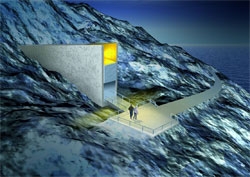
A 20-metre (66-foot) long concrete entrance, still under scaffolding, juts out of the snow-dusted mountain above the coal-mining town of Longyearbyen.

It is reached by a switchback road rising to 120 meters above sea level, offering spectacular views of the fjord below and snow-capped Arctic mountains beyond.

Visitors descend through the mouth of a gently sloping 40-metre steel tube into the frosty cavern which smells of new cement and is dotted with portable lamps as work progresses for February's opening.

"There aren't going to be any better storage conditions than what we will provide here," founder Cary Fowler told reporters during a recent visit to the site in the Svalbard archipelago off northern Norway. "This is a safety deposit box, like in a bank, where you put your valuables."

Although this is one of the world's most northerly settlements, an electric freezer will be used to keep the seeds in the three-chambered concrete-lined vault at minus 18 degrees Celsius (minus 0.4 Fahrenheit).

If the power fails, permafrost will still keep them frozen, but not as deeply.

The project is at the heart of an effort by Fowler's foundation, the Global Crop Diversity Trust, to safeguard strains of 21 essential crops, such as wheat, barley and rice.

Rice alone exists in about 120,000 different varieties.

Ultimately, it is part of the world battle against hunger, as crop insecurity mainly hurts poor nations.

"Crops important to the poorest of the poor have really been neglected," said Roy Steiner, an official at the Bill and Melinda Gates Foundation, which has provided financial support.

"Millet and crops like cow pea receive so little attention."

Fowler calls such varieties "orphan crops" because they have no one to take care of them.

DIVERSITY FOR EVOLUTION

The aim is to preserve genetic diversity, needed by plant breeders in the future to produce varieties able to adapt to challenges like climate change.

Crops consist of numerous species, some as different from each other as a "Dachshund from a Great Dane", Fowler said.

If such a store had existed 10 years ago, he said, the seeds would have been needed about once a year as seed collections have been wiped out -- for instance by a typhoon in the Philippines and war in Iraq and Afghanistan.

"I'm sorry to say we will be using it a lot," Fowler said.

Eventually, the vault will have capacity for around 4.5 million bar-coded seed samples and it hopes in its first year to collect half a million.

Not all seeds can be stored by freezing. Banana, the world's fourth or fifth most valuable crop, is one example.

"The longest viability under these conditions would be that of sorghum -- about 19,500 years," Fowler said. Other varieties will need to be replaced more frequently.

"We're trying to capture the diversity not just between different species but within different species -- that's the basis for evolution," said Fowler, an official of the U.N. Food and Agriculture Organization but his own boss at the Trust.

"Extinction happens when a species loses the ability to evolve."

SEED PACKETS

Norway is contributing some 50 million crowns ($8.6 million) to build the cavern, a sum which Development Aid Minister Erik Solheim said was a pittance for what is gained.

"I consider it a development issue ... Poor African countries have fewer resources to protect their genetic heritage than rich countries," he told Reuters at the site.

The Gates Foundation, the philanthropic giant created by the founder of Microsoft, has given a $30 million grant to Fowler's effort, including money for packaging seeds in their countries of origin and shipping them to the vault.

Some of Gates' money has gone to develop a new style of seed packet, a small silver-colored pouch made of a special foil and layers of other advanced materials to keep seeds dry and frozen -- the "Rolls Royce of seed packets", Fowler said.

The Gates Foundation is also helping develop two software systems, one to help manage seed banks and another to link them globally so that plant breeders can find what is available.

"Seeds are almost the software of the natural world that has taken millions of years to develop, and we don't know how we will need them in the future," the foundation's Steiner said.

Wednesday, September 19, 2007

Scientists in first global study of 'poison' gas in the atmosphere

From: University of York
Published September 19, 2007 10:41 AM

It was used as a chemical weapon in the trenches in the First World War, but nearly a century later, new research by an international team of scientists has discovered that phosgene is present in significant quantities in the atmosphere.

Phosgene was still stockpiled in military arsenals well after the Second World War, but its continued presence in the atmosphere today is due to man-made chlorinated hydrocarbons used in the chemical industry.

A team, including Professor Peter Bernath, of the Department of Chemistry at the University of York, has carried out the first study of the global distribution of the gas. The team also involved scientists from the Universities of Waterloo and Toronto in Canada, NASA’s Jet Propulsion Laboratory and the New Mexico Institute of Mining and Technology in the USA.

Between February 2004 and May 2006, they used the Canadian Atmospheric Chemistry Experiment (ACE) satellite to measure the incidence of the gas. The research, which was financed by the Canada Space Agency (CSA) and the Natural Sciences and Engineering Research Council of Canada, is published in the latest edition of Geophysical Research Letters.

The scientists discovered that the main atmospheric concentration of the gas was above the Equator, though it was present in some quantity in all latitudes. They found that levels of phosgene in the atmosphere had reduced since previous studies in the 1980s and 1990s, though its continued presence is a contributor to ozone depletion.

Phosgene plays a major role in the preparation of pharmaceuticals, herbicides, insecticides, synthetic foams, resins and polymers, though its use is being reduced.

Professor Bernath said: "There is a small, but not negligible, concentration of phosgene in the troposphere. Chlorinated hydrocarbons don't occur in nature but as chlorinated solvents they are used by industry. They are short-lived and they decay rapidly, but they decay into phosgene.

"It's very toxic and pretty nasty stuff - its reputation is well deserved. Considering the health hazards associated with phosgene, the chemical industry is trying to find substitutes to eliminate its use. But the use of chlorinated hydrocarbons is being reduced because of the legal restrictions of the Montreal Protocol, so phosgene is also decreasing."

Higher up in the atmosphere phosgene can be slowly oxidized by ultraviolet rays, and so it continues to play a role in the depletion of the ozone layer.

Next in Sci/tech: Lonliness, A Molecule

China Faltering On Support For Solar Power: Report

From: Reuters

BEIJING - Solar panels could generate over 10 percent of China's power by the middle of the century, but only if Beijing steps up support for pioneering generating plants and sets more ambitious targets, a report said on Wednesday.

Although it is the world's No. 3 producer of photovoltaic (PV) cells that convert sunlight into electricity, China sends 90 percent of its output abroad because it is too expensive for domestic use, according to the report launched by Greenpeace, the Chinese Renewable Energy Industry Association (CREIA) and WWF.

High PV cell prices and low power tariffs mean the cells that do stay in China are mainly used for rural areas, communications, and in industry, rather than for large generating plants linked into national grids -- the main users in other countries and the key to large-scale solar generation.

Beijing aims to boost the portion of its power that comes from renewable energy, and has set out what it says are ambitious targets for the next two decades, aiming for 15 percent of energy to come from non-fossil fuel sources by 2020.

But the report says government solar energy targets are not very challenging, and supportive policies that look good on paper are not being properly implemented, the report added.

With strong government support, China could be generating an estimated 1,300 terawatt hours of solar power a year by 2050, of a total 10,000 TWh used nationwide, it added.

But currently around a dozen pilot plants with capacity of up 1 MW, which should be getting preferential prices, are not even able to link up with transmission networks.

"In no case has a feed-in tariff, calculated according to reasonable costs plus reasonable profits, been implemented, and no PV power system has as yet been permitted by grid companies to connect," the report said.

The report predicts that solar power prices will match conventional power prices by 2030, when installed capacity could be up to 100 GW with strong government support -- or one-sixth of the country's total generating ability at present.

But without support through the years when it cannot compete on price alone, solar will be just one-tenth that potential level, a still impressive 10 GW but far from enough to make a dent in China's energy-related pollution problems or to contribute to its energy security.

"Market supportive mechanisms create incentives to technological innovation and industry development," Li Junfeng, CREIA General Secretary, said at the report's launch.

"The lack of a strong domestic market could limit the potential of the Chinese solar PV industry in the long term."

China at least does not lack the raw material for solar power. About 96 percent of the country gets "abundant" sunlight, the report said, with more light potential than industry leaders Japan and Europe.

Many of the sunniest areas are also sparsely populated, lowering the prospects for potential disputes over land use.

"Unusual" storm haults ferry in Bay Area

(09-19) 08:55 PDT alameda -- (09-19) 09:59 PDT ALAMEDA - An unusual storm sweeping the state is bringing cooler temperatures and high winds to the Bay Area, prompting the Alameda Harbor Bay Ferry to cancel ferry service today between the East Bay and San Francisco.

Spokesman Ernest Sanchez said officials expect to be able to resume service Thursday on the commuter ferry, which runs from Alameda's Harbor Bay Island to the Ferry Plaza in San Francisco.

"Assuming the winds calm down, sure," he said. "We would come back tonight if the winds die down, but I see that weather forecast is calling for high winds."

Sanchez said it is up to the ferry captain to determine when weather conditions are too dangerous for passengers.

A storm system from the northwest will bring strong winds and the possibility of showers to the Bay Area and snow in the Sierra over the next day or so, said National Weather Service forecaster Matt Mehle.

Winds are expected to be 20 to 30 mph today with gusts up to 45 mph, Mehle said. The weather service has already measured gusts as high as 35 mph on several buoys just off the coast, he said.

Temperatures in the Bay Area are unlikely to get out of the 60s today.

"What's going on is we have a pretty potent storm system pushing in from the north, bringing cold air and also creating scattered showers and strong winds across much of the area," Mehle said. "The strongest winds are going to be along the immediate coast ... and will peak later today and into tonight, then die off tomorrow.

"This system is somewhat unusual this time of year," Mehle said. "It's more like a winter storm. This is from the Pacific Northwest ... and it's a pretty big system."

E-mail Marisa Lagos at mlagos@sfchronicle.com.

'Too late to avoid global warming,' say scientists

By Cahal Milmo

The Independent, UK

A rise of two degrees centigrade in global temperatures – the point considered to be the threshold for catastrophic climate change which will expose millions to drought, hunger and flooding – is now "very unlikely" to be avoided, the world's leading climate scientists said yesterday.

The latest study from the United Nation's Intergovernmental Panel on Climate Change (IPCC) put the inevitability of drastic global warming in the starkest terms yet, stating that major impacts on parts of the world – in particular Africa, Asian river deltas, low-lying islands and the Arctic – are unavoidable and the focus must be on adapting life to survive the most devastating changes.

For more than a decade, EU countries led by Britain have set a rise of two degrees centigrade or less in global temperatures above pre-industrial levels as the benchmark after which the effects of climate become devastating, with crop failures, water shortages, sea-level rises, species extinctions and increased disease.

Two years ago, an authoritative study predicted there could be as little as 10 years before this "tipping point" for global warming was reached, adding a rise of 0.8 degrees had already been reached with further rises already locked in because of the time lag in the way carbon dioxide – the principal greenhouse gas – is absorbed into the atmosphere.

The IPCC said yesterday that the effects of this rise are being felt sooner than anticipated with the poorest countries and the poorest people set to suffer the worst of shifts in rainfall patterns, temperature rises and the viability of agriculture across much of the developing world.

In its latest assessment of the progress of climate change, the body said: "If warming is not kept below two degrees centigrade, which will require the strongest mitigation efforts, and currently looks very unlikely to be achieved, the substantial global impacts will occur, such as species extinctions, and millions of people at risk from drought, hunger, flooding."

Under the scale of risk used by IPCC, the words "very unlikely" mean there is just a one to 10 per cent chance of limiting the global temperature rise to two degrees centigrade or less.

Professor Martin Parry, a senior Met Office scientist and co-chairman of the IPCC committee which produced the report, said he believed it would now be "very difficult" to achieve the target and that governments need to combine efforts to "mitigate" climate change by reducing CO2 emissions with "adaptation" to tackle active consequences such as crop failure and flooding.

Speaking at the Royal Geographical Society, he said: "Ten years ago we were talking about these impacts affecting our children and our grandchildren. Now it is happening to us."

"Even if we achieve a cap at two degrees, there is a stock of major impacts out there already and that means adaptation. You cannot mitigate your way out of this problem... The choice is between a damaged world or a future with a severely damaged world."

The IPCC assessment states that up to two billion people worldwide will face water shortages and up to 30 per cent of plant and animal species would be put at risk of extinction if the average rise in temperature stabilises at 1.5C to 2.5C.

Professor Parry said developed countries needed to help the most affected regions, which include sub-Saharan Africa and major Asian river deltas with improved technology for irrigation, drought-resistant crop strains and building techniques.

Rajendra Pachauri, the chairman of the IPCC, said that 2015 was the last year in which the world could afford a net rise in greenhouse gas emissions, after which "very sharp reductions" are required.

Dr Pachauri said the ability of the world's most populous nations to feed themselves was already under pressure, citing a study in India which showed that peak production of wheat had already been reached in one region.

Campaigners said the IPCC findings brought added urgency to the EU's efforts to slash emissions. John Sauven, executive director of Greenpeace, said: "The EU needs to adopt a science-based cap on emissions, ditch plans for dirty new coal plants and nuclear power stations that will give tiny emission cuts at enormous and dangerous cost, end aviation expansion and ban wasteful products like incandescent lightbulbs."

Plus two degrees: the consequences

Arica: Between 350 and 600 million people will suffer water shortages or increased competition for water. Yields from agriculture could fall by half by 2020 while arid areas will rise by up to 8 per cent. The number of sub-Saharan species at risk of extinction will rise by at least 10 per cent.

Asia: Up to a billion people will suffer water shortages as supplies dwindle with the melting of Himalayan glaciers. Maize and wheat yields will fall by up to 5 per cent in India; rice crops in China will drop by up to 12 per cent. Increased risk of coastal flooding.

Australia/New Zealand: Between 3,000 and 5,000 more heat-related deaths a year. Water supplies will no longer be guaranteed in parts of southern and eastern Australia by 2030. Annual bleaching of the Great Barrier Reef.

Europe: Warmer temperatures will increase wheat yields by up to 25 per cent in the north but water availability will drop in the south by up to a quarter. Heatwaves, forest fires and extreme weather events such as flash floods will be more frequent. New diseases will appear.

Latin America: Up to 77 million people will face water shortages and tropical glaciers will disappear. Tropical forests will become savanna and there will be increased risk of coastal flooding in low-lying areas such as El Salvador and Guyana.

North America: Crop yields will increase by up to 20 per cent due to warmer temperatures but economic damage from extreme weather events such as Hurricane Katrina will continue increasing.

Polar regions: The seasonal thaw of permafrost will increase by 15 per cent and the overall extent of the permafrost will shrink by about 20 per cent. Indigenous communities such as the Inuit face loss of traditional lifestyle.

Small islands: Low-lying islands are particularly vulnerable to rising sea levels with the Maldives already suffering land loss.


Canada slashes spending on wildlife protection

From: Reuters

OTTAWA (Reuters) - Canada has slashed spending on wildlife protection and monitoring of ecosystems because of budget problems at the federal environment ministry, the Canadian Broadcasting Corp reported on Wednesday.

The cuts mean the Canadian Wildlife Service -- responsible for studying and protecting wildlife in Canada -- has been forced to halt all its scientific field and survey work.

In addition, a program monitoring the health of bird populations lost half its budget, while the budget for an operation that protects significant habitats for wildlife and birds was reduced to zero.

The network observing changes in ecosystems lost 80 per cent of its budget. CBC said the cuts would be in place until the current fiscal year ended in early 2008.

Sandy Baumgartner of the nonprofit Canadian Wildlife Federation -- which cooperates with the environment ministry on some programs -- said the spending reductions could have long-term consequences.

"A lot of it (the cuts) is actually research-based, which is alarming because if nobody is out there studying the health of the environment, how do we know where there are problems?" she told Reuters.

The press spokesman for Environment Minister John Baird did not respond to repeated requests for comment.

Critics regularly accuse Canada's minority Conservative government of ignoring the environment, particularly over the question of climate change.

Although Ottawa ratified the Kyoto climate change protocol, Prime Minister Stephen Harper says Canada has no chance of meeting its targets under the agreement.

CBC said that despite the spending cuts, the environment ministry would spend C$60,000 ($59,000) on a consultant to study why employee morale was so bad.

($1=$1.02 Canadian)

Tuesday, September 18, 2007

How climate change will affect the world

The effects of climate change will be felt sooner than scientists realised and the world must learn to live with the effects, experts said yesterday.

Martin Parry, a climate scientist with the Met Office, said destructive changes in temperature, rainfall and agriculture were now forecast to occur several decades earlier than thought. He said vulnerable people such as the old and poor would be the worst affected, and that world leaders had not yet accepted their countries would have to adapt to the likely consequences.

Speaking at a meeting to launch the full report on the impacts of global warming by the Intergovernmental Panel on Climate Change (IPCC), Professor Parry, co-chairman of the IPCC working group that wrote the report, said: "We are all used to talking about these impacts coming in the lifetimes of our children and grandchildren. Now we know that it's us."

He added politicians had wasted a decade by focusing only on ways to cut emissions, and had only recently woken up to the need to adapt. "Mitigation has got all the attention, but we cannot mitigate out of this problem. We now have a choice between a future with a damaged world or a severely damaged world."

The international response to the problem has failed to grasp that serious consequences such as reduced crop yields and water shortages are now inevitable, he said. Countries such as Britain need to focus on helping nations in the developing world cope with the predicted impacts, by helping them to introduce irrigation and water management technology, drought resistant crops and new building techniques.

Rajendra Pachauri, chairman of the IPCC, said: "Wheat production in India is already in decline, for no other reason than climate change. Everyone thought we didn't have to worry about Indian agriculture for several decades. Now we know it's being affected now." There are signs a similar shift is under way in China, he added.

The summary chapter of yesterday's report was published in April, after arguments between scientists and political officials over its contents. Prof Parry said: "Governments don't like numbers, so some numbers were brushed out of it."

The report warns that Africa and the Arctic will bear the brunt of climate impacts, along with small islands such as Fiji, and Asian river megadeltas including the Mekong.

It says extreme weather events are likely to become more intense and more frequent, and the effect on ecosystems could be severe, with up to 30% of plant and animal species at risk of extinction if the average rise in global temperatures exceeds 1.5C-2.5C. The consequences of rising temperatures are already being felt on every continent, it adds.

Prof Parry said it was "very unlikely" that average temperature rise could be limited to 2C, as sought by European governments. That would place 2 billion more people at risk of water shortages, and hundreds of millions more will face hunger, the report says.

Arctic summer ice thickness halves to 1 meter

From: Alister Doyle, Environment Correspondent, Reuters

OSLO (Reuters) - Large tracts of ice on the Arctic Ocean have halved in thickness to just 1 meter (3 ft) since 2001, making the region more accessible to ships, a researcher said on Tuesday.

"There was loose ice everywhere we went," Ursula Schauer, leader of a scientific expedition aboard the Polarstern ice-breaker, told Reuters by telephone from the Arctic Ocean north of Siberia.

"All of these areas have previously had two meters of ice," said Schauer, who works at the Alfred Wegener Institute in Germany, of a trip from Norway around the North Pole and back towards Russia. The last major survey was in 2001.

A summer trend of increased ice melting -- widely linked to human emissions of greenhouse gases -- may also threaten the livelihoods of Arctic peoples and wildlife such as polar bears.

But it could open a fabled short-cut for ships between the Atlantic and Pacific Oceans and allow exploration for oil and gas. Russia planted a flag on the ocean floor beneath the North Pole last month in a symbolic claim.

The European Space Agency said last week the shrinking of the ice had opened the Northwest Passage north of Canada as a short-cut route between Europe and Asia "that has been historically impassable."

The passage will ice over in winter.

Schauer also said that there was only some ice blocking an alternative northern sea route along the coast of Russia. Both polar routes are far shorter between Europe and many Asian ports than via the Suez or Panama canals.

"The Northeast Passage seems ice-free north of Siberia except a little part between the mainland and (the island of) Severnaya Zemlya," she said.

The thinning adds to evidence from satellites of a shrinking of the Arctic summer ice extent to record lows. Some experts say summer ice might vanish within decades, earlier than around the end of the century projected by the U.N. climate panel.

The U.S. National Snow and Ice Data Center said on Monday that Arctic sea ice had shrunk to a record low 4.14 million sq km (1.6 million sq mile), more than 1.2 million sq km -- or the size of South Africa -- less than the previous low in 2005.

A Russian ice-breaker, the Akademik Fedorov, had to abandon a plan to deploy a manned station on the ice where scientists had intended to spend the winter because the ice was too thin, Schauer said.

Australia's devestating drought drives up food prices.

The Age, Melbourne, Australia
Orietta Guerrera

HOUSEHOLDS can expect higher food bills as most of the country's grain-growing areas remain in the grip of drought, slashing forecasts for the national winter grains crop by 11 million tonnes.

After a dry winter and start to spring, the Australian Bureau of Agricultural and Resource Economics has predicted a winter grain crop of 25.6 million tonnes, down from 37 million tonnes forecast in June.

Families can expect to pay more for meat, dairy products and eggs as the shortage will push up the price of grains for producers. It will devastate livestock farmers, who already face bidding wars to buy feed for their animals.

The forecast is above last winter's crop, when 15.7 million tonnes was harvested because of the worst drought in memory, but it is 27 per cent below the five-year average.

ABARE chief commodity analyst Terry Sheales said grains production typically rebounded strongly after a severe drought year, but this year might be an exception.

"Everything got off to a great start this year, no one would argue with that," Dr Sheales said. "But unfortunately it's suddenly stopped raining and it's been like this for a couple of months now."

Most cropping regions of Australia recorded below-average winter rainfall, dashing the hopes of many growers who were in line to pocket record global wheat prices because of an international grain shortage. Last month was particularly dry, with warmer than usual conditions and strong winds also threatening crops.

It is vital that rain falls this month as crops enter their final growth stages. In its latest three-month rainfall outlook, released last month, the Bureau of Meteorology reported mixed chances for spring rain.

Wheat production is forecast to be about 15.5 million tonnes, 7 million tonnes below earlier estimates but above last year's 9.8 million tonnes.

However, the Australian Greens said the forecasts were too optimistic and a ploy by the Federal Government to underplay the impact of climate change on agriculture.

NSW has been the worst hit. Its wheat forecast has been halved to 4 million tonnes.

In Victoria, after one of the best starts to the season in years, conditions have deteriorated since last month. Total winter crop production is expected to be about 5.2 million tonnes, including 2.7 million tonnes of wheat.

Victorian Farmers Federation livestock president Ailsa Fox said the cost of wheat and other grains, already at $400 a tonne, was beyond many livestock farmers' means.

She said consumers would inevitably face price increases due to a shortage of quality meat.

"Last year a lot of us fed stock through in good faith to make sure that we had a continuous supply for the marketplace," Ms Fox said.

"It cost us money and most of us are not prepared to do that again this year."

Australian Egg Corporation spokesman Anthony Fisk said that with grain the biggest variable cost for egg producers, the wheat price spike was having an immediate impact on production costs.

"That will have to be passed on eventually to the consumer," he said.

http://www.abare.gov.au

Bottled drinks companies under pressure to boost recycling rates

By Cahal Milmo

A transatlantic backlash against soaring use of plastic bottles has forced the world's two leading drinks manufacturers to pledge dramatically to improve their recycling rates amid growing public concern at the environmental impact of bottled drinks.

Figures released by the Department for Environment, Food and Rural Affairs (Defra) show that sales of mineral water in Britain reached 965 million litres last year, an increase of nearly a third since 2001. Industry studies put the value of the bottled water market in the UK at £1.68bn. Sales in America have more than doubled in a decade to £5.4bn a year.

But there are growing signs that the major beverage companies are being forced to rethink their sales strategy amid a consumer-led wave of action by a number of public bodies – including Liverpool City Council and Defra – to ban bottled water and dispensers in their buildings while highlighting the ecological cost of using mineral water in plastic containers.

Coca-Cola and PepsiCo, which between them account for 55 per cent of the global soft drinks and mineral water market, have vowed to overhaul their operations to recover and recycle the billions of plastic containers used to sell their products worldwide.

Buoyed by this success, campaigners are calling for an EU-wide increase in compulsory plastic recycling targets for drinks manufacturers. In America, a campaign has been launched to lobby Congress to invest heavily in the public water system to cut down on bottled water use.

Global bottled water consumption now stands at 180 billion litres a year, up from 78 billion litres a decade ago. In the US, demand has risen by nearly four billion litres since 2004, to 31 billion litres last year.

Chief executives at drinks companies are concerned that the campaign by consumers and governments to curtail bottled water consumption will cut sales in the multibillion-pound industry, which has boosted profits significantly for companies such as Coca-Cola, PepsiCo and Nestlé as demand for healthier drinks increases.

Coca-Cola announced last week that it intended to recycle all its plastic bottles in the US within five years. A £30m recycling plant will be built in South Carolina with a capacity to handle two billion bottles a year with similar facilities planned for Austria, Mexico and the Philippines. Sandy Douglas, the head of Coca-Cola's US operations, said: "The long-term sustainability of our business depends on our ability to ensure the sustainability of our packaging." PepsiCo, which owns the Aquafina brand and is the second-largest bottled water producer after NestlĂ©, has vowed to improve its recycling performance. Indra Nooyi, the company's chief executive, said the company needed to "do more" to recycle plastic containers.

Environmentalists argue the companies are reacting to growing unease at the expansion of the bottled drinks industry. Of the 13 billion plastic bottles bought in the UK last year, just 2.7 billion were recycled. It is estimated that it takes 1.5 million barrels of oil a year to produce all the plastic bottles required worldwide.

Liverpool City Council said it will save £48,000 a year by switching to tap water in all its buildings while San Francisco has banned city departments from buying bottled water dispensers and pledged to phase out large dispensers by the end of the year. In New York, the city authorities have run an advertising campaign encouraging the use of tap water.

Sustain, a UK-based campaigning group focusing on food and drink, said it was up to governments and institutions to set an example to consumers. Jeanette Longfield, the charity's co-ordinator, said: "If public bodies are using taxpayers' money to buy bottled water then they are not in a position to preach to consumers about changing their habits."

Under the EU's packaging directive, the current target for 20 per cent of all plastics to be recycled by producers will expire next year and campaigners say a more stringent target is vital. Michael Warhurst, waste and resources campaigner for Friends of the Earth, said: "There should be a push for that target to be set at 100 per cent. The directive means there is a well-understood structure in place to compel manufacturers to recycle more plastic than they currently do."

Grim outlook for poor countries in climate report

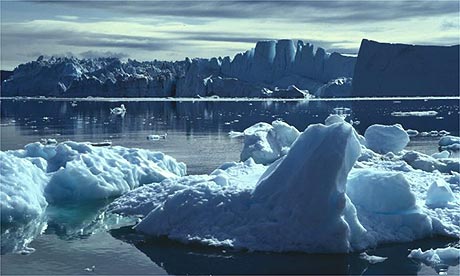
Melting ice sheet in Greenland

The Arctic is again highlighted as being among areas most at risk. Photograph: Corbis

The effects of climate change will be felt sooner than scientists realised and the world must learn to live with the effects, experts said today.

Professor Martin Parry, a climate scientist with the Met Office, said destructive changes in temperature, rainfall and agriculture were now forecast to occur several decades earlier than thought.

He said vulnerable people such as the old and poor would be the worst affected, and that world leaders had not yet accepted their countries would have to adapt to the likely consequences.

The professor was speaking in London at a meeting to launch the full report on the impacts of global warming by the UN's Intergovernmental Panel on Climate Change (IPCC).

The report – which had its executive summary released earlier this year – says hundreds of millions of people in developing nations will face natural disasters, water shortages and hunger due to the effects of climate change.

Today Professor Parry, co-chair of the IPCC working group that wrote the report, said: "We are all used to talking about these impacts coming in the lifetimes of our children and grandchildren. Now we know that it's us."

He said the international response to the problem had failed to grasp that serious consequences such as reduced crop yields and coastal flooding were now inevitable. "Mitigation has got all the attention but we cannot mitigate out of this problem. We now have a choice between a future with a damaged world or a severely damaged world."

Countries such as Britain need to focus on helping nations in the developing world cope with the predicted impacts, by helping them to introduce irrigation and water management technology, drought resistant crops and new building techniques.

Dr Rajendra Pachauri, chair of the IPCC, said: "Wheat production in India is already in decline, for no other reason than climate change."

The report says that "extreme weather events" are likely to become more intense and more frequent, while higher global temperatures could affect crops and water supplies and spread disease.

The effect on ecosystems could be equally severe, with up to 30% of plant and animal species at risk of extinction if the average rise in global temperatures exceeds 1.5-2.5C.

The 1,000-page document is part of the IPCC's fourth overall assessment of climate change, to be published in full later this year. It was put together by the so-called Working Group II, which examines global warming's impact on the environment and people.

The experts involved warn that the consequences of rising temperatures are already being felt on every continent, and sooner than expected. It is "probably too late" to avoid some impacts in developing countries because about 1C of warming is already in the climate system, they warn. If it is not kept below 2C – which "currently looks very unlikely to be achieved" – up to 3.2 billion people will face water shortages and up to 600 million will face hunger, they have predicted.

The trade and development minister, Gareth Thomas, told the launch of the report at the Royal Geographical Society: "Failing to tackle it [climate change] will lead to floods, droughts and natural disasters which can destroy poor people's lives as well as their livelihoods."

Professor Parry said today that he was pessimistic about the chances of keeping the increase in global average temperatures below 2C. "And it's evident from the work of the IPCC that even with a maximum of 2C we're not going to avoid some major impacts at the regional level."

In February the report of the IPCC's first working group, which looks at the scientific background of climate change, concluded that global warming was "very likely" – a probability of 90% or greater – to have been caused by human activity.

A report in May by the IPCC's Working Group III, which examines how climate change can be addressed, argued that devastating global warming can be avoided without excessive economic cost but only if the world begins acting immediately.

Today's report concludes that while the impact of a warmer globe will have mixed effects – for example, it notes that crop yields could increase in northern Europe – the overall impact will be deeply negative, particularly in Africa, in the so-called "mega-deltas" of south and east Asia, and on small islands and in polar regions.

By 2020, the report warns, up to 250 million Africans may be left short of water, while access to sufficient food is "projected to be severely compromised by climate variability and change".

"New studies confirm that Africa is one of the most vulnerable continents to climate variability and change because of multiple stresses and low adaptive capacity," says the document.

Video

"Manufactured Landscapes" SEE THIS BRILLIANT MOVIE! You'll never have the same shopping experience again.